

Audio By Carbonatix
The Ghana Tertiary Education Commission (GTEC) has lifted its ban on the processing of new accreditation applications for academic programmes from public universities, including technical universities.
The suspension which took effect from September 2023 was to sanitise the accreditation space, following persistent non-compliance by some institutions with the accreditation requirements.
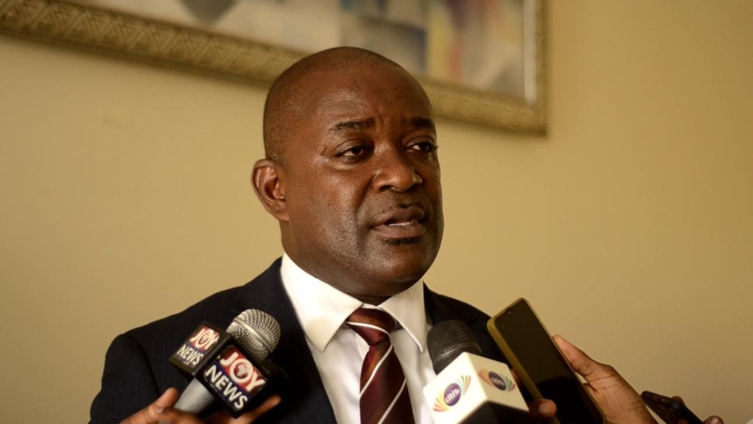
Director-General of the Commission, Professor Ahmed Abdulai Jinapor, says new applications will be processed after clearing the backlog and granting re-accreditation to expired programs.
The commission says it will start new accreditation applications begging February 1, 2024.
“Informed by the work that we’ve done being able to clear the backlog, we’ve given accreditation to so many programs close to 1000 within the last quarter. The commission has come to the decision that we are going to lift the ban,” he said.
The 2022 Auditor-General’s report revealed a significant number of unaccredited programmes offered by some public universities in the country.
Authorities at the universities had argued they had initiated processes but delayed after the GTEC failed to expedite their application.
This subsequently saw a freeze on application for accreditation of new programs.
The Commission has been meeting with Vice-Chancellors of Technical Universities on measures rolled-out for effective implementation and enrollment of programs.
Prof. Abdulai Jinapor says the public universities must prove the relevance of new program introductions to the nation’s development during applications for accreditation.
GTEC has instituted an Acceleration Board to fast-track processes for new accreditation applications.
The Technical Universities’ Vice-Chancellors Association welcomed the decision and believes the board would help sanitise the sector.
Vice Chancellor of the Sunyani Technical University, Professor Kwadwo Appiah Adinkra is upbeat about the expedited process for accreditation.
“Currently, as soon as you put in an application for program accreditation, it doesn’t take long. You’ll hear from them at every stage that the process gets to, and you’re informed about it. Hitherto, it wasn’t as easy at that. Things are very well streamlined now,” he said.
Meanwhile, the GTEC is cautioning public academic institutions against running unaccredited programmes which would present dire consequences to students and graduates of the programs.
“We’re working with the national service secretariat to ensure that programs that are not accredited, graduates from such institutions do not undertake the mandatory national service. In fact, if it’s becomes necessary programs that are not accredited will hav graduates from such programs not receiving any employment,” Prof. Abdulai Jinapor added.
Latest Stories
-
Hawa Koomson pledges experienced and mature leadership of NPP women’s wing
1 hour -
Young woman found dead at Kasoa Peace Town
2 hours -
Playback: The Law examined lawful arrest in Ghana
2 hours -
Mahama urges African governments to treat healthcare as an investment, not budget cost
3 hours -
Bawumia congratulates John Boadu and new NPP executives, pledges support ahead of 2028
3 hours -
‘No talent should be left out’ – Bawumia pledges inclusive NPP campaign for 2028
3 hours -
Prof. Mike Oquaye recounts how he blocked the Special Prosecutor’s attempt to arrest Bawku Central MP
3 hours -
Make health sovereignty a priority for Africa – Mahama
3 hours -
Dorimon Naa, Wa West DCE lead massive clean-up exercise; threaten sanctions against recalcitrant residents
4 hours -
Photos from Adom FM Y2K Jam
4 hours -
Praye Tiatia steals the show at Adom FM Y2K Jam [Watch]
4 hours -
Boakye Agyarko congratulates John Boadu, pledges support for NPP leadership
4 hours -
Antwi HiMight thrills fans with Antwi ne Antwi hits at Adom FM’s Y2K Jam [Video]
4 hours -
Amb. Edward Boateng congratulates Boadu, Kodua on election wins
5 hours -
John Boadu pledges to rebuild NPP from grassroots and restore ‘winning machinery’
5 hours