

Audio By Carbonatix
It was supposed to be a night of rhythm on the river, a stylish swirl of beats, champagne, and Ghanaian pride bobbing gently on the Thames.
The All White Boat Party in London had all the trimmings of a cultural export gone right: gleaming decks, white linen everywhere, and a crowd brimming with Afrobeat enthusiasm, eager to dance their diaspora hearts out. The river sparkled beneath the glow of dockside lights, as the speakers tuned up to ferry the soul of Kumasi straight into the UK capital.
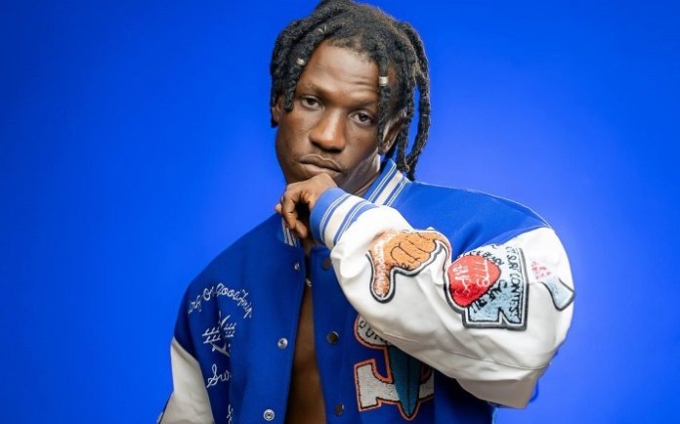
Then came King Paluta
Swaggering onstage with the confidence of a man whose Spotify streams were finally catching up to his ambition, the rapper—known for bangers like Aseda and Yahitte—grabbed the mic like a man on the cusp of greatness. But within minutes, the mood flipped like a dodgy generator.
Mid-performance, Paluta didn’t drop a surprise freestyle or call out a celebrity guest. No. He stopped the music cold to verbally eviscerate a woman in the crowd—her only crime: giving him the bombastic side eye and not “vibing” hard enough. What followed was less lyrical flow, more public meltdown. He zeroed in on her wig, lobbed a volley of insults, and crowned her “foolish” for daring to stand still.
The crowd froze. Phones came up. The moment was captured, uploaded, and magnified by the digital gods. And just like that, the celebration capsized—not in sound, but in spirit. In that instant, King Paluta’s performance turned from promising showcase to cautionary tale, and the image of a rising star dimmed under the harsh glare of global scrutiny.
The Public Spectacle and the Private Disgrace
To insult anyone from the stage is bad enough; to verbally attack a woman publicly—unprovoked and unrelenting—is worse. In Ghanaian culture, where respect for women is foundational and public decorum expected, the episode struck a jarring dissonance.
It was ungentlemanly. Uncultured. Un-Ghanaian.
That moment was more than a lapse in judgment; it was an avoidable descent into hubris, and one that echoed far louder than any chorus he could have dropped that night.
Industry Reacts: The Firestorm
Back in Ghana, the backlash was immediate.
Highlife veteran Kwabena Kwabena, no stranger to the spotlight himself, called on King Paluta to do the decent thing: apologize. “Humility,” he said pointedly, “only polishes your star—it never dims it.”
Music Industry firebrand BullGod, never one to coat his opinions in sugar, called the incident unprofessional and disgraceful. He didn't hesitate to label Paluta a “fool,” further criticizing the rapper’s decision to respond not with contrition, but with contempt. “Musicians,” he declared on national radio, “are the most pampered professionals ever.”
And yet, not all responses were scorched earth. Arts and culture journalist Kwame Dadzie called for accountability, yes—but also for constructive criticism. “Let’s not crush him,” he urged. “Let’s correct him.”
Instead of Apology, a Song—and a Shrug
But what came next only deepened the wound.
Rather than issue a heartfelt apology—perhaps at a press conference, or even a simple Instagram post—King Paluta dropped a track titled “Between Me and God.”
In it, he brushed aside the entire controversy with theological indifference, effectively saying the matter was nobody’s business but his and the Almighty’s. Critics and fans alike found the track underwhelming and petulant. Compared to the sonic richness of his recent work, “Between Me and God” felt half-baked—an emotional rebuttal disguised as artistry.
The track is simply “tainted by malice.” Others saw it as a deliberate provocation—a middle finger to public accountability masquerading as divine reflection.
The Bigger Picture: Career at a Crossroads
A moment like this may seem small in the echo chamber of social media. But it isn’t.
Artists, especially those still building their careers, must understand that talent alone doesn’t sustain fame—character does. On global stages, musicians represent not just themselves, but their people, their roots, and their values. And when those values are abandoned for ego, the consequences are swift and severe.
King Paluta is not yet so untouchable that he can afford to alienate his audience. Ghanaians love their stars—but they expect them to respect the very people who raised them.
Disrespect toward a woman on foreign soil? That doesn’t just harm a brand—it stains a legacy in the making.
A Moment to Make Right
King Paluta must now ask himself: Is he an artist shaped by impulse, or one guided by introspection?
The honorable path—though less glamorous—is clear. Issue a sincere public apology. Reach out directly to the fan he insulted. Rebuild trust with humility, not hostility. Consult elders in the industry. Sit with mentors. Reflect.
Because the truth is this: an apology doesn’t weaken you. It doesn’t diminish your craft. It shows you're big enough to admit when you were wrong—and wise enough to learn from it.
The People Are Your Platform
Paluta’s rise wasn’t accidental. His team worked hard, but it was the people who pushed him forward—sharing his music, attending his shows, chanting his name in the streets and clubs of Kumasi, Accra, and now London.
But the same people who build you up can turn away just as quickly if you forget who you’re performing for. Stardom may come from the stage, but it is sustained in the hearts of those watching from the crowd.
Respect them. Value them. Honor them.
End Thoughts
Let this saga not end in shame, but in a turning point.
The meltdown in London was an error - yes, a grievous one. But it doesn’t have to be the end of King Paluta’s journey. If he finds the courage to take responsibility, to listen, to grow, he may yet emerge stronger - not just as an artist, but as a man worthy of the stage he commands.
And next time he stops the music mid-performance, let it be to say something that lifts us all—not tears someone down.
May this be the turning point that transforms an incident of poor judgment into a lesson in character.
Latest Stories
-
Ghana’s banking sector assets rise 20.47% to GH¢500.2bn – BoG Governor
2 minutes -
22 injured as Sprinter bus overturns at Sege after tyre burst
3 minutes -
UN housing expert urges Ghana to strengthen Rent Control Department amid housing affordability concerns
11 minutes -
Delta-BCI partnership reaches 166,000 people with breast cancer education
21 minutes -
Power restoration fault suspected in Kumasi Central Market fire
6 hours -
The 7-foot giant of Ngleshie Amanfro: Seven-foot Ghanaian Ephraim Saawa dreams of joining the national basketball team
6 hours -
Government promises support for Kumasi Central Market fire victims
6 hours -
Vibes The Movie: Big Ghun’s Ghanaian film earns five nominations at 2026 REFFA
7 hours -
‘I’m a fulfilled man’—Justice Korbieh on missing out on Supreme Court despite two nominations
7 hours -
MamaCare CEO warns unresolved conflicts among health workers could undermine maternal and neonatal care
7 hours -
Health professionals urged to translate medical knowledge into practice to save mothers
7 hours -
Retired judge Justice Francis Korbieh charges 1,568 new lawyers to uphold integrity
9 hours -
Conflicts among care providers linked to maternal, neonatal deaths – Expert
9 hours -
GIS marks 10th TIME conference, champions improved teaching practices
9 hours -
BRICS Or Balance? What Ghana’s bid really means
9 hours