

Audio By Carbonatix
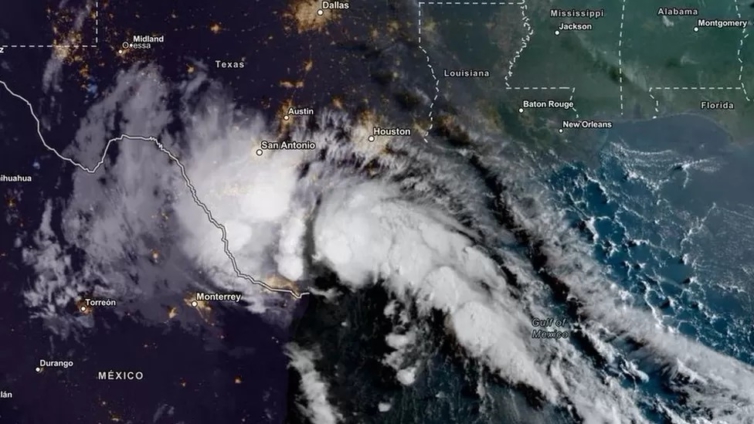
Tropical Storm Harold made landfall on the south-east coast of Texas on Tuesday, bringing more heavy rain and high winds to the southern US.
The storm has dumped up to 7in (17.7cm) of rain in some parts of the state.
By late Tuesday afternoon, the storm had been downgraded to a tropical depression, but heavy rains continued.
More than 23,000 people were without power in the Lone Star state on Tuesday night.
The Texas deluge arrived a day after historic amounts of rain flooded parts of the south-western US.
California and Nevada were cleaning up on Tuesday after seeing historic amounts of rain from Storm Hilary, which caused widespread flooding.
Tropical Storm Harold made landfall on Tuesday morning local time on Texas' Padre Island in the Gulf of Mexico.
Tropical storm warnings had been issued from the Rio Grande river - along the state's southern boundary - to roughly 250 miles (400km) north, to the community of Port O'Connor.
Scattered instances of flash flooding were still a threat, the NWS warned.
Texas Governor Greg Abbott said the state had deployed emergency resources including rescue boats, search-and-rescue teams and platoons from the state National Guard.
Wind gusts of 59 mph were reported outside of Corpus Christi.
The storm was expected to continue to carry rain, wind and hail farther inland as it tracks westward across the hot and dry Texas landscape.
Rain was expected to taper off on Wednesday.
As Texans endure the deluge, weather officials have warned of yet another tropical storm - Franklin - currently some 230 miles east off the coast of the Dominican Republican.
Up to 6in of rain from Franklin is predicted to fall in Puerto Rico from Wednesday.
The impact of climate change on the frequency of storms is still unclear, but we know that increased sea surface temperatures warm the air above and make more energy available to drive hurricanes, cyclones and typhoons. As a result, they are likely to be more intense with more extreme rainfall.
The world has already warmed by about 1.1C since the industrial era began and temperatures will keep rising unless governments around the world make steep cuts to emissions.
Latest Stories
-
Using 44% of big push projects to empower local contractors is a very laudable initiative-Razak Kojo Opoku
2 minutes -
We’ll ruthlessly come after you—NAIMOS to illegal miners
5 minutes -
Foreign nationals dominating galamsey arrests – NAIMOS
14 minutes -
PAC sitting disrupted as Majority MPs pulled to form quorum in chamber
22 minutes -
Ghana demands compensation for slavery in landmark UN vote
24 minutes -
Removing GH₵1 fuel levy now could worsen energy sector debt – IES
31 minutes -
Beckoning hope: A new dawn for cancer care in Ghana
37 minutes -
94 excavators seized, 237 arrested, majority foreigners—NAIMOS reveals
38 minutes -
NAIMOS raises alarm over rising involvement of minors in galamsey
44 minutes -
Act swiftly on climate and conflict risks – Local Government Minister to West African leaders
49 minutes -
Big Push exposé only the beginning — Sulemana Braimah
49 minutes -
Mining will continue but the risk of galamsey must be stopped—NAIMOS
52 minutes -
Ghana Month: Losing our dishes means losing our identity — Expert warns
59 minutes -
Illegal mining requires coordinated national response, KAIPTC Deputy Commandant urges
60 minutes -
Big Push: 81 of 107 contracts sole-sourced raises serious concerns – Sulemana Braimah
1 hour