

Audio By Carbonatix
The Health Community of West Africa Association (HCOWA Association) has pledged to revolutionise healthcare in Ghana and West Africa by introducing cutting-edge Artificial Intelligence medical imaging technology in partnership with leading medical imaging companies from China to enhance diagnostics, improve patient outcomes, and advance medical innovation across the region.
This transformative initiative aims to enhance diagnostic accuracy, improve patient outcomes, and bridge critical gaps in medical imaging across the region.
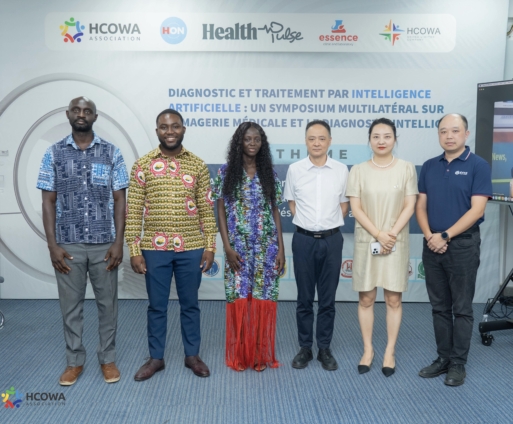
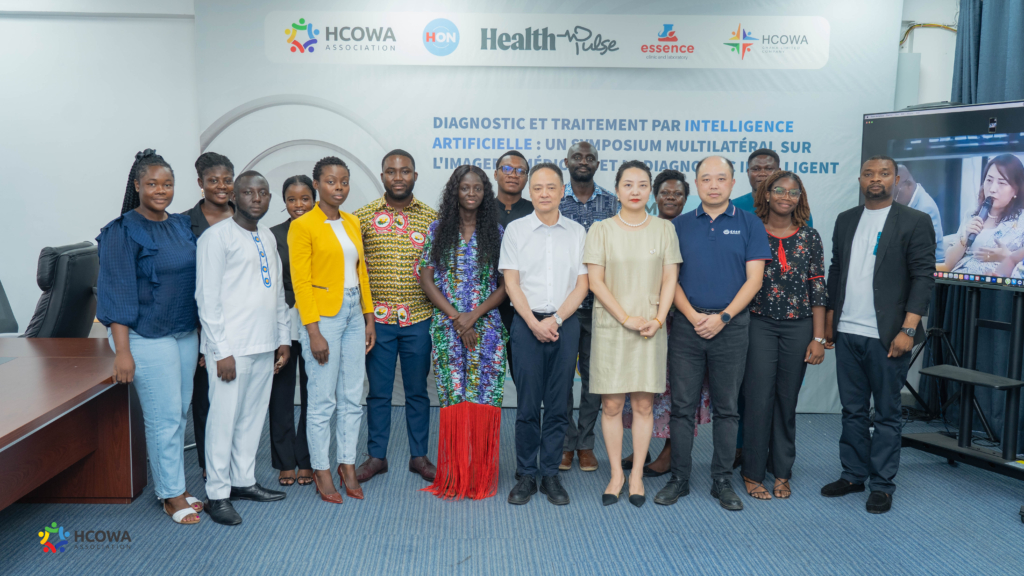
The announcement was made at HCOWA Association’s recent symposium, held at its headquarters in Accra, under the theme “AI in Medical Imaging & Smart Diagnostics: Enhancing Accuracy, Speed, and Patient Outcomes.”
The event, which took place on March 21, 2025, brought together leading medical experts, policymakers, and technology providers from across Africa and beyond. Attendees from Ghana, Côte d’Ivoire, Algeria, Togo, Guinea Conakry, Benin, Mali, Sierra Leone, Burkina Faso, Nigeria, and China participated both in person and virtually via Zoom.
The full implementation of Artificial Intelligence in Medical Imaging and other areas of medical practice is scheduled to commence following HCOWA Association’s three-day Medical and Health Expo, set to take place from August 20 to 22 at the Accra International Conference Centre.
Medical imaging refers to the use of advanced technologies such as X-rays, CT scans, MRIs, and ultrasounds to visualize the inside of the human body for accurate diagnosis and treatment. Artificial Intelligence is transforming medical imaging by enhancing image analysis, detecting abnormalities with high precision, and assisting healthcare professionals in making faster and more accurate diagnoses.
HCOWA Association underscored its commitment to working with governments across West Africa to integrate advanced AI medical imaging systems into hospitals and clinics, ensuring enhanced healthcare delivery, capacity building, job creation, and economic development.
At the symposium, leading AI medical imaging companies such as Gold Panda and Dingco Biotechnology from China showcased their state-of-the-art solutions designed to enhance medical imaging precision in West Africa. Their presentations emphasized how AI-powered imaging can improve diagnostic speed and accuracy, reducing the burden on overworked medical professionals.
Dr. Gifty Boateng Agyenim, a Doctor of Pharmacy, highlighted the impact of AI-driven diagnostics in resource-limited environments, where hospitals often face shortages of trained personnel and essential equipment.
“Many healthcare facilities in West Africa, including those in urban areas, struggle with limited resources, affecting diagnostic accuracy and patient outcomes. AI is the game-changer we need,” she noted.
Citing a 2019 study by Nigerian medical professors, Dr. Agyenim emphasized that Africa faces a critical shortage of healthcare professionals, leading to overburdened medical staff and delayed diagnoses. She stressed that AI-driven tools, capable of rapidly analyzing blood smears, culture tests, and radiological images, could significantly improve early disease detection and patient care.
Dr. Habib Kourouma, Secretary-General of HCOWA Association and an epidemiologist with the World Health Organization (WHO), shed light on the growing role of AI in medical imaging and the challenges associated with its adoption.
“Artificial Intelligence in radiology is no longer a futuristic concept; it’s a necessity. With the exponential growth in medical data, radiologists are overwhelmed. AI-powered software assists by identifying critical abnormalities, prioritizing urgent cases, and enhancing image clarity, ultimately saving lives,” stated Dr. Kourouma.
He emphasised that integrating AI into medical imaging would not only improve diagnostic efficiency but also strengthen healthcare infrastructure in West Africa, where limited resources have long hindered progress.
Vice President of HCOWA Association, Prince Dogbey, announced that the Association is actively engaging with medical equipment manufacturers in China to ensure that Ghana and West Africa benefit from the latest innovations.
“Our goal is clear and it is to partner with governments, healthcare institutions, and technology providers to bring the best AI medical imaging solutions to hospitals across West Africa,” he emphasized.
The symposium concluded with a strong consensus on the urgent need for AI-powered medical imaging solutions to address diagnostic inefficiencies, improve healthcare accessibility, and strengthen medical infrastructure across West Africa.
Latest Stories
-
Ex-Health Minister Agyemang Manu faces charges in the coming weeks over questionable COVID-19 deals – Ofosu Kwakye reveals
38 minutes -
Ahafo ranks high in national health performance review; records significant gains in maternal and child health
2 hours -
Metro Mass Transit fights back against ‘brazen’ private takeover of Opera Square terminal
3 hours -
Trump calls for allies to help secure Strait of Hormuz as Iran vows to step up retaliation
3 hours -
US Embassy in Baghdad, Iraq attacked with missile that hits helipad
4 hours -
CSA reports rise in cyber incidents as over 23,000 enquiries recorded
5 hours -
Local dishes remain favourite at buffets and events
6 hours -
F1 cancels Bahrain, Saudi Arabia races due to Iran war
6 hours -
Three more Iran football team members change minds over asylum
7 hours -
WAEC Awards: PRESEC-Legon student grabs best business student prize
7 hours -
Bills Micro-Credit suspends officers over altercation with customer, hands them over to police
9 hours -
Court jails foreign national 5 years after GH¢1.9m & US$191k fake currency conviction
9 hours -
E.P. College of Education raises alarm over infrastructure deficit
10 hours -
Hamas urges key ally Iran to halt attacks on Gulf states
10 hours -
Trump urges UK and other nations to send ships to help secure Strait of Hormuz after Iranian attacks
11 hours