

Audio By Carbonatix
In December 2025, while visiting the Kwame Nkrumah Mausoleum with a friend, I joined a guided tour that unfolded as an almost wholly celebratory narrative of Osagyefo Dr Kwame Nkrumah, Ghana’s first president – his life, liberation struggles, Pan-African ambitions, countless developmental projects, and his global stature.
For the multiple times that I have visited the mausoleum, Nkrumah’s life history has rendered with reverence. Among the group in the December guided tour were several African Americans and other African nationals who had come to Ghana for the Detty December. They listened attentively as the story of Nkrumah’s achievements was narrated in heroic terms.
At the end of the tour, however, one visitor – an African American – posed a deceptively simple but deeply unsettling question to the guide: if Nkrumah was this great – if he did all these things – why did the people overthrow him? This query briefly disrupted the rhythm of triumphal remembrance, as the tour guide struggled to answer the question.
It gestured toward the silences that often accompany official commemorative spaces and exposed, for me, the tension between celebratory national narratives and the contested, politically charged realities of post-independence Ghanaian history. It was a stark reminder that history is complex. As historians will say, when the story sounds so nice, something is certainly being omitted.
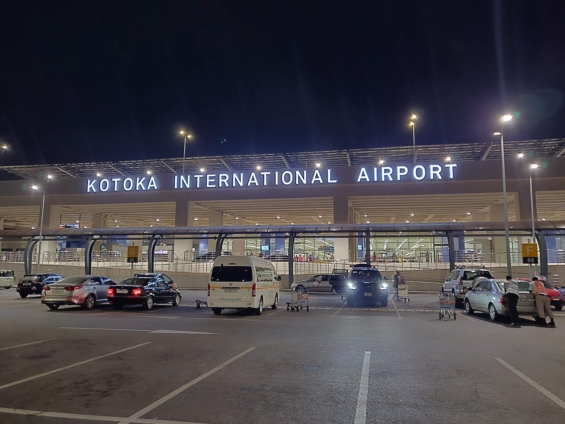
That moment has shaped how I think about Ghana’s contemporary controversy over proposals to rename Kotoka International Airport to Accra International Airport. Both situations raise the same underlying problem: how should we remember a past that is morally complex, politically fractured, and resistant to simple hero–villain binaries? I regard Nkrumah as undeniably a towering figure in African liberation and the sociopolitical and economic development and transformation of our country, yet I also recognise that his overthrow in February 1966 emerged from a convergence of real economic pressures, political repression, and domestic dissatisfaction.
In 1962, for instance, the National Assembly proclaimed Nkrumah “President for Life”, and in 1964, after a constitutional amendment, Nkrumah officially declared Ghana a one-party state, officially banning the opposition. The machinery of the CPP essentially became the machinery of the state, and vice versa. Through the Preventive Detention Act (PDA), earlier enacted in 1958, Nkrumah extensively and effectively imprisoned political opponents, dissenting union leaders, and critics without trial.
This undoubtedly resulted in fear and resentment. Economically, Ghana by February 1966 was in a state of virtual bankruptcy due to corruption and years of massive (sometimes unproductive) state-led industrial projects. Inflation was high and there were shortages of basic commodities such as sugar and milk.
To recount only Nkrumah’s greatness without acknowledging these tensions is not only historical falsification, but also historical narrowing—an approach that privileges commemoration over interrogation. The mausoleum encounter thus crystallized for me a broader dilemma in Ghana’s memorial culture: whether public sites should stabilize consensus or provoke critical reflection.
I see this same dilemma animating the current campaign to remove Kotoka’s name from Ghana’s principal international gateway. Advocates of renaming insist that a national symbol ought not to honor a man associated with the overthrow of an elected government. Yet the lesson I draw from the mausoleum exchange is precisely why caution is required. If public memory becomes governed solely by contemporary moral preferences – celebrating figures who conform neatly to present-day democratic and political ideals while erasing those who trouble(d) them – then our national history risks being curated rather than examined.
Retaining Kotoka is not a timeless endorsement of military intervention; it is a refusal to sanitize Ghana’s past - by telling the uncomfortable, messy, and complicated part of our history. It is to ignite historical curiosity and inquiry rather than closure. Kotoka forces confrontation rather than comfort – it compels citizens and visitors alike to ask why Nkrumah was overthrown, why soldiers intervened in politics at the time, why Kotoka became a hero, and how Ghana navigated that violent and uncertain decade.
The question asked at the mausoleum – why did the people overthrow him (Nkrumah)? – is exactly the kind of inquiry renaming campaigns risk foreclosing if they collapse complexity into moral certitude and politico-historical convenience. Ghana’s post-independence history was not a linear progression from liberation to constitutional democracy; it was punctuated by coups, ideological struggles, institutional breakdowns, and recalibrations of authority.
It is these that have collectively shaped our current political structure and democratic dispensation. To retain the name Kotoka, I repeat, is not, to sanctify coups, just as acknowledging Nkrumah’s shortcomings is not to deny his monumental achievements. In my opinion, public memory should stimulate debate and curiosity rather than enforce closure, and that national landmarks can function as reminders of contentious histories rather than monuments only to unblemished virtue.
This ongoing controversy over KIA mirrors that brief exchange I witnessed at the mausoleum: a confrontation between celebratory storytelling and historical questioning. I do not believe a historically mature political culture resolves such tensions by removing inconvenient names or smoothing jagged edges; it confronts them by widening the narrative frame. Ghana does not dishonor itself by remembering the conflicts and uncomfortable moments that shaped it.
On the contrary, retaining contested symbols while subjecting them to sustained and informed public debate affirms confidence in our democratic present – one robust enough to acknowledge that our past, like that of all nations, was forged not only by heroic aspiration and linear progress but by struggle, fracture, and difficult political choices.
Latest Stories
-
IMANI Africa President urges greater awareness and support for Parkinson’s Disease patients
5 minutes -
T-bills: Government records undersubscription of 29%; interest rates continue to surge
7 minutes -
Perceptions of Judicial partisanship ‘unfortunate’ – Justice Adjei-Frimpong urges greater public engagement to build trust
10 minutes -
Ghana to honour Christina Hammock Koch for historic Artemis II mission
1 hour -
Supreme Court appointments require more than 15 years’ experience – Justice Adjei-Frimpong
1 hour -
Fire destroys 3-bedroom house at Bogyawe
2 hours -
Why the Supreme Court is a “policy court” – Justice Richard Adjei-Frimpong breaks it down
2 hours -
Playback: The Law discussed Supreme Court @150
3 hours -
MTN Momo staff walk to promote wellness and fitness
3 hours -
Assafuah: Sedina Attionu’s return from Nevada will test government’s commitment to accountability
3 hours -
How GRA’s Modified Taxation Scheme is boosting revenue compliance & SMEs competitiveness
4 hours -
Stonebwoy Can Do It: A call to unite behind 2026 BHIM Fest
4 hours -
World Shea Expo returns to Tamale for 2026 edition
4 hours -
Prioritise cocoa sector with better prices, timely payments-Annoh-Dompreh urges NDC
5 hours -
Lands and Mines Watch Ghana endorses Heath Goldfields’ mining capacity
5 hours