

Audio By Carbonatix
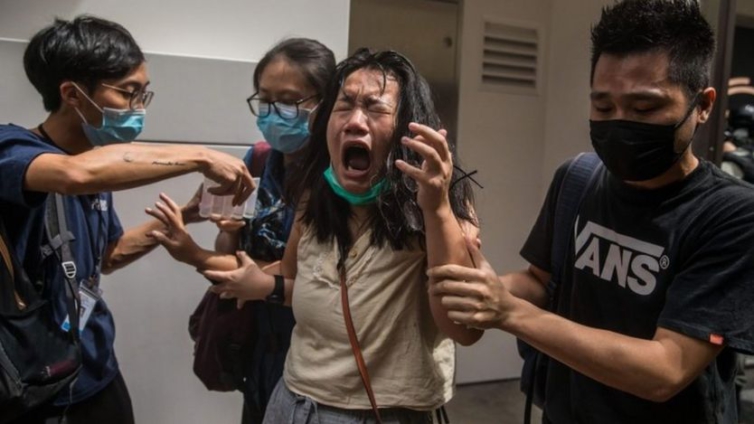
The US House of Representatives has approved new Hong Kong-related sanctions, after Beijing imposed a security law that was condemned by countries around the world.
The measure, which was passed unanimously, penalises banks that do business with Chinese officials.
It will have to be approved by the Senate before going to President Trump.
Critics say China's law ends freedoms that were guaranteed for 50 years when British rule ended in 1997.
"The law is a brutal, sweeping crackdown against the people of Hong Kong, intended to destroy the freedoms they were promised," said House Speaker Nancy Pelosi.
UK Prime Minister Boris Johnson said the passing of the law was a "clear and serious breach" of the 1985 Sino-British joint declaration.
Under this declaration, Hong Kong was handed back to China in 1997, with certain freedoms guaranteed for at least 50 years under the "one country, two systems" agreement.
China said the security law was necessary to stop the type of protests seen in Hong Kong during much of 2019.
And despite condemnation in the West, more than 50 countries, led by Cuba, supported China at the UN this week.
What does the US law say?
The Hong Kong Autonomy Act imposes sanctions on banks that do business with Chinese officials who are involved in cracking down on pro-democracy protesters in Hong Kong.
Ms Pelosi said the law was an "urgently needed response to [China's passing] of its so-called 'national security' law... which is purpose-built to dismantle democratic freedoms in Hong Kong".
Before the bill was signed, the US had already began eliminating Hong Kong's special status - halting defence exports and restricting the territory's access to high-technology products.
Last year, the US had also signed into law the Human Rights and Democracy Act, supporting pro-democracy protesters in Hong Kong.
What have other countries said?
The UK said it will offer up to three million Hong Kong residents the chance to settle there and ultimately apply for full British citizenship.
Australia is also "actively considering" offering safe haven to Hong Kong residents - with Prime Minister Scott Morrison saying there were proposals that will "soon be considered by cabinet".
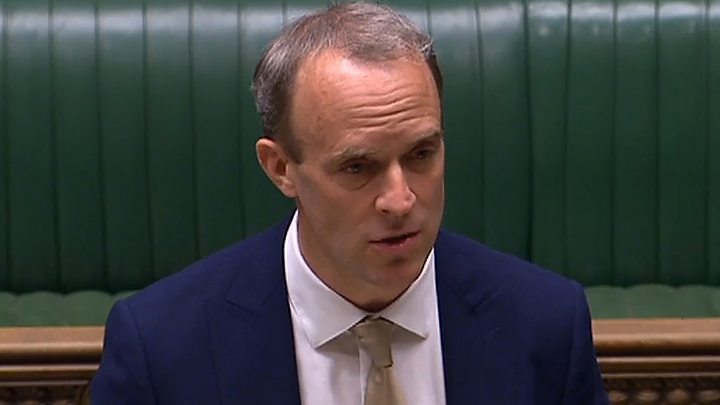
Japan was among the other countries that spoke out against the law, calling it "regrettable".
"It will undermine trust for the principle of 'one country, two systems'" said Foreign Minister Toshimitsu Motegi.
European Council President Charles Michel said it "deplored" the law - adding that it had a "detrimental effect on the independence of the judiciary and rule of law".
And Canada changed its travel advice to Hong Kong, saying the new law "increased the risk of arbitrary detention on national security grounds and possible extradition to mainland China".
Yesterday, a senior Chinese official slammed foreign critics, saying Hong Kong's affairs were "none of your business".
Have all countries been critical?
No. At the United Nations this week, Cuba - on behalf of 53 countries - welcomed the law.
Speaking at the 44th session of the United Nations Human Rights Council, it said: "Non-interference in internal affairs of sovereign states is an essential principle enshrined in the Charter of the United Nations.
"We believe every country has the right to safeguard its national security through legislation, and commend relevant steps taken for this purpose."
How has the new law been used so far?
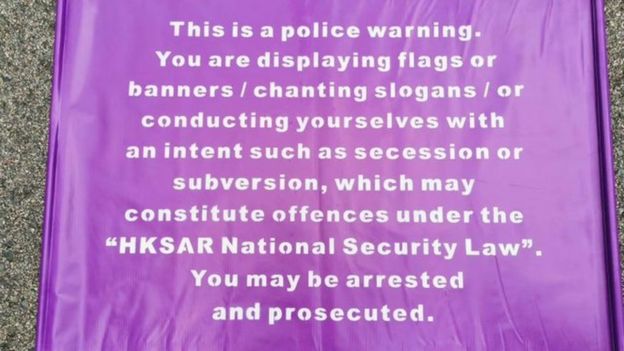
Just hours after the law was passed, Hong Kong police made their first arrests.
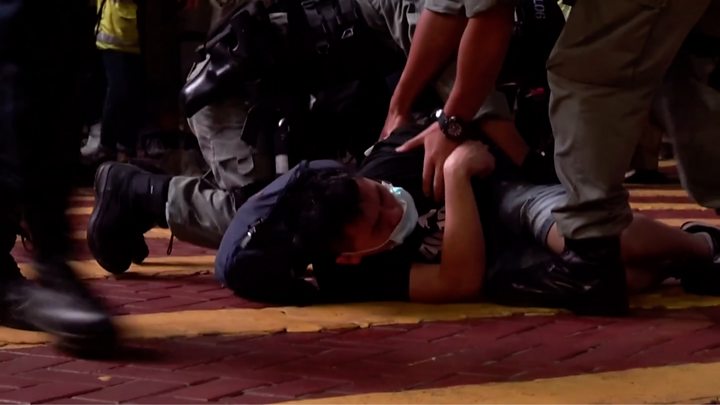
Ten people were accused of violating the new law, including a man with a pro-independence flag. About 360 others were detained at a banned rally.
Under the new law, inciting hatred of China's central government and Hong Kong's regional government are offences.
Acts including damaging public transport facilities - which often happened during the 2019 protests - can be considered terrorism.
Latest Stories
-
Second edition of Prince Amoako Jr giveback project scheduled for December
7 seconds -
Muntaka commissions polyclinic at Ayigya Zongo to address healthcare challenges
7 minutes -
World Habitat Day: Adequate housing for all – a right we must build
9 minutes -
Ghana Institute of Architects urges government to adopt coordinated agenda for affordable housing
10 minutes -
Yutong bus extensively damaged by fire at Gbogdaa
10 minutes -
Spanish PM Sánchez calls early election after housing protests
16 minutes -
GH¢3,000 monthly allowances for Paramount Chiefs and Queen Mothers fully paid – Ayariga
16 minutes -
Government disbursed over GH¢5bn to MMDAs in 2025- Ayariga
16 minutes -
Teachers’ strike: Abosamso queenmother, assemblyman take over classroom
20 minutes -
GPL 2026/27: Tanko, Agyemang shortlisted for September Coach of the Month award
25 minutes -
Mahama directs creation of Local Government TV – Ayariga
26 minutes -
GPL 2026/27: Amankona, Gyamfi Junior and four others nominated for September Player of the Month award
30 minutes -
Government to remodel 24-hour markets, rename project District Model Markets – Ayariga
34 minutes -
June 29 floods exposed weaknesses in Ghana’s environmental sanitation system – Ayariga
40 minutes -
Local Gov’t Minister announces plans to regenerate Agbogbloshie enclave
45 minutes