

Audio By Carbonatix
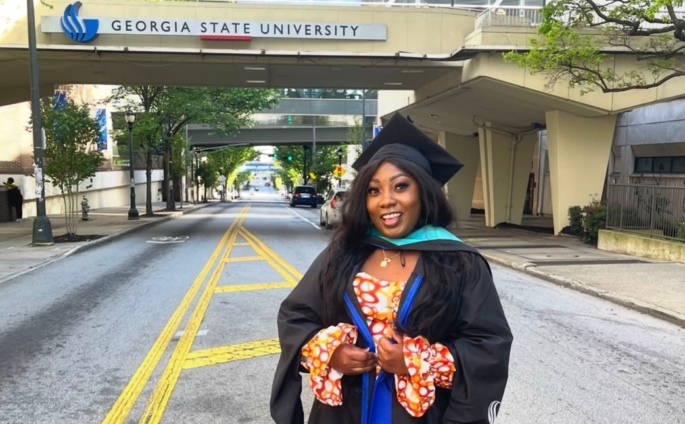
As the US grapples with unprecedented challenges related to global displacement, one professional's journey from Ghana to China to the US, in Atlanta, illustrates how rigorous academic training and foreign experience can lead to tangible policy change. Henrietta Fletcher's journey across several continents and fields provides a glimpse into how the next generation of policymakers is addressing America's most pressing humanitarian challenges.
From Accra to Atlanta: Building a Global Academic Base
Fletcher's educational experience signifies an enhanced understanding of current policy and where it falls short by having learned how the challenge may have been approached from another cultural or legal perspective. She attended the University of Ghana, where she earned a Bachelor of Arts in Sociology and Chinese Language. While at the University of Ghana, she broadened her cultural and worldview by studying overseas for an exchange program/study abroad at Zhejiang University of Technology in Hangzhou, China. During this period, she studied Chinese language and culture exclusively for one year. A program that was fully funded by the government of Ghana, awarded to students with exceptional academic performance. This foundation in cross-cultural communication was smart since more and more people are moving across the world and need to be able to speak more than one language and understand more than one culture. This program helped broaden her view of the world to appreciate, welcome, and understand other people’s cultures regardless of who they are.
Her subsequent Master of Law in Chinese Law from Zhongnan University of Economics and Law in Wuhan gave her a unique international perspective to understand how different legal systems handle immigration and citizenship. This knowledge is especially useful now that U.S. policymakers are looking at best practices from around the world. Her choice to study for a Master of Public Administration at Georgia State University's Andrew Young School of Policy Studies, where she earned an impressive 3.94 GPA, shows her dedication to turning her overseas expertise into answers for American policy problems.
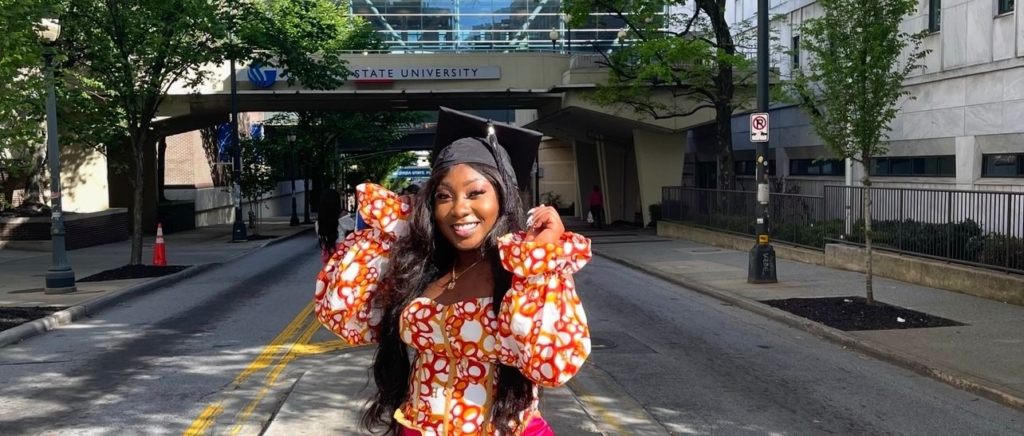
This academic path is not just about personal success; it shows how today's policy problems need people who can work with different legal, cultural, and administrative systems. Fletcher's knowledge of sociology, law, and public administration from several fields makes him a unique specialist with talents that are directly useful for the difficult task of resettling and integrating refugees. This educated intersection substantiates why her experience would benefit immediately. As America continues to battle complex issues with seemingly little budget and support for new offerings, those trained in fields in multi-environmental settings where they had to synthesize and apply real-time learning offer years of value in mere months.
Professional Experience: Putting Theory into Action
Fletcher's career portfolio shows a planned path from working directly with clients to analyzing policies, with each job building on the skills and knowledge gained in the preceding one to produce a deep understanding of refugee and immigrant services.
International Rescue Committee (IRC), Atlanta – Her job supporting office operations and community service delivery gave her firsthand experience with the problems that refugee resettlement agencies face. This experience showed her the difference between what policies say they want to do and what actually happens on the ground. This helped her come up with ideas for systemic transformation later on.
JF&CS Atlanta—Her work writing grants and building relationships with donors showed her how hard it is to keep refugee services running financially. To come up with scalable policy ideas that can get long-term support, it's important to know how funding works and what donors care about.
Georgia State University Housing: Her work creating administrative systems to make student services better shows that she can find problems and come up with workable solutions. The computerized forms she made for kids with emotional support animals illustrate how good she is at solving difficult administrative problems with new technology.
LemFi Financial Services—Her current work to promote financial inclusion in immigrant communities gives her a lot of information about the problems that immigrants face when they settle down. This job brings her in touch with the daily struggles that immigrant families face as they try to make sense of American financial institutions.
This mix of experience in the charitable, academic, and corporate sectors gives a full picture of the ecosystem that surrounds the integration of refugees and immigrants. Fletcher is different from researchers who just study in academia or professionals who only work in practice because he understands how policy decisions affect different organizational structures and community networks.
Recognition from Notable Voices
The endorsements Fletcher has gotten show that he has not only done well personally, but that he has also been recognized for the talents America needs to solve complicated humanitarian problems.
Professor Kathryn Kozaitis, who used to be the head of the anthropology department at Georgia State University, has worked with graduate students and on international development initiatives for decades. Kozaitis's opinion of Fletcher's "sophisticated research proposal on the U.S. Refugee System" is important because she has a lot of experience working with refugees and is a leader in anthropological research. Kozaitis has been judging students' potential and outcomes for 30 years, so when she says that Fletcher is "poised to contribute a great deal to American society and its citizenry," she means it.
Professor John C. Thomas, who used to be the Director of Master's Programs at GSU, has a very nuanced view of how Fletcher has changed. His remark regarding her academic path, where she started with "B" marks and then got straight "A" grades, shows how important it is to be flexible. Thomas sees this pattern as proof that Fletcher can understand and adapt to diverse cultural views on leadership and how organizations work. The ability to adapt to other cultures is exactly what you need to do good refugee policy work, which means being able to understand the needs of different groups of people and communities.
Dr. Susan Snyder's focus on Fletcher's ability to speak Mandarin Chinese, Twi, and English, as well as her "ability to complete complicated projects, to problem-solve, and to use creativity," shows that she possesses the practical skills needed to carry out policies. Language skills by themselves don't make policies work, but they do make it possible for people to get involved in the community in a way that informs policy needs.
Rasool Shojaei's thoughts on Fletcher's internship at IRC are proof from the field itself. When operational coordinators at refugee resettlement groups say that someone's contributions are "invaluable" and have a "lasting impact," it means that the person is useful in a way that goes beyond their academic credentials.
A Complete Plan for Systemic Change
Fletcher's suggested study focuses on creating and testing an evidence-based evaluation system for the United States. Refugee Admissions Program (USRAP). This method fills a major gap that has been pointed up in many government and academic reports: there are no systematic evaluation methods for figuring out how well a program is doing and where it may be better.
The Extent of Present Difficulties
Reports from the Government Accountability Office have continually pointed out that delays in processing, gaps in coordination between agencies, and inconsistent integration outcomes among states are ongoing issues in the U.S. refugee system. These aren't just small problems with the administration; they are big problems with the way things are set up that hurt both humanitarian outcomes and public trust in immigration policy.
Processing delays keep families apart for long periods of time, which causes psychological suffering and defeats the aim of refugee resettlement. Some locations have duplicated activities because of inadequacies in cooperation between agencies, while other areas have unmet demands. Because different states have different levels of integration success, a refugee's success rests more on the community that takes them in than on organized support systems.
Fletcher's Multi-Dimensional Method
Her proposed framework tackles these problems with a number of solutions that operate together:
Humanitarian Optimization: The framework promises to speed up protection for vulnerable groups and shorten the time families are apart by finding bottlenecks in processing and resettlement. This isn't just about being more efficient; it's also about keeping people safe while reducing their misery.
Administrative Innovation: Fletcher's idea to use program assessment methods from public administration to help refugees move to a new country is an example of methodological innovation. Traditional methods often use stories or little amounts of data as proof. A thorough evaluation methodology would give policymakers systematic data to help them make changes based on what they find.
Economic Impact Amplification: Fletcher's use of economic data, such as the fact that refugees brought in $93.6 billion in household income in 2019, backs up her claim that better integration processes help not only refugees but also American communities. Better integration initiatives bring faster economic growth, lower long-term support expenditures, and stronger community stability.
Scalability and Standardization: Most crucially, Fletcher suggests a standardized structure that can be used in all states. The discrepancies in resettlement outcomes that we see now are often due to inconsistent methods, not because the regions are different. A scalable framework could lessen these differences while still letting each area make changes.
Fletcher's concept acknowledges that American refugee policy functions within a global framework, hence enhancing international credibility. Showing that the U.S. is efficient, fair, and creative makes it more credible in international forums and with ally states, which helps achieve broader foreign policy goals.
Taking Care of Possible Criticisms
Fletcher's method has gotten a lot of praise, but it's important to think about possible problems and criticisms:
Implementation Complexity: Systematic assessment systems need a lot of money up front for things like collecting data, training staff, and building technology. Some people could say that these resources might be better used for direct services. Fletcher's experience in both academic research and operational implementation, on the other hand, makes her well-suited to create frameworks that are both thorough and doable.
Political Sustainability: The policy on refugees is still a hot topic in politics, and there have been big changes between previous administrations. A framework created in one political setting may be met with opposition or forsaken in a different one. Fletcher's focus on economic gains and security improvements shows that he knows about this problem and is trying to find answers that will last politically.
Concerns about cultural sensitivity: Standardized evaluation frameworks could miss cultural distinctions between refugee groups or host communities. Fletcher's ability to speak multiple languages and work in other countries helps insulate him from this risk, but to be fully culturally competent, he would need to talk to more people and keep changing.
Wider Effects on American Leadership
Fletcher's work is part of a bigger picture of American humanitarian leadership and worldwide trends in displacement. The efficacy of American refugee policy has ramifications that extend beyond U.S. borders, given that over 100 million individuals are forcefully displaced globally.
Setting International Standards: Other countries, especially U.S. allies, often look to the U.S. for ideas on how to help refugees settle down. Innovations in evaluation and integration can change the best practices around the world, making policy changes even more powerful.
Economic Competitiveness: In a time when countries are competing for skilled workers, successfully integrating refugees is a way to grow the economy. Countries that successfully integrate displaced populations get access to various skills, languages, and international networks that boost their competitive advantage.
Social Cohesion and Security: Good integration programs help not only refugees but also the communities that take them in. When integration works, it helps people from different cultures understand each other and makes communities stronger. When it doesn't work, it might make social tensions and security worries worse.
The Way Ahead
Fletcher's journey from being an international student to a policy innovator shows a few fundamental patterns in how policies are made today:
Interdisciplinary Approaches — To solve hard problems like refugee resettlement, you need to know a lot about more than one field. Fletcher's training in law, sociology, and public administration gives him the broad view that these problems need.
Global-Local Integration: To make good policy, you need to know about both international contexts and how things are done in your area. Fletcher's work with refugees in Atlanta and on three continents shows how this integration works.
Evidence-Based Innovation: The focus on evaluation and measurement is in line with larger trends in public policy toward accountability and effectiveness. Fletcher's plan promises not only improvements to policy, but also ways to keep track of and improve those changes over time.
Cultural competency is a core skill. In a world that is becoming more diverse, cultural competency is no longer just a nice-to-have; it is a must-have. Fletcher's ability to speak more than one language and work with people from different cultures are skills that policy professionals are starting to require more and more.
How to Tell if You're Successful and What Your Long-Term Effects Are
The final test of Fletcher's proposed framework will be whether it can make things better for refugees while still getting support from the public and politicians. Some possible success metrics are:
Shorter wait periods for refugee applications
Better job and school achievements for refugees who have moved to a new country
Better cooperation between federal, state, and local agencies
More people trust initiatives that help refugees adjust in their new homes
More cost-effective program delivery
However, quantifying success in humanitarian policy requires both quantitative measurements and qualitative evaluations of human dignity and community integration—factors that are difficult to quantify but are crucial for policy effectiveness.
Conclusion: A Novel Framework for Policy Leadership
Henrietta Fletcher exemplifies a novel paradigm of policy leadership, integrating intense academic background, international experience, practical implementation expertise, and profound community involvement. Her suggested framework for changing refugee policy includes a number of important ideas, such as making decisions based on facts, regularly reviewing policies, being culturally aware, and being able to scale up new ideas.
Her narrative shows that today's policy problems need people who can connect several worlds, such academic and practical, domestic and foreign, policy and community. As more and more people move throughout the world and American culture becomes more diverse, the need for those who can build bridges will only grow.
Fletcher's work also shows how doing well on your own may help the country as a whole. Her academic accomplishments, career experiences, and policy breakthroughs generate value not only for herself but also for American communities, refugee populations, and international humanitarian initiatives.
American institutions need to figure out if they can find, support, and use this kind of talent well. Fletcher's trajectory indicates that the forthcoming generation of policy leaders may significantly differ from their predecessors—exhibiting greater international experience, enhanced cultural diversity, increased methodological sophistication, and a heightened awareness of the interconnections between global and local viewpoints.
Fletcher's specific proposals may or may not work, but her approach teaches us important lessons about how to make humanitarian policy that works: combining careful analysis with real-world experience, bridging cultural gaps through deep engagement, and keeping an eye on both individual dignity and overall effectiveness.
In a time when the world faces many difficult problems, America's capacity to attract, develop, and keep such a wide range of experts may become more important for its policies to work.
Latest Stories
-
KMA to prohibit other assemblies from accessing Oti landfill site over looming sanitation crisis
1 minute -
GTA supported A Plus’ Gomoa Easter Carnival – Abeiku Aggrey
2 minutes -
GRA to tighten controls on importation of right-hand drive vehicles
20 minutes -
You can’t leave a bigger legacy than Petroleum Hub project – Western Regional Chiefs tell President Mahama
21 minutes -
Lawra MP cuts sod for GH₵11m multipurpose dining hall construction at Birifoh SHS
23 minutes -
Ghana defend African Schools Football Championship title after shootout win over Burkina Faso
26 minutes -
Ghana’s education system must evolve or risk becoming irrelevant – Patricia Obo-Nai warns
33 minutes -
Ghana Health Service responds to dead fish incident at Tema Port
45 minutes -
David Vondee lauds Mahama for emergency Cabinet meeting and key resolutions
52 minutes -
Universities should focus on churning out impactful graduates rather than merely adding new programmes — UEW VC
55 minutes -
Publican AI system is speeding up trade, not slowing it — GRA Boss
58 minutes -
Government to construct a FIFA category 2 stadium in the Volta Region – James Gunu
1 hour -
CAF to introduce reforms to fix AFCON final controversies – Patrice Motsepe
1 hour -
EOCO defends probe into Kwamigah-Atokple
1 hour -
Fuel tanker accident at Breku Forest spills thousands of litres of diesel
1 hour