

Audio By Carbonatix
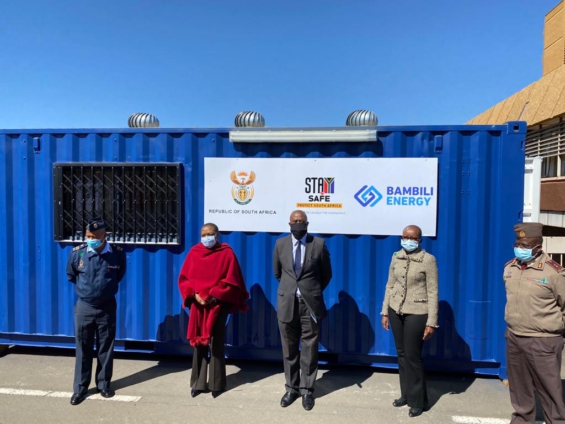
The Department of Science and Innovation (DSI) will on Wednesday, 19 August 2020 unveil seven hydrogen fuel cell systems which are being used as the primary power source for the field hospital established at 1 Military Hospital in Pretoria as part of the government's response to COVID-19.
The project is a public-private partnership between the DSI, the Department of Public Works and Infrastructure (DPWI), the Department of Defence (DoD), local companies Bambili Energy and HyPlat, and international companies PowerCell Sweden.

Horizon Fuel Cell Technologies (Singapore) and Element 1 Corporation (United States). Further contributions, in the form of methanol and hydrogen fuel for the fuel cell units, were also received from Air Products South Africa, Protea Chemicals and Sasol.
Bambili Energy focuses on the hydrogen economy, providing solutions to complement various forms of alternative energy, and is committed to commercialising intellectual property developed through the Hydrogen South Africa (HySA) programme.
The COVID-19 pandemic has highlighted the need to respond with speed and flexibility, particularly in providing high care facilities for those who need them most.
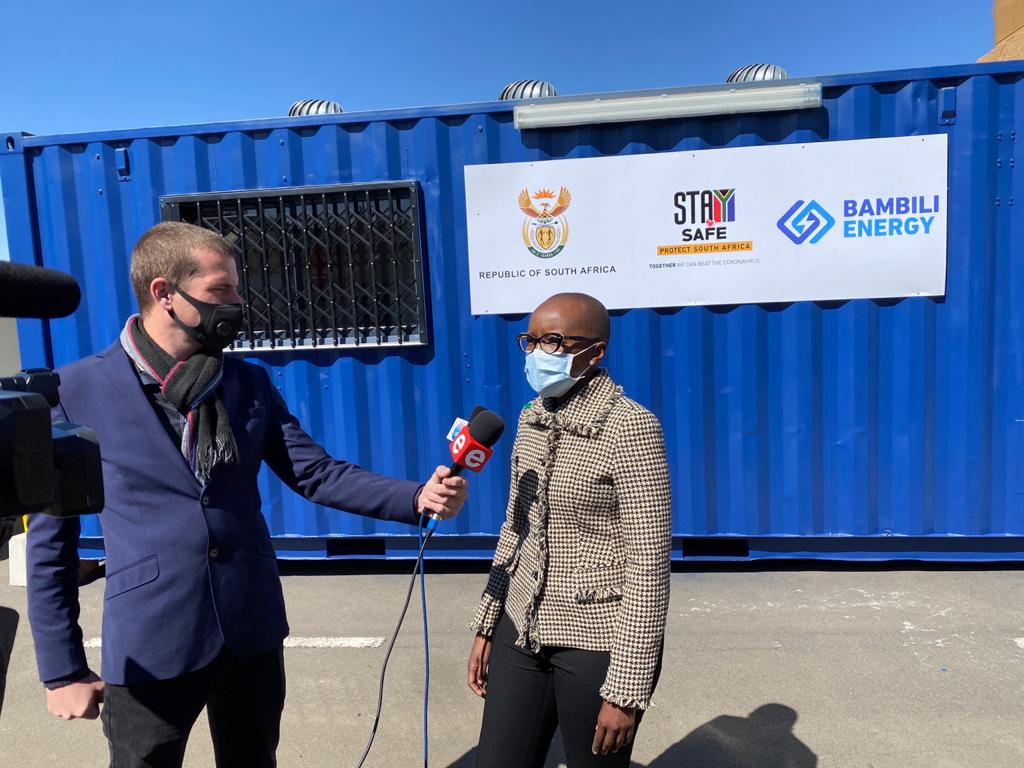
Containerised hydrogen fuel cells can be deployed at short notice to provide a clean source of energy, even when the need is only temporary.
The support provided to 1 Military Hospital will be complemented by hands-on training to ensure that the skills required to operate and manage the fuel cell systems are institutionalised within government.
The first two phases of training will focus on officials from the DoD and DPWI, while the third phase will involve unemployed TVET college graduates with N4 electrical and light and heavy current qualifications.
Hydrogen fuel cell technology is globally recognised for its potential to decarbonise the energy and transport sectors.
Hydrogen fuel cells produce electricity by means of a chemical reaction, using hydrogen as the basic fuel together with platinum-based catalysts.
They are efficient, reliable, safe and quiet, ensuring a non-intrusive standby and primary power solution.
Being modular in nature, they can be deployed rapidly and scaled up easily as the need arises, and their maintenance cost is relatively low.
Latest Stories
-
Tyson Fury dominates Makhmudov, calls out Joshua next
14 minutes -
I have supported highway authority financially to fix roads in my constituency – A Plus
1 hour -
US, Iran fail to reach peace agreement after marathon talks in Pakistan
2 hours -
ECG kicks off Phase Two of transformer upgrades at Lashibi; brief outages expected
2 hours -
Port crises loom as 11,000 drivers threaten four-day strike
3 hours -
A source of excellence across generations – Vice President Opoku-Agyemang lauds Mfantsipim
4 hours -
(Photos) Mfantsipim School launches historic 150th anniversary
4 hours -
Knights and Ladies of Marshall group backs Catholic Bishops’ stance on anti-LGBTQ+
5 hours -
Bright Simons writes: All the Filla in the Ibrahim Mahama/E&P – Gold Fields Saga
6 hours -
Monetise Idiocy In Ghana
6 hours -
The Ghanaian prophet and the mysterious death of his scottish wife Charmain Speirs
7 hours -
Nearly 400 sentenced in Nigeria for links to militant Islamists
7 hours -
Ghana’s recovery supported by gold strength despite global oil price pressures – Standard Bank Research
7 hours -
Methodist Church hails Mfantsipim@150; calls for “fresh consecration” to excellence
7 hours -
‘Excellence is our inheritance’ – Nana Sam Brew-Butler hails Mfantsipim’s 150-year reign in leadership
8 hours