


Audio By Carbonatix
A study conducted by Rivia, a network of tech-driven primary care clinics, from data collected in 2024, has indicated that Ghana is experiencing a rise in "silent" killer diseases.
According to the report, these illnesses, which develop insidiously, are taking a significant toll on individuals and the healthcare system.
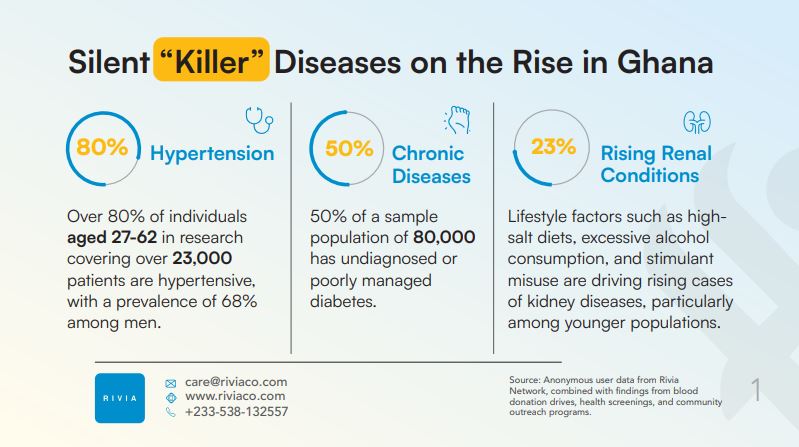
The findings from Rivia provide an alarming glimpse into the state of health in Ghana. The study revealed that over 80 per cent of individuals aged 27-62 in a sample of 23,000 patients are hypertensive, with men showing a 68 per cent prevalence.
It also found that 50 per cent of a sample population of 80,000 have undiagnosed or poorly managed diabetes.
Additionally, lifestyle factors such as high-salt diets, excessive alcohol consumption, and stimulant misuse have contributed to rising cases of kidney disease, particularly among younger populations, now affecting 23 per cent of them.
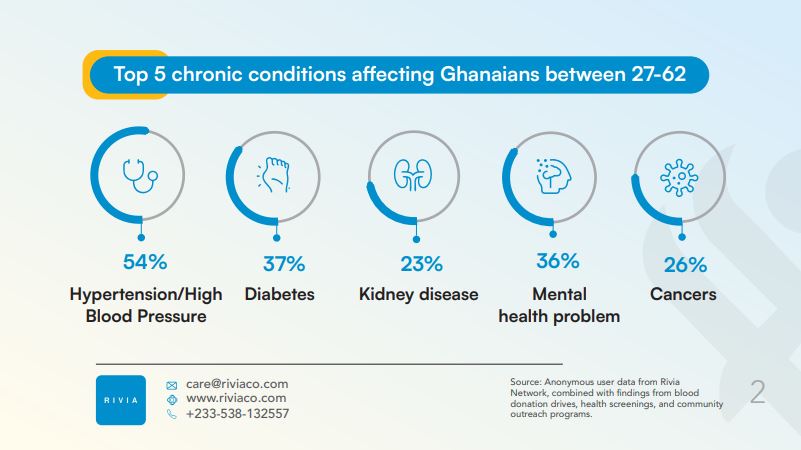
Among Ghanaians aged 27-62, the research indicated that the top five chronic conditions include hypertension, diabetes, kidney disease, mental health issues, and cancers.
To address this public health challenge, it stated that it requires a multi-faceted approach, encompassing government policies, workplace wellness initiatives, and preventive healthcare infrastructure.
The report suggested that government policies could play a significant role by offering tax incentives to encourage corporate health programmes and mandating subsidised annual health screenings promoted by companies, unions, and associations.
It also emphasised the need for stricter food labelling laws to reduce salt and sugar intake in processed foods, helping Ghanaians make healthier choices.
Furthermore, workplaces can foster healthier lifestyles by implementing regular health screenings for chronic diseases and offering programmes focused on stress management, mental health support, and physical fitness.
Employee health benefits, including partnerships with providers like RiviaCare, were highlighted as key to improving access to preventive care.
The report also called for mobile health units and the expansion of Community-based Health Planning and Services (CHPS) compounds to serve under-served areas.
Public campaigns to raise awareness about the importance of regular checkups and disease prevention were seen as crucial to empowering individuals to take proactive steps in managing their health.
Additionally, training healthcare workers in chronic disease management will ensure better care and outcomes for patients.
Latest Stories
-
Salah-Mane rivalry renewed in AFCON semi-finals
6 hours -
What does Trump’s foreign policy mean for World Cup?
6 hours -
Carrick confirmed as Man Utd caretaker head coach
7 hours -
CPS & JoyNews to hold public lecture on Ghana’s move to back currency with gold
7 hours -
Africa Education Watch supports calls for review of SHS teachers’ manual, curricula over gender controversy
7 hours -
Ntim Fordjour demands review of SHS teachers’ manual over gender controversy
7 hours -
GCB Bank hands over renovated dormitory to TAMASCO
7 hours -
Nkyinkyim Band to headline Ghana Independence celebration in London
8 hours -
NPP leadership has lost touch with grassroot – Dr Nyaho-Tamekloe
8 hours -
IGP’s Team nabs drug suspects in Tamale swoop; seizes cash, narcotics
8 hours -
NaCCA revises teacher manual, withdraws ‘gender definition’ content deemed contrary to Ghanaian values
8 hours -
Ntim Fordjour condemns gov’t over gender definition in curriculum
9 hours -
NPP must develop thick skin for criticism – Dr Asah-Asante
9 hours -
Auditor-General raises alarm over 2,000+ weapon interceptions at airports
9 hours -
Motorists lament years of faulty traffic lights at Poku Transport Junction
9 hours