

Audio By Carbonatix
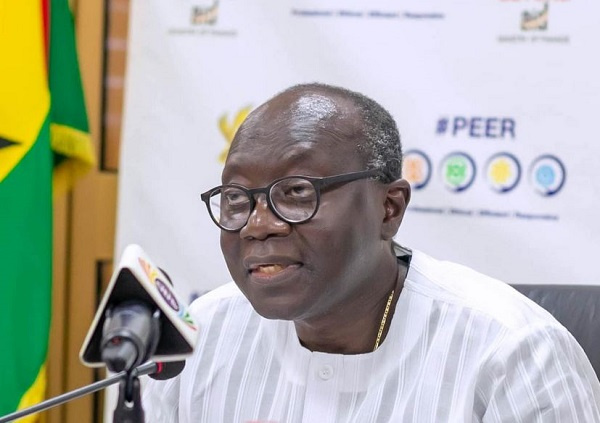
The Finance Minister, Ken Ofori-Atta, is optimistic that the board of the International Monetary Fund (IMF) would approve the second tranche of the country’s deal with the Fund.
Speaking on the business edition of JoyNews’ PM Express, the Minister said he has engaged external creditors who have, in turn, given him positive assurances about the fate of Ghana’s debt restructuring programme in the coming weeks.
It is on the back of these, that Mr Ofori-Atta remains hopeful that the country would successfully get the Fund’s Board to approve the second tranche of its financial support. The IMF Board is expected to meet in November 2023, to consider the second tranche of $600 million for Ghana as part of the Fund-support programme.
“My deep sense is that we will get whatever is appropriate for the Fund Board to be able to make their decision in November. I am confident about it. And yes, we did meet with the officials from Paris Club and there was pretty positive assurance.
“I also had the opportunity to meet the Governor of the PPOC of China which is their central bank and his assurances were also very positive. So really, I am confident that we would get to the Board and it will approve our next tranche,” he told George Wiafe on Thursday.
Ghana is eagerly anticipating the arrival of its second tranche of financial support from the IMF. However, the country faces a hurdle as it is mandated to restructure its external debt as a prerequisite for the aid package. Failure to comply with this requirement could potentially lead to a delay in the disbursement.
Since the Covid-19 pandemic, Ghana has been grappling with the economic fallout which has exacerbated its fiscal challenges and elevated the importance of external financial support.
The IMF's assistance is therefore vital for stabilising the country's economy, addressing budget deficits, and mitigating the adverse effects of the pandemic on citizens.
On Wednesday, May 17, the first tranche – $600 million – of the $3 billion was credited to Ghana’s bank account.
The funds were used for the balance of payment and budget support, as well as to stabilise the foreign exchange rate and control inflation.
Latest Stories
-
Church of Pentecost supports over 2,000 BECE candidates in Obuasi with career guidance seminar
9 minutes -
Brandon Asante and Coventry all but promoted to Premier League despite Sheffield Wednesday draw
31 minutes -
GPL 2025/26: Late Kwartemaa strike downs Hearts in Tema
37 minutes -
Ghana Faces Sierra Leone Moment as Prosecutorial Powers come under strain
47 minutes -
Don’t consume fish or seafood from Tema Shipyard until further notice – FDA warns
52 minutes -
Why volunteering might be Africa’s most underrated career accelerator
58 minutes -
ActionAid Ghana raises concern over gender gaps in Feed Ghana Programme
1 hour -
Windstorm wreaks havoc in Gushegu, displacing nearly 2,000 residents and damaging schools
1 hour -
Friends of Bridget Bonnie Marks her 35th birthday with donation to Kasseh Model Health Centre
2 hours -
From Ekumfi Kokodo to the Pulpit Stage: Essi Donkor’s gospel journey takes shape
2 hours -
Landfilling waste management creates no value, it’s an economic waste
2 hours -
Photos: Speaker Bagbin Commissions MPs constituency office under parliamentary decentralisation programme
3 hours -
Black Stars technical advisor Winfried Schäfer sacked as GFA shakes up backroom staff
3 hours -
Wenchi water project almost complete, critical to gov’t agenda – GWL MD
3 hours -
Anti-LGBTQ+ bill not part of government’s legislative agenda – Inusah Fuseini
3 hours