

Audio By Carbonatix
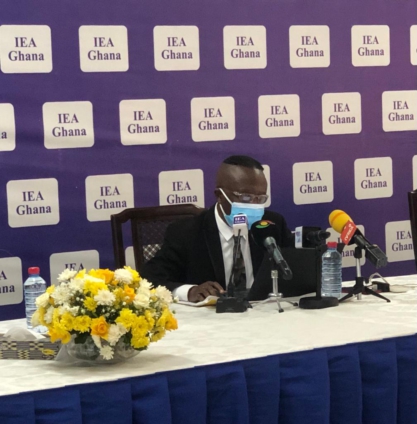
The Institute of Economic Affairs is projecting a 200 basis points increase in the policy rate (PR) of the Bank of Ghana (BoG) to 19.0%.
This, it believes, will help narrow the gap with the rising inflation and also ease to some extent the risk of foreign currency outflows.
However, the move will increase the cost of living and doing business because lending rates will go up further, while money supply will reduce.
The MPC will be meeting from tomorrow, May 18th, 2022 till Friday May 20th, 2022 and developments in the economy expected to be announced alongside a decision on the Policy Rate.
The IEA said “going by the principle underlying the Inflation Targeting (IT) with current inflation and future outlook being so elevated, the immediate response by the BoG should be to tighten monetary policy by raising the PR.”
“The obvious question is by how much should the BoG raise the PR? The factors that should determine the PR adjustment include the wide gap between the PR (17.0%) and inflation (23.6%). It cannot take one decision to close this gap, though, given the expected impact on the economy by making credit exorbitantly costly, the policy tightening by major central banks, which increases the risk of foreign currency outflows from developing and emerging market economies and which could put renewed pressure on the cedi”, it argued.
Furthermore, the policy and economic think tank said “taking all of these factors together, it may be surmised that the PR should be raised by another 200 basis points to 19.0%. This will help narrow the gap with inflation and also ease to some extent the risk of foreign currency outflows.”
The adjustment, it said, will also provide some assurance to the markets that the BoG is committed to addressing the resurging inflation, adding, “anything less than this may be interpreted as a weak response, which may be concerning to the markets.”
The IEA also stressed that the Central Bank must buttress its decision with an effective communication strategy to make its intentions clear so that it can rally the markets behind the decision.
Comprehensive approach other than Inflation Targeting framework needed
The IEA called for a more comprehensive approach going beyond the Inflation Targeting to stem inflation.
“It is known, however, that in the Ghanaian context, the transmission of the PR is constrained by an under-developed and less-responsive financial sector. But even more important is the fact that Ghana has a long history of inflation with strong supply or cost undercurrents, in particular, food, fuel and the exchange rate. Therefore, as an essentially demand-management tool, the IT framework is less suited to Ghana’s type of inflation. It is more suited to mature economies where inflation tends to be more demand-driven.”
BoG urged to engage government to target directly key sources of inflation pressures
The IEA also urged the Bank of Ghana to engage with government and relevant agencies to target directly the key sources of inflation pressures, in particular, fuel, food, transport and the exchange rate. It also wants the country to mitigate oil price shocks that may occur due to geopolitical developments. “This should require that BOST maintain strategic oil reserves that could be released to cushion pump prices in the midst of shocks.”
It also wants government to use some of its windfall earnings from higher oil prices to cushion domestic prices and also suspend or reduce some of the numerous fuel taxes and levies amidst oil shocks.
For food, it said it’s necessary to increase production and ensure storage and preservation of excess produce especially during the peak seasons so that buffer stocks may be released to cushion prices amidst shocks and during the lean seasons.
For transport, it called for improvement in the public transport system and the availability of intra- and inter-city public transport. The public transport system should be subsidised to cushion the masses that mainly use it.
For the exchange rate, it pointed out that it was necessary to leverage capacities and opportunities for earning foreign exchange, including through greater processing of export commodities and increasing earnings from natural resources.
Latest Stories
-
Ghanaian Commonwealth Youth Leader meets King Charles III, pushes for youth economic empowerment
23 minutes -
Former President Akufo-Addo takes on new role in Anglican Church
1 hour -
MTN Ghana steps up sensitization on efficient and safe data usage
1 hour -
Mfantsipim celebrates 150 Years with historic launch of anniversary songs and commemorative cloth
1 hour -
Korle-Bu doctors accuse management of staging ‘perfect’ emergency ward for Health Minister’s visit
2 hours -
Ghana’s historic proposal for a UN Resolution on Transatlantic Slave Trade as the gravest crime against humanity. Revisiting the depth beneath our silence
2 hours -
Korle-Bu accident and emergency centre under strain as doctors warn of legal and safety risks
2 hours -
Ghana pushes landmark UN Resolution on Reparations for slave trade
2 hours -
NPP’s poll decline ‘startling’ – Prof Nortey calls for introspection
2 hours -
Consumers to feel impact of Burkina Faso tomato ban – Peasant Farmers Association
2 hours -
ICGC hosts DOULOS Conference 2026 to raise enduring church leaders
2 hours -
NPP support declining, NDC gaining ground – Global Info Analytics poll
2 hours -
Activist proposes strategic reforms to cushion national growth aspirations
2 hours -
LCF leads successful prison outreach at Nsawam, extends hope to inmates
3 hours -
Ibrahim Mahama announces legal action against Black Maria special operations team over alleged assault in Tamale
3 hours