

Audio By Carbonatix
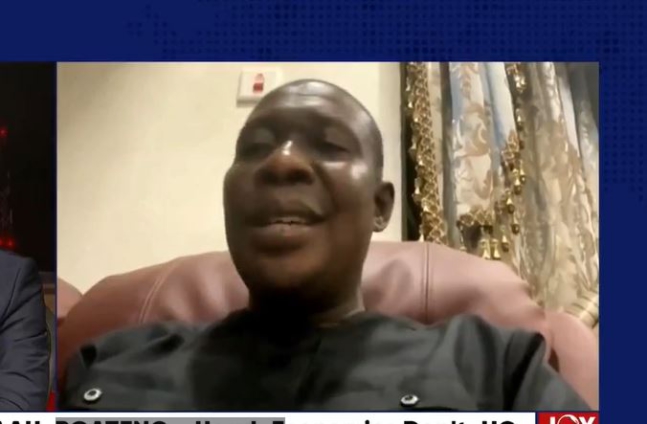
Head of Economics Department at the University of Ghana, William Baah-Boateng has commended the Bank of Ghana (BoG) for its swift approach to increase the policy rate by 300 basis points to 22%, after an Emergency Monetary Policy Committee.
Speaking in an interview on JoyNews’ Business Edition of PM Express, Dr. Baah-Boateng indicated that had the BoG not intervened, the country’s inflation rate would have been 100%.
“In economics, there is something we call counterfactual so if the problem is coming and they don’t even step in at all, perhaps we would have been in the 100’s,” he said.
Currently, year-on-year inflation shot up to 31% in July 2022, latest data from the Ghana Statistical Service (GSS) has revealed.
Dr. Baah-Boateng's comments are in relation to the decision by the Bank of Ghana to increase the policy rate by 300 basis points to 22%, after an Emergency Monetary Policy Committee meeting on August 17, 2022.
The move is part of measures to address the risks to the inflation outlook.
However, the cost of borrowing is expected to go up significantly, and consequently, increase cost of living and doing business.
In the meantime, a Partner at Deloitte Ghana, Yaw Lartey has expressed worry about the increased policy rate, saying it will not address the rising inflation rate, but rather shoot up cost of borrowing.
According to him, though the monetary policy rate historically has helped to manage inflation, the current economic situation proves otherwise
Dr Baah-Boateng, in response, stated that, since the measures have been implemented “and we are here, it will be very difficult for you to measure whether indeed the policy is not working.”
For this reason, he urged that comments that the policy is not working should be put in perspective.
He explained that fiscal policy and monetary policy are supposed to play complementary roles, adding that both cannot stand alone therefore there is a need to observe where the inflation is coming from.
He observed that the inflation is coming from the supply side therefore Central bank has no role to play.
According to him, the exchange rate is the bigger issue driving inflation in the country.
“You can look at inflation from January to now the moment the exchange rate depreciates, you know it reflects on fuel prices, fuel prices become cost push. So it means that there is some kind of demand element there moving into supply and therefore you cannot have the fiscal and monetary standing alone, they need to play a complementary role,” he stressed.
Latest Stories
-
A source of excellence across generations – Vice President Opoku-Agyemang lauds Mfantsipim
1 hour -
(Photos) Mfantsipim School launches historic 150th anniversary
1 hour -
Knights and Ladies of Marshall group backs Catholic Bishops’ stance on anti-LGBTQ+
2 hours -
Bright Simons writes: All the Filla in the Ibrahim Mahama/E&P – Gold Fields Saga
3 hours -
Monetise Idiocy In Ghana
3 hours -
The Ghanaian prophet and the mysterious death of his scottish wife Charmain Speirs
4 hours -
Nearly 400 sentenced in Nigeria for links to militant Islamists
4 hours -
Ghana’s recovery supported by gold strength despite global oil price pressures – Standard Bank Research
4 hours -
Methodist Church hails Mfantsipim@150; calls for “fresh consecration” to excellence
4 hours -
‘Excellence is our inheritance’ – Nana Sam Brew-Butler hails Mfantsipim’s 150-year reign in leadership
5 hours -
Kwaku Azar writes: A-G vs OSP
5 hours -
Mfantsipim–Adisadel rivalry built excellence, not division – Sam Jonah
5 hours -
Vice President launches Mfantsipim’s 150 years of shaping Ghana’s greatest mind
5 hours -
I assure Otumfuo, Mahama will join him to commission KNUST Teaching Hospital by end of this year – Haruna Iddrisu
6 hours -
Barcelona dominate derby to extend La Liga lead
6 hours