

Audio By Carbonatix
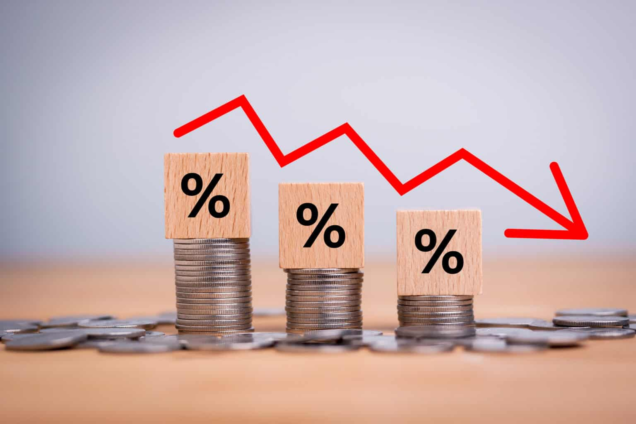
Ghana's inflation rate fell further to 3.3 per cent in February 2026, down from 3.8 per cent in January and a dramatic decline from 23.1 per cent recorded in the same month last year, the Ghana Statistical Service (GSS) has announced.
The latest Consumer Price Index (CPI) data, released by the GSS, shows the country's general price level continues to ease, offering some relief to Ghanaian households who have endured years of high living costs.
"The February figure marks the 14th consecutive decline in year-on-year inflation since January 2025 and represents the lowest rate recorded since the CPI rebasing in 2021," the GSS stated in its report.
In practical terms, the CPI stood at 264.4 in February 2026, compared to 255.9 in February 2025 — a year-on-year increase of 3.3 per cent.
On a month-on-month basis, prices rose by just 0.8 per cent between January and February, suggesting the pace of price increases remains modest.
Overall, inflation has fallen by 19.8 percentage points over the past year — a significant turnaround for an economy that was grappling with one of its worst cost-of-living crises in recent memory.
One of the clearest signs of easing pressure came from the food basket. Food inflation — which covers food and non-alcoholic beverages and carries a weight of 42.7 per cent in the CPI — dropped sharply to 2.4 per cent in February from 3.9 per cent in January, a 1.5 percentage point decline. Month-on-month, food prices rose by just 0.2 per cent.
Non-food inflation, however, crept slightly higher, rising to 4.0 per cent in February from 3.8 per cent in January.
On a month-on-month basis, non-food prices rose by 1.2 per cent, reversing the -0.5 per cent recorded in January.
Prices of imported goods showed notable stability. Year-on-year inflation for imported items eased significantly to 0.6 per cent in February from 2.0 per cent in January.
On a month-on-month basis, imported goods actually recorded a marginal decline of -0.02 percent — suggesting the cedi's relative stability in recent months may be filtering through to consumer prices.
Locally produced goods, by contrast, recorded year-on-year inflation of 4.5 per cent in February, marginally higher than the 4.4 per cent in January, with a month-on-month reading of 1.2 per cent.
The inflation story was uneven across the country. The Savannah Region recorded the lowest inflation rate at -2.6 percent, meaning prices there were actually lower than a year ago. The North East Region, on the other hand, recorded the highest rate at 8.9 per cent — more than double the national average.
The sustained disinflation trend is expected to influence the Bank of Ghana's upcoming monetary policy decisions.
Latest Stories
-
Photos: Mahama commissions 85-bed Police Hospital ward, donates two ambulances
5 minutes -
GTEC directs Ghana’s public universities to reopen by October 16 and begin lectures on October 19
6 minutes -
Star Oil donates GH¢1million towards construction of new CID facility
10 minutes -
Court hands Adjetey Sowah, two others lifetime bans after Amputee Football legal dispute
19 minutes -
NDC appoints Julius Kwame Anthony as a Deputy Communications Director
20 minutes -
Ghana repatriates 120 Nigerians rescued from suspected cybercrime centres
24 minutes -
NPP rejects Emelia Agbenyo’s appointment as Deputy EC Chair, demands withdrawal
29 minutes -
EOCO grants Suame MP John Darko enquiry bail in GH¢27m SIC investigation
32 minutes -
NPP cannot question EC appointment after appointing own people to Commission – Kwakye Ofosu
38 minutes -
BoG deepens public trust with regional stakeholder forum in Techiman
47 minutes -
‘We have turned the tide’ – Ato Forson says Ghana is ready to take off
52 minutes -
Police arrest man captured in viral video assaulting wife in Agona Nkwanta
54 minutes -
KATH Mother and Baby Unit construction stalled for 14 months over unpaid contractor arrears
1 hour -
Government wanted to ‘tilt the balance’ with new EC appointments – Kwakye Ofosu
1 hour -
Angry Tema Community 25 residents threaten to sleep at GWL over water shortage
1 hour