

Audio By Carbonatix
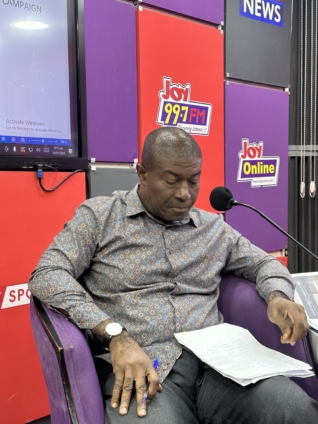
The Chairman of the New Patriotic Party Select Committee on Communications, Nana Akomea, says macroeconomic stability means little to ordinary Ghanaians if it does not translate into improved living conditions.
While government has touted recent gains, including inflation dropping to 3.4 percent, the cedi strengthening to about GH¢11.30 to the dollar, and Ghana’s GDP rising to an estimated $118 billion, Mr Akomea argues these figures do not reflect the daily realities facing most citizens.
Speaking in a yet-to-be-aired interview on PM Express with Evans Mensah, the NPP stalwart challenged the government’s economic narrative, insisting that ordinary people judge the economy by what they can afford, not by macroeconomic indicators.
“Nobody, no electorate eats stability. No electorate eats inflation. It is good to achieve stability in the macro economy. It is good to achieve low inflation figures. It is not the same as the cost of living,” he said.
Mr Akomea argued that although exchange rate stability may be welcomed, its benefits are often cancelled out by rising charges elsewhere in the economy, especially at the ports, where many imported goods enter the country.
He noted that as an import-dependent economy, Ghana’s cost of living is heavily influenced by import-related charges, which are ultimately passed on to consumers.
“So when you have achieved stability in the dollar, but port charges have gone up by 100%, it is that 100% that translates into your pocket and my pocket. Not the stability of the dollar. The importer will pass that cost on to consumers,” he said.
Responding to suggestions that increased duties support revenue mobilisation, Mr Akomea maintained that what matters to citizens is the direct effect on prices.
“When prices go up 50%, it comes to my pocket. Whether it is the right duty or not, it is hitting my pocket directly. That is what I feel, and that is what informs my decision,” he added.
He said while the cedi’s recent appreciation and single-digit inflation may appear positive on paper, voters are more concerned about whether those gains reduce prices and ease the pressure on households.
“What influences the ordinary person is the impact. Once electricity goes up, once prices go up, that is what matters. It is the effect on our lives, not the mere fact that the dollar is stable,” he stated.
Latest Stories
-
St Augustine’s College retain National Investment Quiz title after nail biting grand finale
8 minutes -
Education infrastructure investment will drive Banda’s development – Ahmed Ibrahim
16 minutes -
Teacher unions strike: Gov’t presents fresh proposals as talks end inconclusively
58 minutes -
51,000 teachers’ promotion arrears to be validated for October payment – Education Minister
1 hour -
Kwabena Boamah appointed Board Chair for Impact Investing Ghana
2 hours -
Striking teacher unions to meet Fair Wages and Salaries Commission on October 6
2 hours -
EOCO working with AG to arraign Nana Baffour Awuah before weekend court
2 hours -
Duraplast reassures customers after fire, announces October 5 reopening
2 hours -
Call off strike, gov’t will not renege on promotion arrears pledge – Haruna Iddrisu appeals to teacher unions
2 hours -
Committee set up to validate teachers eligible for 20% deprived-area allowance – Education Minister
2 hours -
Five-member committee to search for new Black Stars coach after Sports Ministry-GFA meeting
3 hours -
Pinktober: Breast cancer survival exceeds 90% when detected early – Breast Society of Ghana
3 hours -
TCDA to adopt Upper West’s MATCO mango farm as northern prototype, issues warning against felling shea trees
3 hours -
‘Fear delegates’ tag: Afoko touts genuineness among delegates ahead of NPP delegates conference
3 hours -
John Boadu: The leader our party needs at this time – Amb. Edward Akwasi Boateng
3 hours