

Audio By Carbonatix
The Hunger Project Ghana has commemorated World Hunger Day 2026 in the Eastern Region, bringing together more than 100 community partners and district leaders to reaffirm their commitment to ending hunger and building self-reliant communities.
Founded by The Hunger Project in 2011, World Hunger Day is observed annually on 28th May to draw global attention to the persistent challenge of hunger and food insecurity.
The day unites individuals, communities, and organisations worldwide around a shared commitment to ending chronic hunger.
This year’s celebration was held at the Asenema Epicenter under the theme, “The End of Hunger Is in Our Own Hands.”
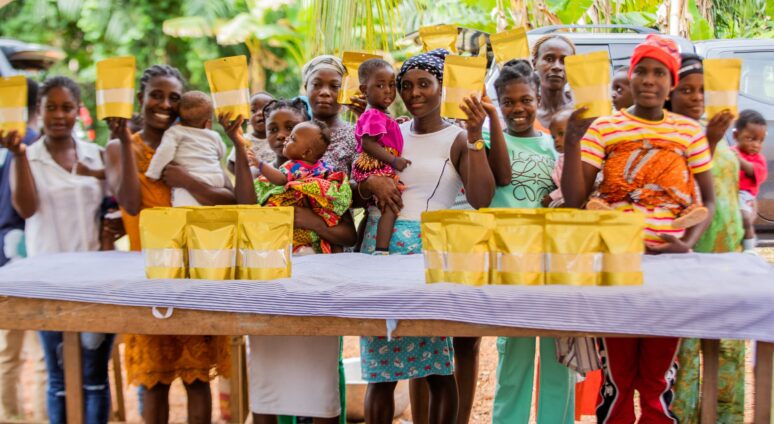
A key highlight of the event was a practical training session on the preparation of Celemix, a nutritious meal made from locally sourced ingredients such as rice, maize, and soybeans.
As a Ready-to-Eat Therapeutic Food (RUTF), Celemix is rich in essential nutrients and can help to address child malnutrition.
The training also sought to create economic opportunities for women by equipping them with a valuable skill that can be developed into a small business.
The theme served as a powerful reminder that communities themselves are at the heart of sustainable solutions to hunger.
While hunger is solvable, it persists because many people, particularly women, continue to face barriers to resources, decision-making, and economic opportunities.
"When communities have the vision, commitment, and opportunity to lead, they create lasting solutions. This World Hunger Day, we are reminded that ending hunger is not only about charity.
"It is about transforming systems, investing in people, and recognising that those closest to the challenge are also closest to the solution," said Mrs Agatha Quayson, Country Leader of The Hunger Project-Ghana.
Globally, an estimated one in twelve people lives with chronic hunger. In Ghana, food insecurity remains a significant challenge.
According to the Ghana Statistical Service, approximately 12.5 million Ghanaians were estimated to be food insecure in 2025, with a national food insecurity prevalence rate of 38 percent.
This means that nearly four out of every ten Ghanaians experience some level of food insecurity, with rural households disproportionately affected.
The Hunger Project Ghana works alongside communities to identify the root causes of hunger and develop locally led solutions that address the systems and barriers that perpetuate it.
By strengthening leadership and building the capacity of women, girls, and men in rural communities, the organisation supports communities to drive their own development and create lasting change.
Latest Stories
-
Glut! Farmers count losses as prices crash, customers happy
22 minutes -
GSA postpones auction of unserviceable vehicles
25 minutes -
Man charged with attempted murder after stabbing
28 minutes -
World Cup visa scandal: Senyo Hosi says issue goes beyond calls for Sports Minister’s resignation
29 minutes -
Yaw Ampofo Ankrah hasn’t taken or received any money to facilitate visas – Lawyer insists
47 minutes -
World Cup visa scandal: Senyo Hosi urges focus on constitutional accountability
48 minutes -
La Beach demolition: Senyo Hosi condemns lack of consultation
59 minutes -
Russian glide bomb attack on Zaporizhzhia kills at least 15 people
1 hour -
Jinapor warns underperforming energy sector CEOs of consequences, says no protection for failure
1 hour -
Fire destroys head of tipper truck on Lower Volta Bridge
1 hour -
Palmer signs new Chelsea contract until 2034
1 hour -
World Cup visa scandal: Mahama will act on corruption allegations – Abass Nurudeen
1 hour -
Abass Nurudeen accuses Minority of ‘scandal scavenging’ over World Cup visa controversy
1 hour -
US Embassy recognised NSA, GFA and GTA as separate entities for visa applications – Sports Minister’s aide
2 hours -
Only 30% of Ghanaian teachers satisfied with their jobs – CAPCOE data reveals
2 hours