

Audio By Carbonatix
The Chief Executive Officer of the Ghana Investment Promotion Centre (GIPC), Simon Madjie, says the European Union (EU) has invested about US$16.24 billion in Ghana over the past three decades.
According to him, the EU’s investments, recorded between 1994 and May 2026, span 2,236 projects across key sectors, with manufacturing attracting the largest share.
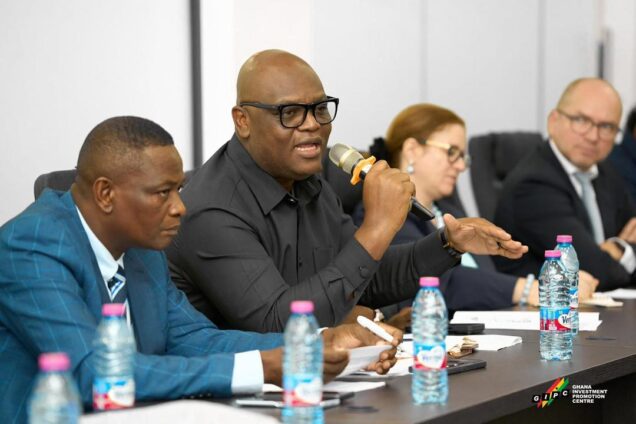
Mr Madjie made this known at the inaugural Ghana–EU Thematic Dialogue on Economic Stabilisation and the Business Environment in Accra.
He said manufacturing alone accounted for over US$8.49 billion, showing a shift towards industrial production and value addition.
According to him, services recorded 804 projects, followed by manufacturing with 456 and general trading with 219. Construction attracted over US$2 billion, while mining recorded about US$406 million.
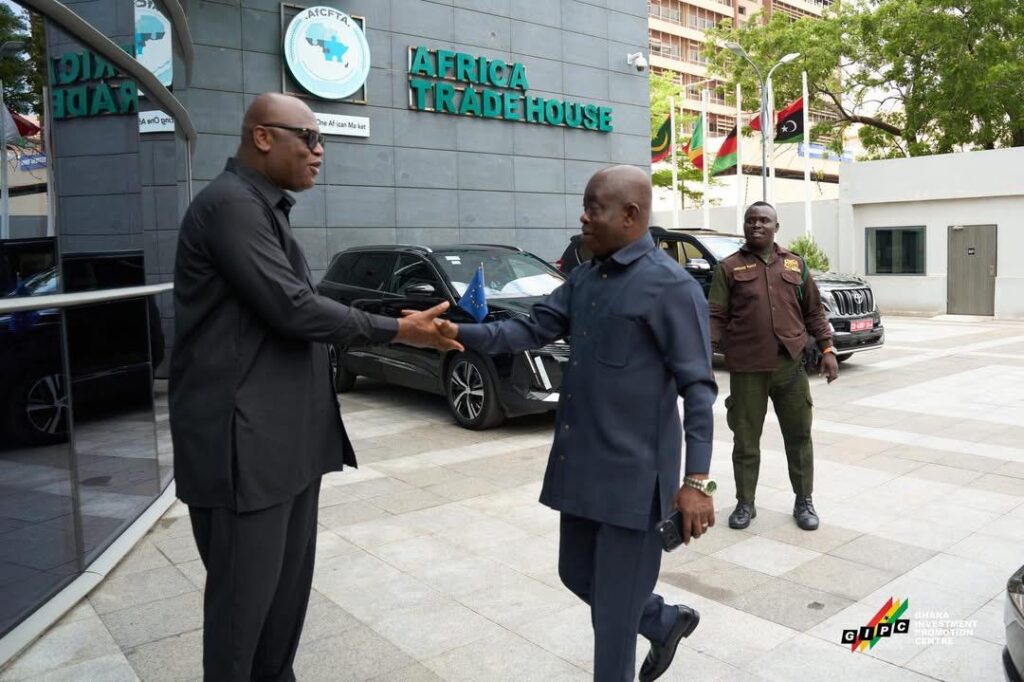
Mr Madjie said the dialogue built on commitments made at the June 2025 EU–Ghana Partnership Dialogue, where both sides agreed to deepen engagement on economic stabilisation and business environment reforms.
He said discussions focused on maximising the Economic Partnership Agreement (EPA) and exploring the proposed Sustainable Investment Facilitation Agreement (SIFA) to enhance legal certainty for investors.
Touching on Ghana’s macroeconomic outlook, he said the country had completed the US$3 billion International Monetary Fund (IMF) Extended Credit Facility programme and had transitioned to a Policy Coordination Instrument to support fiscal discipline.
He also cited the upgrade of Ghana’s sovereign credit rating by Fitch Ratings to “B” with a positive outlook in May 2026 as a sign of improving investor confidence.
Mr Madjie said government reforms, including the Ghana Investment Promotion Authority Bill, 2026, the Value for Money Office Act, 2026, and amendments to the Companies Act, 2019 (Act 992), were strengthening the country’s investment environment.
He said the GIPC was also shifting focus from investment promotion alone to investment retention and expansion through improved aftercare services, faster approvals, and a structured investor grievance mechanism.
The EU Ambassador to Ghana, Rune Skinnebach, said the EU remains Ghana’s largest investor, with Foreign Direct Investment (FDI) stock at €4.9 billion in 2025.
He said in 2025, the EU imported €3.7 billion from Ghana, mostly cocoa, while exporting €3.3 billion.
The German Ambassador, Frederick Landshoft, described Ghana as a “gateway to West Africa” and reaffirmed Europe’s partnership commitment.
The Deputy Minister for Trade, Agribusiness and Industry, Sampson Ahi, said government aims to transform the economy and expand its productive base.
Latest Stories
-
He entered at eight. He is now 16: Ghana’s children growing up in prayer camps
1 hour -
‘Development must not always begin from Accra’ — Anwelle Foundation launched in Jirapa
1 hour -
PKO trio eye victories at Odwira Festival
4 hours -
346 Ghana Navy recruits pass out after 26 weeks of intensive training
4 hours -
Newsfile to discuss EOCO-MP arrest, drug trafficking, speech arrests and $235m water debt
4 hours -
JoyNews gets results as listeners raise GH¢40,000 to help 17-year-old student with cerebral palsy attend SHS
5 hours -
Vice President calls for stronger local pharmaceutical production to reduce medicine imports
5 hours -
The brewing tension at KNUST; Beware the Ides of October….
5 hours -
Health Ministry moves to integrate traditional medicine into mainstream healthcare
6 hours -
550 pupils in Kintampo South get educational lifeline as ‘Seeds of Hope’ reaches farming communities
6 hours -
Opoku Mensah urges Christian Council, House of Chiefs to speak up on democratic freedoms
6 hours -
Teacher unions’ strike: Minority demands immediate payment of teacher arrears, 20% deprived area allowance
6 hours -
The Accra-Kumasi Expressway: Building it right
7 hours -
Beyond gold exports: Building value and economic resilience from Ghana’s gold
7 hours -
2027 AFCONQ: Ghana under pressure as Gambia beat Somalia 2-1
7 hours