

Audio By Carbonatix
There is a Better way to help MPs.
The District Assemblies Common Fund (DACF) stands as one of the most significant pillars of Ghana’s Fourth Republic, designed specifically to ensure that development is not an administrative favour but a constitutional right for local government.
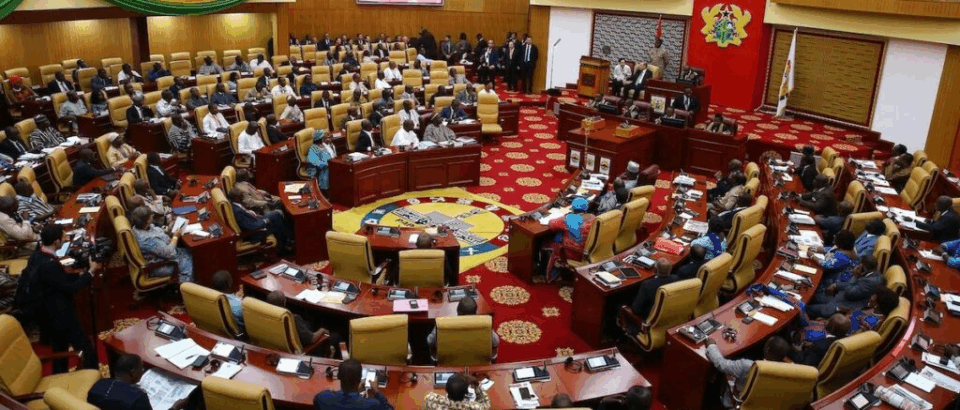
Yet, an enduring and increasingly contentious practice persists: the direct allocation of portions of this fund to Members of Parliament (MPs). While often defended as a necessary tool for constituency development, a closer look at the 1992 Constitution and the mechanics of this MP’s Share reveals a profound tension between political convenience and constitutional fidelity.
The legal foundation for the DACF is found in Article 252 of the 1992 Constitution of the Republic of Ghana, which mandates that at least five percent of national revenue be "distributed among the District Assemblies". The language is remarkably singular; it does not mention MPs, central agencies, or statutory bodies as beneficiaries.
As noted in the 1992 Constitution, if the framers had intended to create a parallel development channel for legislators, they would have explicitly stated so. This textual clarity is reinforced by the Local Governance Act, 2016 (Act 936), which designates Assemblies and not individual legislators as the highest political and administrative authorities at the local level.
By allowing MPs to control a share of these funds, the state effectively blurs the line between the legislature’s role of oversight and the executive’s role of implementation.
The historical roots of this practice further complicate its legitimacy. The MP’s share was not born of a constitutional amendment, but rather a political compromise in 1997.
According to former Minister for Local Government Kwamena Ahwoi, the allocation was established only after parliamentary leaders threatened to block the approval of the DACF formula entirely if they were not given a share. This political bargaining origin suggests that the share was a concession to legislative power rather than a move to strengthen decentralization.
Furthermore, as Suhuyini, Antwi-Boasiako, and Abdul-Rashid (2023) highlight, this has created a "perception meets practice" gap where many citizens wrongly believe these funds are deposited into MPs' personal accounts, leading to a culture where constituents chase their MPs for individual financial favours and developmental project rather than their local government and MMDCEs.
From a practical standpoint, the current disbursement process is an administrative labyrinth that often undermines the very Assemblies the fund was meant to empower. While MPs clarify that they are not signatories to the accounts and must request funds through the District Assembly’s internal processes, the reality remains that they exercise significant discretionary power over project selection.
This creates ambiguity in accountability, where it becomes unclear if the Assembly is truly in charge of its own development planning or merely serving as a conduit for the MP’s political agenda. When MPs become implementers, their ability to exercise dispassionate oversight over local government spending, which is their primary constitutional duty is inherently compromised.
The path toward reform requires a disciplined return to the original institutional design of the 1992 Constitution. A legitimate way forward would involve allocating 100% of DACF resources strictly to the Metropolitan, Municipal, and District Assemblies (MMDAs), as Article 252 requires.
In this reformed model, MPs would maintain their vital role as advocates by proposing and sponsoring projects that must be integrated into the Assembly’s approved medium-term development plans.
This ensures that all projects are executed through formal Assembly structures with transparent reporting, preserving the MP's political responsiveness without sacrificing constitutional integrity.
Ultimately, the continued practice of direct allocations to Parliamentarians raises a question that Ghana can no longer ignore: is the MP’s Share a necessary evil of political reality, or a quiet departure from the supreme law of the land? In a constitutional democracy, clarity and adherence to the rule of law are the foundations of legitimacy.
Reforming the DACF is not about diminishing the role of the MP, but about ensuring that the pillars of decentralization are strong enough to support the weight of local development for generations to come.
Latest Stories
-
I assure Otumfuo, Mahama will join him to commission KNUST Teaching Hospital by end of this year – Haruna Iddrisu
40 minutes -
Gov’t to roll out free special education for persons with disabilities from July 1 – Education Minister
1 hour -
“We used it to test our officiating officials’ readiness” – Bawah Fuseini after CAA Athletics event
1 hour -
Volleyball emerges as Ghana’s fastest rising sport
2 hours -
National Sports Fund needs strong leadership from the top – Administrator David Wuaku
2 hours -
JoySports Exclusive: Steve McLaren in talks with GFA after expressing interest in Black Stars job
2 hours -
Fire guts auto parts warehouse at Bubuashie, one fire officer injured
2 hours -
I owe my victory to coach Ofori Asare – Allotey after winning WBA Africa Gold Super Flyweight belt
2 hours -
Church of Pentecost supports over 2,000 BECE candidates in Obuasi with career guidance seminar
4 hours -
Brandon Asante and Coventry all but promoted to Premier League despite Sheffield Wednesday draw
4 hours -
GPL 2025/26: Late Kwartemaa strike downs Hearts in Tema
4 hours -
Ghana Faces Sierra Leone Moment as Prosecutorial Powers come under strain
4 hours -
Don’t consume fish or seafood from Tema Shipyard until further notice – FDA warns
4 hours -
Why volunteering might be Africa’s most underrated career accelerator
5 hours -
ActionAid Ghana raises concern over gender gaps in Feed Ghana Programme
5 hours