

Audio By Carbonatix
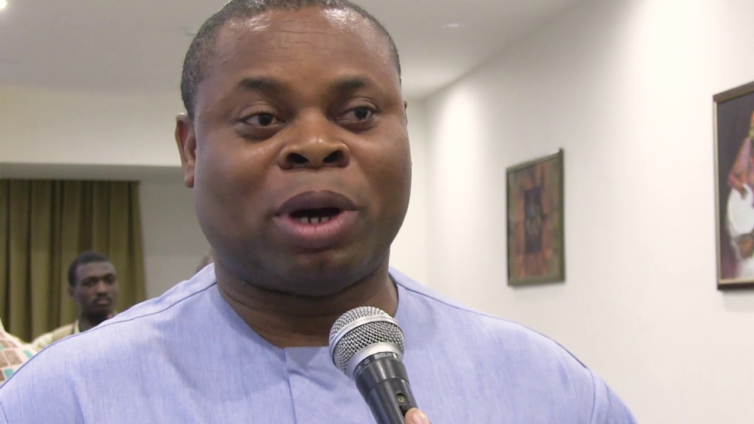
The conviction and sentencing of eight men for their role in violent disturbances during the recent Ablekuma North parliamentary by-election have drawn criticism from Franklin Cudjoe, President of the policy think tank IMANI Africa.
While acknowledging the convictions, Mr Cudjoe questioned whether the punishments are severe enough to serve as a deterrent against future electoral hooliganism in Ghana.
The eight individuals—Mohammed Abubakari, Tijani Mahmudu, Prince Dzakpasu, Anas Mohammed, Mohammed Hamda, Darko Otibu Samuel, Musah Muntari, and Ali Saeed (alias Bomba)—were convicted by an Accra Circuit Court on August 29, 2025.
They pleaded guilty to charges including assault after a video of their actions at the Methodist Church Polling Station went viral.
Each of the convicted men was ordered to pay a fine of 500 penalty units, equivalent to GH¢6,000, or serve a prison sentence of 24 months in default.
The incident involved an unprovoked attack on former Minister of State Hawa Mavis Koomson, NPP Deputy Organiser Chris Lloyd Nii Kwei, and a trader, Majeed Mohammed Saana, who were monitoring the by-election re-run.
Speaking in an interview on Channel One on Saturday, August 30, Mr Cudjoe expressed his discontent with the court's decision.
“I am not too sure and happy about the sentencing in the case of Ablekuma. I think they should have been punished a lot more. So that people are deterred from getting involved in acts of violence and electoral hooliganism,” he stated.
Mr Cudjoe’s comments resonate with a growing public concern about the persistent issue of electoral violence in Ghana.
The country has a history of by-elections marred by clashes and intimidation, with notable examples including the Ayawaso West Wuogon by-election in 2019, where masked men on motorbikes attacked civilians and political figures, and the Atiwa by-election in 2010, which was also plagued by violence.
Critics of the sentences argue that the fines and relatively short prison terms fail to reflect the seriousness of the crime, particularly given the potential for electoral violence to destabilise a nation's democratic process.
The lack of severe punishment, according to these critics, might encourage politically-motivated violence rather than prevent it.
The sentences have reopened the national conversation on how Ghana can effectively address and curb election-related violence.
While the convictions are a step in the right direction for holding perpetrators accountable, the debate now centres on whether the punishment fits the crime and if the judiciary's approach is a sufficient deterrent.
Latest Stories
-
Explosion reported outside US embassy in Oslo, police say
3 hours -
Trump accuses UK PM of seeking to ‘join wars after we’ve already won’
3 hours -
See the areas that will be affected by ECG’s planned maintenance today, March 8
3 hours -
First Lady champions ‘Give to Gain’ spirit for International Women’s Day
3 hours -
Ghana@69: Ghana mission in Canada promotes investments and partnerships
4 hours -
Lebanon condemns ‘grave breach’ as missiles strike Ghanaian UN base
4 hours -
Franklin Cudjoe demands urgent TOR overhaul as Middle East crisis threatens fuel security
4 hours -
10 injured in three-vehicle crash on Konongo–Kumasi road
5 hours -
UK aircraft carrier given five days to be ready to deploy
5 hours -
Ghana to replicate digital innovation success in Malawi
5 hours -
Iranian ambassador warns UK to be ‘very careful’ about further involvement in war
5 hours -
She Gives: The ripple effect of women who choose to give
5 hours -
Nadowli-Kaleo District observes 69th Independence Day with cultural exhibition and academic awards
6 hours -
Chambas Team of Red Alert, Narcotics Commission join forces to combat drug abuse
6 hours -
Tano North MCE launches 75 km road project under DRIP initiative
6 hours