

Audio By Carbonatix
The Government must be prepared to take “tough measures” geared towards cutting down expenditure as it engages the International Monetary Fund (IMF) for support.
The measures include reducing the size of government and reviewing some flagship programmes such as the Free SHS Programme to reduce expenditure.
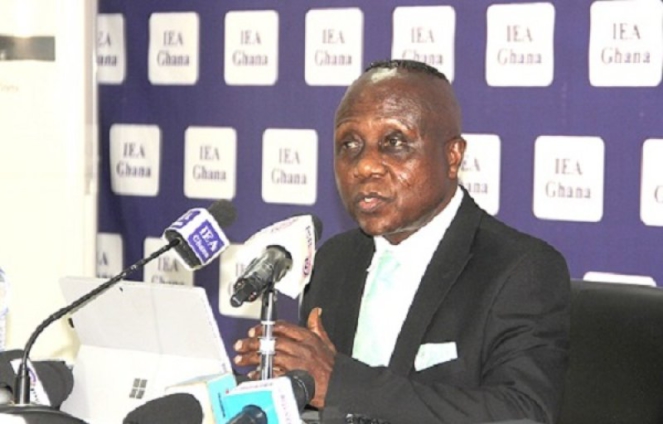
Speaking to selected journalists at a forum dubbed: “Time with IEA Fellows,” Dr John Kwabena Kwakye, the Director of Research at the Institute of Economic Affairs (IEA), said the IMF Programme would not achieve its objective of stabilising the economy if the Government failed to cut expenditure and increase revenue.
He said the main goal of the Programme was to provide policy credibility and help to restore confidence in the markets in the short term.
“We have large economic and structural imbalance; IMF will close the budget gap. The Fund will not essentially solve the structural weaknesses in Ghana’s economy.
“…Our authorities ought to negotiate for policies that support long-term growth,” Dr Kwakye said.
Ghana, in July, commenced engagements with the IMF for Balance of Payment support to quicken the country’s economic recovery process.
The first round of discussions between the Government and the IMF ended on Wednesday July 13, 2022.
Experts project that the IMF could disburse as much as $3 billion to Ghana and unlock budget support from other multilateral lenders.
They, however, indicate that the timing of the support would be dependent on the country’s ability to present a credible fiscal reform plan.
Dr Kwakye said Ghana must prepare its own programme and present it to the IMF as part of the negotiations.
He said although the country would not get all that it desired in the negotiations, the indigenous programme would help to make a strong case for the country and quicken the process.
He said one of the key requirements to address the country’s economic challenges was to “enlarge our revenue envelop” and take drastic measures to reduce expenditure.
With respect to the Government’s flagship programmes, Dr Kwakye said the Government must focus on policies that were geared towards human capacity development and forego those that would put a strain on its expenditure.
“I don’t see why we can’t touch Free SHS….Let parents who can afford pay part of the cost. Policies that do not focus on human capacity development can be phased out,” Dr Kwakye said.
He also urged the Government to create an enabling environment for the private sector to grow and create employment.
“There are a lot of rigidities in our expenditure. Public sector compensations are huge. The public sector needs to be downsized to be more productive so that we can remunerate them better,” Dr Kwakye added.
Latest Stories
-
Ghana hosts high-level African climate strategy meeting ahead of COP31 and COP32
16 minutes -
Today’s Front pages : Tuesday, March 31, 2026
31 minutes -
President Mahama welcomes Zimbabwe’s Mnangagwa for three-day state visit
37 minutes -
Dr Anthony Adjiepong’s Pharmatrust Pharmacy receives top recognition at UG’s White Coat ceremony
50 minutes -
OMCs increase in fuel prices at pumps: GOIL sells petrol at GH¢13.30 and diesel GH¢17.10
1 hour -
Gender Ministry convenes Equity Committee meeting, commissions secretariat to strengthen coordination
2 hours -
Aggie Asiimwe Konde: Soil is Africa’s hidden growth asset
2 hours -
Fiscal slippage could weigh on Ghana’s credit rating – S&P warns
2 hours -
Gender Ministry reviews Anti-Trafficking Action Plan to strengthen implementation
2 hours -
Fidelity Bank supports UG’s ‘One Student, One Laptop’ initiative
2 hours -
Ellembelle MP donates 1,000 set of furniture to KIMTECK
3 hours -
We’re focused on basic needs, not Anti-LGBTQ Bill – Mahama
3 hours -
Mahama announces April 15 launch for Free Primary Health Care Programme
3 hours -
Government pushes scaled investment in women entrepreneurs at Accra Summit
3 hours -
Gov’t sets 12%–12.5% guidance for 7-year bond as market re-entry gains momentum
3 hours