

Audio By Carbonatix
A development economist has advised the government to tread cautiously in its bid to impose restrictions on the import of certain products.
Prof. Ebo Turkson insists that as the government works to finalize this controversial legislative instrument, many factors must be considered to avoid leaving negative repercussions on the country.
The associate professor made these comments on Joy FM's Super Morning Show on Wednesday, November 29, 2023.
“We should be careful we don't come up with something that is going to be costly to Ghana, and we'll have no potential benefits that we foresee, apart from the fact that those who have the licenses will make much more money and know what will happen if they make that money,” he said.
For him, the employment of adequate data in the roll-up process will be crucial in ensuring a well-targeted policy.
While admitting that the policy could accelerate demand for local goods, Prof Turkson does not believe it will be a walk in the park.
"I'm not saying we shouldn't restrict, but we should use better ways of doing this. And it should be informed by data. And it should be a gradual process of assessing the domestic production capacity, the demand, the shortfall, and how we restrict using, for instance, a central bank..." he added.
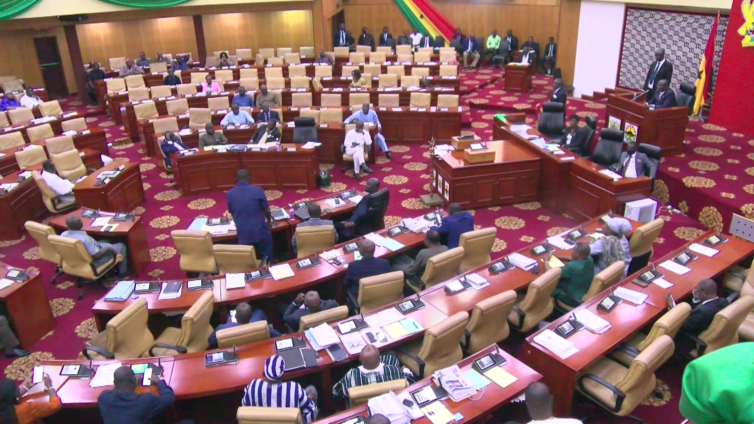
Already, six business associations have submitted a petition to Parliament urging the House to reject the bill proposed by the government through the Ministry of Trade and Industry.
The Joint Business Consultative Forum, comprising associations such as the Ghana Union of Traders Associations (GUTA), Food and Beverages Association of Ghana (FABAG), Importers and Exporters Association of Ghana, Ghana Institute of Freight Forwarders (GIFF), Chamber of Automobile Dealership Ghana (CADEG), and Ghana National Chamber of Commerce and Industry (GNCCI), argue that the bill if enacted, would have detrimental effects on their businesses.
The petition, dated Sunday, November 26, outlined concerns that the legislation could negatively impact the prices of goods, disrupt the free flow of goods, and potentially harm businesses.
Meanwhile, the President also expresses concerns about the absence of funding for farmers under the Planting for Food and Jobs program in the 2024 budget.
Find full list of 22 items considered for import restriction below:
- Rice
- Guts, bladders and stomach of animals
- Poultry
- Animal and Vegetable Oil
- Margarine
- Fruit Juices
- Soft Drink
- Mineral Water
- Noodles and Pasta
- Ceramic Tiles
- Corrugated Paper and Paper Board
- Mosquito Coil and Insecticides
- Soaps and Detergents
- Motor Cars
- Iron and Steel
- Cement
- Polymers (Plastics and Plastic Products)
- Fish
- Sugar
- Clothing and Apparel
- Biscuits
- Canned Tomatoes
Latest Stories
-
Prudential Life settles GH¢100,000 medical bills under its PRUCares Valentine Experience Initiative
51 minutes -
Wa West Picnic: Peter Lanchene Toobu champions peace, health and unity in landmark celebration
1 hour -
Dr Mensah Market flooded after downpour in Kumasi
1 hour -
Armed men reportedly storm Adjen Kotoku Onion Market amid tensions
2 hours -
Tecco Mensah writes: Why football fans must look beyond statistics
3 hours -
Police recover stolen Honda CR-V in Kumasi within 48 hours
3 hours -
Apetorku Gbodzi 2026 Festival opens in Dagbamete with development focus
4 hours -
President Mahama arrives in Lyon to co-chair One Health Summit
4 hours -
Beverly View Plus Hotel draws crowds amid coastal Easter rush in Volta
4 hours -
Maiden Zongo Festival held in Wa amid calls to tackle drug abuse among the youth
4 hours -
FDA warns of fake HIV test kits on Ghanaian market
5 hours -
Africa urged to build resilient health systems as donor support tightens
5 hours -
Easter gesture: Ablakwa settles medical bills for 85 North Tongu constituents
7 hours -
Africa must harness its population strength—Titus-Glover
7 hours -
Visa-free access doesn’t mean unlimited stay – Lom Ahlijah
7 hours