

Audio By Carbonatix
In my hometown Wusuta, there is an old story the elders tell on quiet evenings. Two hunters once spotted a rare Ewe antelope deep in the forest.
One, driven by excitement, fired his gun without checking the wind, the distance, or even whether his powder was dry. The shot missed, the animal vanished, and the gun misfired, burning his hand. The second hunter simply said, “The forest does not run away.
However, if your hand becomes useless, the forest cannot help you hunt.” That wisdom feels painfully relevant today as Ghana confronts the global race for rare lithium.
The world is running as if chasing that same rare antelope. Countries are scrambling to secure lithium, the mineral that powers electric vehicles, global battery technologies, and the future of renewable energy. But Ghana must resist the pressure to run blindly. Minerals do not expire.
They do not rot. But a bad mining agreement can damage a nation permanently. Mining is a robber industry. Once the resource is taken, it is gone forever, and only the environmental scars remain. Ghana cannot afford to misfire at this moment.
The lithium discovered at Ewoyaa is undeniably valuable, yet the agreement as initially structured hands more than eighty percent control of the resource to foreign companies. Atlantic Lithium through Barari DV Ghana Ltd and Piedmont Lithium dominate the upstream and the pricing dynamics. Ghana holds roughly nineteen percent equity. And here lies the core danger. A nation cannot hope to build industrial sovereignty on ownership this weak, especially not for a mineral as rare and decisive as lithium.
I fully understand the frustration of local residents who are eager for jobs, development, and opportunities. Many feel neglected and are desperate for any project that promises economic activity. Their concerns are genuine, and their hunger for visible progress is legitimate.
But even in our quest to bring life and employment to these communities, the right thing must be done. A rushed agreement may bring quick jobs, but it will leave behind long-term poverty if the nation fails to secure its fair share. We must not give the people temporary relief at the cost of permanent national loss.
Zimbabwe provides a lesson Ghana cannot ignore. They too discovered significant lithium deposits. They too felt the global excitement and the pressure to move quickly. They too hurried into agreements. Today, over ninety percent of Zimbabwe’s lithium fields are controlled by Chinese companies. Zimbabwe earns a meagre five percent royalty, one of the lowest for a strategic mineral on the continent.
They export raw spodumene at three hundred dollars per tonne while China refines it into battery-grade chemicals worth up to twenty thousand dollars per tonne. Their loss was sealed the moment they chose speed over structure. A Zimbabwean miner once lamented, “We have lithium, but lithium does not have us.” Ghana must not repeat that error.
A royalty of ten percent may sound strong until one examines the economics of the lithium value chain. The real wealth is not in digging up the mineral. It is in refining it, processing it, and transforming it into battery chemicals. Without a refinery clause, without mandatory value addition, without a clear national vision that Ewoyaa must not become another raw export site, Ghana will capture little more than crumbs while others feast.
This is why Parliament’s decision to withdraw the agreement for broader consultation was not a delay. It was an act of national protection. Our laws must match our ambitions. Act 703, which fixes royalties at a baseline of five percent, must be modernized. A critical minerals framework must be created. Community safeguards, environmental bonding, downstream processing, and local participation cannot be afterthoughts. They must form the foundation of any lithium agreement.
Lithium mining requires immense water consumption, chemical processing, tailings dams, blasting, and long-term waste management. If Ghana does not insist on rigorous environmental protections, Ewoyaa may become another corridor of polluted rivers, abandoned pits, displaced farmers, and irreversible ecological damage. Mining is irreversible. The mineral never returns, but the destruction does.
Upstream extraction will never transform Ghana. The future lies in downstream capacity, refineries, battery precursor plants, technology partnerships, and local manufacturing. Without this vision, Ghana risks surrendering the industrial future of its children in exchange for short-term revenue controlled by foreign entities.
The world is indeed racing for rare lithium. But Ghana must not mistake global urgency for local wisdom. Our responsibility is not to match the world’s speed but to protect Ghana’s future. We must negotiate with clarity and firmness. We must understand the hopes of communities yearning for jobs, while also guarding the long-term interest of the nation. Because if we misfire now, the wound will outlast the mineral. The forest may remain, but the opportunity will not.
Ghana has one chance to get lithium right. We must walk with intention, not run blindly, into this new mineral frontier.
���������� ������ ������������
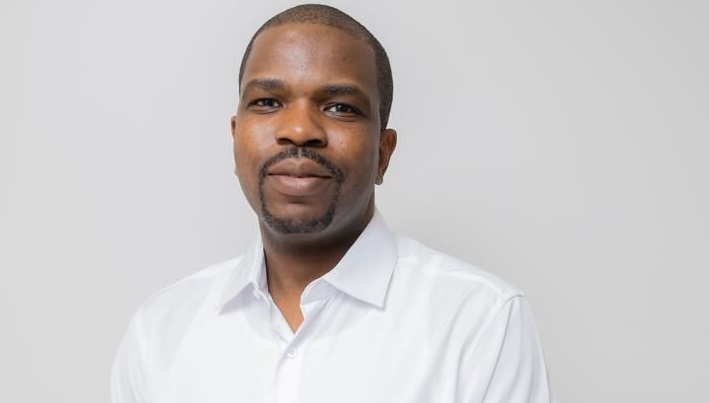
Dr Manaseh M. Mintah is an Afrocentric scholar whose work spans environmental law and justice, African governance, and decolonial thought. Dr Mintah’s scholarship combines rigorous field research with a Pan-African intellectual commitment to restoring African agency, cultural identity, and self-determination in global affairs. He can be reached at mmintah@antioch.edu
Latest Stories
-
Ghana urges travellers to prepare for new EU border system roll-out
9 minutes -
Mahama enforces fuel coupon ban for ministers as cabinet moves to slash fuel taxes
13 minutes -
Task force probes strange fish deaths in Tema
16 minutes -
Neglected traffic lights turn Awoshie–Anyaa highway into deadly hotspot
38 minutes -
EOCO declares Dr Gabriel Tanko Kwamigah-Atokple a fugitive over alleged gold fraud
50 minutes -
GSE records GH¢1.09bn trade in equity market; 10 stocks register gains
1 hour -
Fuel prices: Ghana places 15th in Africa
1 hour -
Africa must look inward: Reframing resilience in a shifting global economy
1 hour -
7 dead, 2 missing after boat capsizes on Volta Lake
2 hours -
Miss Diaspora Ghana 2026 launched to deepen diaspora ties and drive development
2 hours -
US issues travel warnings for Nigeria and São Tomé and Príncipe as security risks mount
2 hours -
Ivan Toney questions refereeing in Saudi Pro League title race after Al-Ahli draw
2 hours -
Angola appoint Aliou Cissé as new head coach
2 hours -
Virtual Security Africa showcases digital security vision at Kwahu Business Forum
2 hours -
EBID strengthens regional integration role amid global economic uncertainty
3 hours