

Audio By Carbonatix
Only a few countries in sub-Saharan Africa can meet their planting material requirements, let alone planting material, to take advantage of regional and global programs.
This is because most of the seed collected from natural stands and remnant trees scattered in farmlands is the main source of planting in many African countries, but there is clearly an insufficient supply of seeds from native species in these countries.
The Executive Secretary of the African Forest Forum, Professor Godwin Kowero, explained that tree seed markets are also limited to smallholder farmers, non-governmental organisations, private forestry companies, and national governments as key stakeholders in the production of seeds and seedlings as well as selling excess germplasm for tree planting.
Germplasm is a seed, plant, or part of a plant used in crop selection, research, and conservation efforts. Plants, seeds, or cultures are germplasm when kept for the purposes of studying, managing, or using the genetic information they possess. Its maintenance involves seed germination testing and viability monitoring. Germplasm samples for storage are multiplied mainly during the post-rainy season to obtain better quality seeds.
Seed stored in a genebank becomes progressively less viable during storage. The gene bank tests the viability of fresh germplasm sample seeds and monitors seed viability at regular intervals based on initial viability, storage type, and cultivation.
These periods vary between eight and 25 years for active collection and 10 to 30 years for basic collection.
Lack of trained staff and lab facilities in many countries, according to Prof Kowero affects the genetic improvement of trees.
"Further, there is a widespread lack of trained personnel and laboratory facilities in many countries leading to inadequate attention being given to the genetic improvement of trees.''
Prof. Kowero also deplores the lack of a quality control system for the production of genetics to distinguish improved seeds from wild seeds.
According to him, many countries have cut investment in forestry research and development in the breeding and deployment of trees, causing the use of low-quality tree germplasm for planting as well as the minimal operation or even closure of national tree seed centres.
"It is, therefore, critical importance that Africa secures the production, distribution, and use of quality germplasm of known origin to safeguard the development of a successful forestry sector," he said.
He indicates that inappropriate germplasm will jeopardise the whole forestry industry.
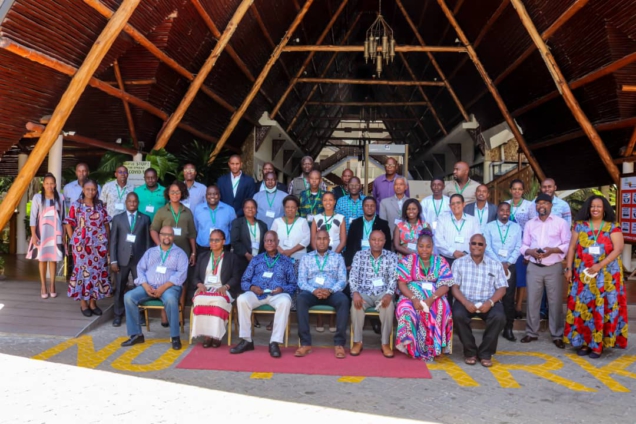
Prof Kowero was speaking at a regional workshop on sharing of information and experiences in Mombasa, Kenya on a theme, “Sharing Information and Experiences on Challenges and Opportunities in Forest Management for Sustainable Development in Africa in the Context of Climate Change.”
Latest Stories
-
Church of Pentecost supports over 2,000 BECE candidates in Obuasi with career guidance seminar
7 minutes -
Brandon Asante and Coventry all but promoted to Premier League despite Sheffield Wednesday draw
29 minutes -
GPL 2025/26: Late Kwartemaa strike downs Hearts in Tema
35 minutes -
Ghana Faces Sierra Leone Moment as Prosecutorial Powers come under strain
45 minutes -
Don’t consume fish or seafood from Tema Shipyard until further notice – FDA warns
50 minutes -
Why volunteering might be Africa’s most underrated career accelerator
56 minutes -
ActionAid Ghana raises concern over gender gaps in Feed Ghana Programme
58 minutes -
Windstorm wreaks havoc in Gushegu, displacing nearly 2,000 residents and damaging schools
1 hour -
Friends of Bridget Bonnie Marks her 35th birthday with donation to Kasseh Model Health Centre
2 hours -
From Ekumfi Kokodo to the Pulpit Stage: Essi Donkor’s gospel journey takes shape
2 hours -
Landfilling waste management creates no value, it’s an economic waste
2 hours -
Photos: Speaker Bagbin Commissions MPs constituency office under parliamentary decentralisation programme
3 hours -
Black Stars technical advisor Winfried Schäfer sacked as GFA shakes up backroom staff
3 hours -
Wenchi water project almost complete, critical to gov’t agenda – GWL MD
3 hours -
Anti-LGBTQ+ bill not part of government’s legislative agenda – Inusah Fuseini
3 hours