

Audio By Carbonatix
The integration of Indigenous Peoples and local communities into REDD+ projects in Africa is highlighted as a significant means of honouring traditional knowledge and sustainable methods and upholding Indigenous Peoples' rights at the Regional Knowledge Exchange Workshop in Abidjan.
The week-long event assessed achievements and insights from various African countries, including a learning lab that focused on "strengthening social inclusion in REDD+ implementation."
Participants concurred that promoting a human-rights-based approach to development, social justice, and equity is most effectively and efficiently achieved by ensuring the inclusion of Indigenous Peoples, women and local communities.
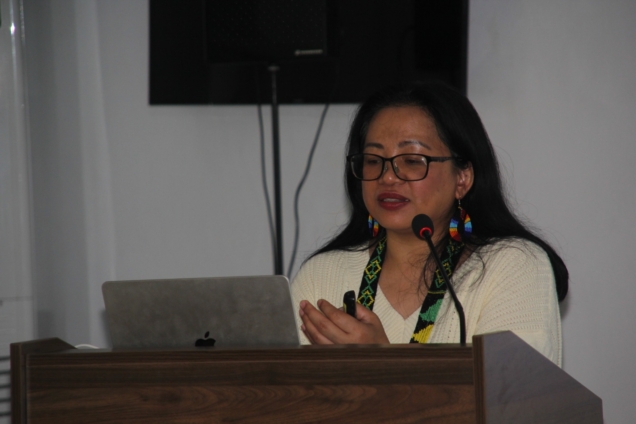
Mary Ann Manja Bayang and her colleague Elizabeth Berth, specialists in Climate Change, Indigenous Peoples, and Local Communities from the United Nations Development Programme (UNDP) climate and forest hub, emphasized the importance of integrating social inclusion and gender approaches into REDD+ planning and implementation.
Their presentations underscored the crucial role of indigenous and local communities in sustaining and enhancing REDD+ initiatives.
Manja emphasised that Indigenous Peoples are the guardians of the world's biodiversity, protecting about 80% of it. She highlighted the need to conserve Africa's significant wealth of forests, which host some of the world's hotspots in terms of biodiversity.
Manja pointed out that without the active and meaningful participation of Indigenous Peoples, and local communities, including children and women who hold valuable local environmental knowledge, REDD+ initiatives may not fully achieve their expected potential.
To successfully incorporate Indigenous Peoples' traditional knowledge and sustainable practices into REDD+ projects, various strategies can be employed.
She suggested that legal and policy reform, community engagement, leadership, capacity building, and empowerment could play pivotal roles in transforming the narrative.
“Involving Indigenous communities from the beginning stages of the project from planning and design to implementation and monitoring, and empowering Indigenous leaders to take key roles in project management and decision-making process would ensure their voices are heard and their knowledge is valued,” she said.
Manja highlighted the Surui Forest Carbon Project in Brazil as an exemplary case, being the first indigenous-led conservation initiative funded by the sale of carbon offsets. She noted that the Painter Indigenous Peoples led the project in partnership with NGOs and private entities.
However, the project faced setbacks when it was suspended in 2018 due to the discovery of gold deposits within the Surui territory, leading to increased deforestation activities.
“It demonstrates how indigenous communities can play a crucial role in forest conservation and climate change.”
The Surui Forest Carbon Project produced 299,895 carbon offsets, equivalent to removing 64,000 cars from the road.
“The Paiter-Surui used the proceeds from the offset sales to support six sustainable development initiatives that generated income and supported traditional practices such as harvesting of medicinal plants, creation of artisanal handicrafts that enabled Indigenous Peoples to live off the land while maintaining the forest.”
The workshop organised by Africa Forest Forum (AFF) in partnership with the United Nations Collaborative Programme on Reducing Emissions from Deforestation and Forest Degradation in Developing Countries (UN-REDD Programme) brought together over 45 participants from more than 12 African countries.
These included experts, REDD+ representatives, and technical staff from Burkina Faso, Cameroon, Ghana, the Republic of Congo, the Democratic Republic of Congo, Ethiopia, Uganda, Togo, Zambia, and other stakeholders involved in REDD+ implementation.
Participants such as Godfred Phiri, REDD+ environmental and social safeguards from Zambia, Tessia Boateng with the Ghana Forest Commission, Teshale Wolderamanuel, REDD+ consultant from Ethiopia, Dr Jewel Andoh with CSIR-Forestry Research Institute of Ghana among other participants lauded emphasis on issues social inclusion and gender concerns as well ensuring full and effective participation of a diverse range of stakeholders and rights-holders in REDD+ implementation.
“The inclusion of Indigenous Peoples, women and local communities in REDD+ activities will ensure the effectiveness, legitimacy, ownership and sustainability of this international voluntary climate change mitigation efforts by developing countries,” Dr Andoh said.
Latest Stories
-
Atta Akyea denies seeking presidential pardon for Wontumi in galamsey case
19 minutes -
Photos: Mahama commissions 85-bed Police Hospital ward, donates two ambulances
28 minutes -
GTEC directs Ghana’s public universities to reopen by October 16 and begin lectures on October 19
29 minutes -
Star Oil donates GH¢1million towards construction of new CID facility
33 minutes -
Court hands Adjetey Sowah, two others lifetime bans after Amputee Football legal dispute
43 minutes -
NDC appoints Julius Kwame Anthony as a Deputy Communications Director
43 minutes -
Ghana repatriates 120 Nigerians rescued from suspected cybercrime centres
47 minutes -
NPP rejects Emelia Agbenyo’s appointment as Deputy EC Chair, demands withdrawal
52 minutes -
EOCO grants Suame MP John Darko enquiry bail in GH¢27m SIC investigation
55 minutes -
NPP cannot question EC appointment after appointing own people to Commission – Kwakye Ofosu
1 hour -
BoG deepens public trust with regional stakeholder forum in Techiman
1 hour -
‘We have turned the tide’ – Ato Forson says Ghana is ready to take off
1 hour -
Police arrest man captured in viral video assaulting wife in Agona Nkwanta
1 hour -
KATH Mother and Baby Unit construction stalled for 14 months over unpaid contractor arrears
2 hours -
Government wanted to ‘tilt the balance’ with new EC appointments – Kwakye Ofosu
2 hours