

Audio By Carbonatix
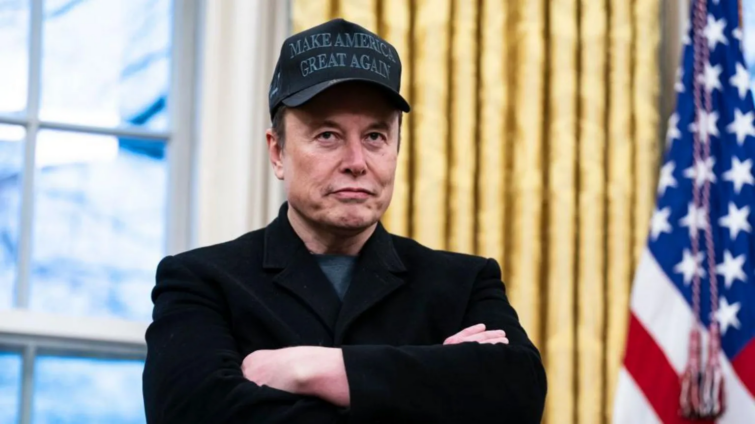
Days before Republicans took the helm of the U.S. Securities and Exchange Commission in January, the agency's five commissioners held a closed-door vote on whether to sue Elon Musk.
Since 2022, the agency had been investigating whether the billionaire, a close ally of incoming President Donald Trump, had violated securities laws by disclosing too late his purchase of shares of Twitter, now known as X, prior to acquiring the company that year.
Four of the five commissioners, including Republican Hester Peirce, voted yes, three sources said. The fifth - Republican Mark Uyeda, now the acting head of the SEC - voted no, the people said.
The week after the 4-1 vote in favour, the SEC filed a lawsuit against Musk on January 14.
The details of the vote - including Uyeda's dissent - are reported here for the first time.
In the days before the vote, Uyeda pressed enforcement staff involved in the Musk case to sign pledges that the case was not driven by politics, according to two of the sources.
That effort was first reported by Bloomberg News. The staff refused to sign the pledge, as it is not typical SEC practice, the sources told Reuters.
Two of the sources said Uyeda and his fellow Republican Peirce took issue with what the SEC wanted Musk to pay - giving up $150 million in alleged unjust enrichment plus a penalty. Nonetheless, Peirce joined with the three Democrats in voting to sue.
An SEC spokesperson declined to comment about the vote or the Musk case on behalf of the agency and Uyeda.
The SEC also denied a public records request by Reuters for the voting record. Peirce, Musk, his lawyer and the White House did not answer questions from Reuters.
Under U.S. law, investors who accumulate a stake exceeding 5% of a company's outstanding shares must disclose that holding within 10 days.
Musk’s disclosure in April 2022 sent Twitter’s share price soaring 27% over the previous close.
Because Musk's disclosure came 21 days after his purchase, the SEC has said, he was able to buy more shares at lower prices, ultimately allowing him to save $150 million on his acquisition of Twitter.
Twitter shareholders have also sued Musk for fraud.
PROBING INTENT
In addition to the timing of his disclosure, investigators at the agency examined whether they could prove any intent behind his late filing, which could have led to more serious charges, according to two of the sources and a third person with knowledge of the investigation.
Musk has said he disclosed the stake promptly after realizing he misunderstood the SEC disclosure rule and the SEC ultimately did not bring any charges alleging intent.
That line of inquiry, and Musk's delays added time to the investigation, the sources said. He agreed to be deposed twice in 2022 but subsequently refused to be interviewed a third time , leading the SEC to ask a court to compel his additional testimony.
On Oct. 3, 2024 he appeared, but that year-long tug of war ensured the matter could not be concluded before the election.
In December, a month before filing the lawsuit, the SEC attempted to reach a settlement with Musk . Musk posted a copy of his lawyer Alex Spiro’s response to the SEC’s then-Chair Gary Gensler on X saying the agency had given him 48 hours to agree to pay a penalty to settle the probe or face civil charges.
The two sides did not settle.
Six legal experts interviewed by Reuters questioned why the SEC took so long to bring a late filing case.
"They could have brought it closer to the timing of the conduct,” said Howard Fischer, a partner at law firm Moses & Singer who worked at the SEC under President Barack Obama and President Trump.
“But bringing it at the last minute – literally – it loses credibility. That’s problematic for any agency, especially when dealing with such an obviously politicized issue.”
Still, some said not bringing a case at all would raise questions of selective enforcement of U.S. laws.
“It’s certainly not the violation of the century, but if we care about fair markets and fair enforcement, it would be humiliating for the SEC, a fiercely independent agency, to be seen as backing down," said Robert Frenchman of Dynamis law firm in New York.
Musk has feuded with the SEC since 2018 when the agency sued him for tweeting that he had secured funding to take his electric car maker Tesla private. Since then, Musk has repeatedly derided the SEC, calling it a "totally broken organisation."
Musk has until April 4 to respond to a summons in this case, according to a court filing on Thursday.
Trump issued an executive order accusing the SEC and other agencies of politically motivated investigations under former President Joe Biden and directing a review of cases over the past four years. The SEC’s spokesperson declined to comment on that review.
Latest Stories
-
OnlyFans owner Leonid Radvinsky dies at 43
2 minutes -
Nigerian police arrest 15 after viral videos of alleged sexual assault at festival
11 minutes -
Ethnic, political exclusion, not theology alone drives Muslim sectarian violence in Ghana, KNUST study finds
31 minutes -
Semenyo reports to Black Stars camp after Carabao Cup win
1 hour -
Journalism out loud: Defending truth in a divided world
6 hours -
Heath Goldfields partners local firm, receives new mining fleet to revive Bogoso-Prestea mine
6 hours -
Korle-Bu overcrowding driven by broken referral system, not just bed shortage – Doctors
6 hours -
MC Portfolio named red carpet host for 2026 Ghana Music Awards USA
6 hours -
Oda-Akyem Swedru road develops dangerous potholes
6 hours -
U.S. Embassy explains Visa process for Ghanaians ahead of World Cup
7 hours -
Viral video on emergency care at Korle-Bu Teaching Hospital is ‘authentic’ – Emergency Medicine Residents
7 hours -
Ahmad Abdul-Samad, Rachael Quarcoo dominate 1st quarter All Ghana Badminton Championship
7 hours -
ActionAid calls for strong partnerships to advance water, gender, and climate justice
7 hours -
DVLA begins nationwide clampdown on expired DV plates from March 24
7 hours -
Ghanaian Commonwealth Youth Leader meets King Charles III, pushes for youth economic empowerment
8 hours