

Audio By Carbonatix
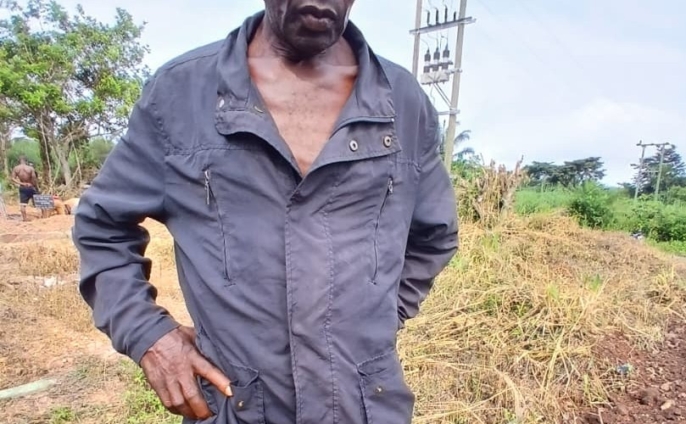
Gboka Komla has spent his entire life in Ghana. Born to a family that migrated from Togo in the early 1950s, he grew up believing he belonged.
His father, Gboka, permanently left the Tabligbo area in Togo over three decades ago, after mining activities displaced local farming communities.
The family settled in Nsawam, Eastern Region, where Komla spent his childhood and youth before relocating to Shia in the Ho Municipality of the Volta Region in the early 2000s.
Over the decades, Komla has built a life in Shia, the small farming community, raised three children, and contributed to his community. Yet, despite being married to a Ghanaian woman and living in the country for more than 40 years, he alleged that, he continues to face discrimination and exclusion.
“They did this during the Ghana Card registration too,” Komla told me in Ewe. “We are one people. I married and have children here. We all speak Ewe here (Ghana) and there (Togo). But the way some of us are treated is unfair.”
He alleged that. his difficulties reached a climax in the 2020 general election, when he was denied the right to vote.
In the 2020 general elections, the then government strengthened security along the Togo–Ghana border to prevent illegal voters from participating and to ensure a smooth electoral process.
However, some local communities, often encouraged by political actors, have used these measures as an excuse to discriminate against long-term residents like Komla.
He alleges that he is one of many who have suffered such treatment in Shia, Nyive, and Ave enclave in the Ho municipality in that year.
These communities are agricultural settlements in the Ho Municipality, situated along the border with Togo.
Komla’s story is a reminder that recognition is about more than legal documents, it is about dignity, belonging, and equal rights. “Some see me as a Ghanaian in every way but when it comes to paper works, I am not,” he said.
He says he still feels upset about being unable to participate in the mass Ghana Card registration in 2019, and today he is excluded from several social activities for not possessing the card.
Ghana’s 1992 Constitution, in Chapter Three, provides that “A woman married to a man who is a citizen of Ghana, or a man married to a woman who is a citizen of Ghana" is considered a citizen of Ghana. Yet, for Komla, the process remains elusive.
Today, he continues to live in Ghana without a Ghana Card or other official documents that affirm his citizenship, despite the law permitting him to acquire them.
In the recently concluded elections, he was unable to vote again because he was not recognised on the voters’ register, a situation he attributes to discrimination by local residents around him.
Advocates say his plight highlights a wider issue: long-term migrants who contribute to society often face barriers to inclusion, fuelled by misinformation, bureaucratic delays, and discriminatory practices.
On International Migrants Day 2024, Komla’s experience underscores the urgent need for legal clarity, fair administrative procedures, and public awareness campaigns to protect the rights and dignity of migrants in the Sub-Sahara region.
Latest Stories
-
Kenyasi assault case: Woman handed 15-month jail term for injuring child
50 minutes -
Mahama’s trust well placed, I remain focused on fixing education – Haruna Iddrisu
1 hour -
IGP Yohuno promotes 13 senior officers in recognition of exemplary service
1 hour -
Miss Health Organisation unveils new Miss Health Africa and Ghana queens
2 hours -
Andy Dosty set to headline inaugural Ghana Independence Day celebrations in Europe
2 hours -
GoldBod rejects IMF claims of $214m losses under gold-for-reserves programme
2 hours -
Some MMDCEs reject uniform 24-Hour Economy Market model, seek flexible options
2 hours -
Government to reform cultural, creative sector policies
2 hours -
Illegal farming ravages Chai River forest reserve
2 hours -
Christmas should inspire unity and national renewal – Prof Opoku-Agyemang
3 hours -
Ashanti Region: NADMO prioritises preventive measures to reduce road carnage
3 hours -
Mahama pledges reset, growth and jobs for all Ghanaians in Christmas message
3 hours -
13 inmates at Nsawam Prison granted bail under the Justice For All Programme
3 hours -
We invited a man into our home at Christmas and he stayed with us for 45 years
3 hours -
From uncertainty to clarity: Ghana draws the line on digital assets
3 hours