

Audio By Carbonatix
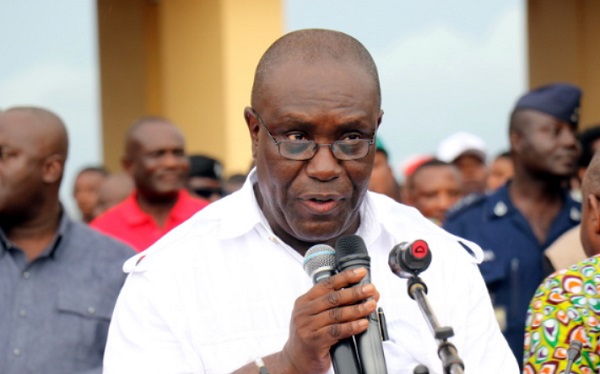
The Secretary-General of the Trades Union Congress (TUC), Dr Yaw Baah, Ghana, has called on the government to involve the leadership of Union bodies in negotiations and management of public agreements.
He said the Union body had experts who could work with government in negotiating contracts on behalf of the country to ensure value for money.
Dr Baah made the call at a TUC seminar on “Negotiation and Management of Public Agreements in Ghana - The Role of the Trade Unions”.
He said the country was endowed with natural resources but poor contract negotiations had affected its fortunes in terms of development.
“Ghana has been mining gold over 120 years, but foreigners are making lot of money to the detriment of the citizenry. There is poor road infrastructure in most of these mining communities coupled with hunger and poverty,” he stated.
Dr Baah called on Civil Society Organisations and other bodies to join the TUC to lead the process of creating the political will for government to involve key stakeholders in negotiating agreements.
He cited the Volta River Authority agreement in the 1960s, which was reviewed by Ghanaian experts like Professor George Akilakpa Sawyerr, an Academia, who got a better deal for the country.
He expressed disappointment over Parliament’s alleged approval of some contract documents without due diligence.
“It is worrying that some of these Parliamentarians approve these contracts because they do not understand the technicalities involved in the document while others do not have enough time to peruse the voluminous documents,” he said.
The Director, Labour Research and Policy Institute, TUC-Ghana, Dr Kwabena Nyarko Otoo, who presented a “Research Analysis of Negotiation and Management of Public Agreement in Ghana,” noted that from 2011 to 2016, the country had experienced extended blackouts - “dumsor”- largely due to generation problem of higher demand oversupply of energy.
The generation, he noted, had since increased far in excess of energy demand with current projections being that no additional power generation would be needed until 2027.
But the energy sector faced monumental challenges of the unreliability of power, mounting debts, rising tariffs and low investment, Dr Otoo said, and called for capacity building for government appointees on contract negotiations.
Latest Stories
-
CUTS International calls for urgent competition law amid sachet water price hikes
7 minutes -
‘I never did this advert’, AI clones hijack Ghanaian identities for profit
26 minutes -
25-year-old woman battles trauma after surviving deadly Nkwanta attack
42 minutes -
Vice President honoured at Tortsogbeza as South Tongu leaders highlight development needs
51 minutes -
Kwahu Business Forum 2026: Corporate citizenship, sustaining African businesses take centre stage with KGL as the case study
2 hours -
Trump seeks $152m to reopen notorious Alcatraz prison
4 hours -
Ex-Chelsea player Oscar retires with heart issue
4 hours -
CA Foundation drives constitutional literacy in Kpone Katamanso municipality
5 hours -
GPRTU to hold talks with Transport Ministry over rising fuel costs
5 hours -
CUTS International urges gov’t to halt sachet water price hike pending cost review
5 hours -
Chief Justice: Efficient Judiciary essential to reducing business costs
5 hours -
Bayern grabs 99th-minute winner to cap superb fightback
5 hours -
Ahmed Ibrahim urges Ghanaians to reflect Easter values in nation-building
5 hours -
ECG inefficiencies undermining power supply -Mahama outlines reforms
5 hours -
Lewandowski scores as Barca fight back to defeat Atletico
5 hours