


Audio By Carbonatix
Israel has scrapped a plan to forcibly deport tens of thousands of illegal African migrants.
In a written response to the country's Supreme Court, the government said forced removal of the migrants "is no longer on the agenda".
However, Israel's immigration authorities are still seeking ways to deport migrants voluntarily, it said.
The fate of Israel's roughly 30,000 illegal African migrants has become a hugely contentious issue.
The supreme court previously suspended a plan to expel the migrants - mostly from Eritrea and Sudan - unless they voluntarily accepted a cash lump sum and a plane ticket out of the country.
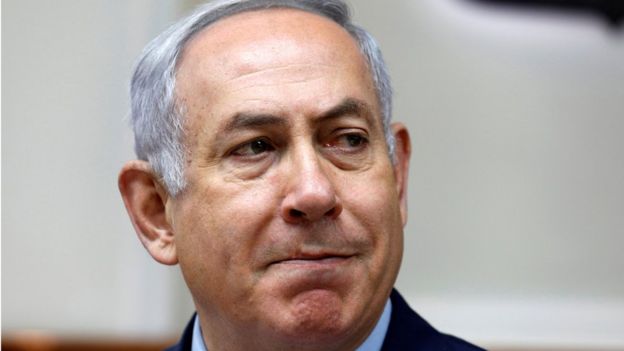
Prime Minister Benjamin Netanyahu then cancelled a UN deal to resettle the migrants in Western nations.
Under the deal, Israel would give "temporary residence" to a migrant in Israel for each migrant resettled abroad.
On Monday, 18 Democratic members of the US House of Representatives reportedly wrote to Mr Netanyahu saying they were "dismayed" and "disappointed" that he had dropped the UN proposal, saying it left the migrants "in limbo, with no clear next step".
Where are the migrants from?
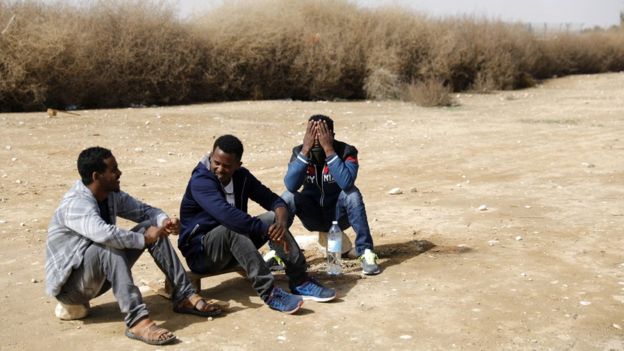
Most of the African migrants in Israel are from Eritrea - a one-party state whose leaders have been accused of crimes against humanity by a UN inquiry - and war-torn Sudan.
They say they fled danger at home and that it is not safe to return to another African country, but Israel considers the majority of African asylum seekers to be economic migrants.
Most of them entered from Egypt several years ago, before a new fence was built along the desert border. This has ended most illegal crossings.
How controversial is this issue?
A decision in January to offer the migrants a cash lump-sum and a plane ticket to leave Israel voluntarily or otherwise face forced expulsion has been criticised in Israel.
Some critics in the country and among the Jewish community abroad - including former ambassadors and Holocaust survivors - said the plan was unethical and a stain on Israel's international image. The UN refugee agency said it violated local and international laws, and large protests were held in Israel.
Mr Netanyahu said the opposition was "baseless and absurd" and that Israel would resettle "genuine refugees".
Activists, however, noted that only a handful of Eritreans and Sudanese had been recognised as refugees by Israel since the country took over the processing of applications from the UN in 2009.
Latest Stories
-
CAF President urges faith in African football despite AFCON 2025 issues
2 minutes -
AFCON U-17: Black Starlets’ aim is to win trophy – Head Coach Prosper Ogum
7 minutes -
ENFA expands access to global capital for Ghanaian SMEs
15 minutes -
Beyond security: Why mobile payment fraud has become a customer experience crisis
16 minutes -
Former Effia MP demands full disclosure of Truedare AI deal, warns of ‘hidden risks’
40 minutes -
Joseph Cudjoe raises alarm over potential revenue loss in Truedare AI Customs deal
41 minutes -
Video: Awoshie-Anyaa Highway: Years of fatal crashes caused by faulty traffic lights
45 minutes -
No financial transactions with Ghana Card yet, says NIA
52 minutes -
Former Netherlands Fire Chief engages GNFS Tema Command on capacity building
52 minutes -
Finance Ministry defends Publican AI rollout amid stakeholder concerns
55 minutes -
Police arrest 5 in Asankrangwa robbery; cash and guns retrieved
56 minutes -
Why I joined NPP – Jeneral Ntatia
57 minutes -
Three UDS students remanded over alleged armed robbery
1 hour -
Kudus Mohammed at risk of missing World Cup 2026 after fresh injury blow
1 hour -
Minority urges cocoa farmers to resist pressure from galamseyers
1 hour