

Audio By Carbonatix
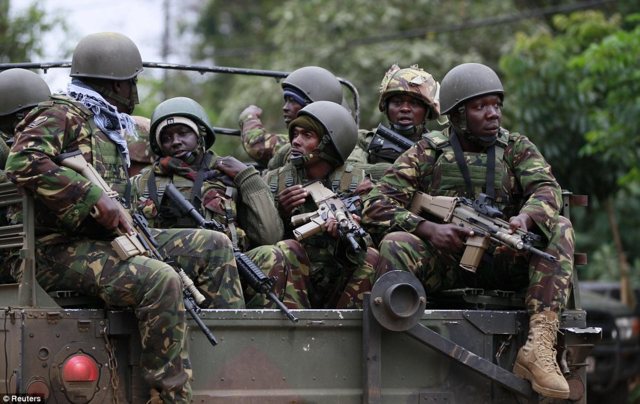
Security Analyst, Colonel Festus Aboagye (Rtd) says it is not normal for a democratic country like Ghana to have military personnel stationed at polling centres during general elections.
According to him, though the practice stemmed from Ghana’s erstwhile military dictatorships, the country’s current democratic dispensation does not allow for the military to be used during elections except in special situations.
He stated that the practice was abnormal and was not in line with the country’s constitution as well as other codes the country has assented to on the international front.
Speaking on Joy FM’s News Night, the Security Analyst said, “That is precisely the issue. That because we moved, we transitioned from a long period of military rule even at the point where we embarked on democratic rule, in this case since 1992. We seem to think that it was normal practice for the military to be everywhere in situations that are typically law enforcement situations. That is an abnormality.
“The principle established in a number or international and regional documents including the ECOWAS protocol on good governance and democracy is that election security is not the role for the military. That’s the first premise. If the military has to play a role, the military is enjoined to conduct itself in terms of how it organizes its own activities consistent with democratic principles.”
His comment was in reaction to an announcement by the Chairman of the Election Security Task Force, James Oppong-Boanuh, who is also the Inspector General of Police, that a deployment of a total of 62,794 security men has been made across the country during the general elections to ensure law and order.
The security men, who will be identified by armlets, are from the Police Service, the Ghana Armed Forces (GAF), the Customs Division of the GRA, the Bureau of National Investigations (BNI), the Criminal Investigations Department (CID), as well as the Fire, the Prisons and the Immigration services.
However, commenting on the issue, Colonel Festus Aboagye stated that the practice ought to be discouraged.
He stressed that the military can only be called upon in dire situations where the police are not equipped enough to ensure calm other than having them there throughout the process.
“The situation that we have in this country, where invariably because of operation like calm life and so on we tend to mix military and police, put them in vehicles and we say we’re doing joint operations that is not how we teach military systems civil power.
“So the military should stand by; it could be in their barracks, it could be at other vantage points, and when the police determine that there is a situation that is beyond their capacity, indeed in writing they must state that they cannot deal with the situation and invite the military to come in.”
He added that overly engaging the military in frontline law enforcement situations posed a serious threat to the country’s democracy and must be discouraged.
“So the dangers that I am seeing is this new reality or the new normal that increasingly the military is getting involved in frontline law enforcement situations including elections. And that is the risk that that military role poses to our democratic elections and invariably to our democracy.”
Colonel Aboagye therefore called on the police service to assess themselves properly and present themselves in a manner that would build confidence and command respect from among the populace rather than always looking to the military to do that for them.
“Simply in the context of democracy we need to move now to the actual normality. The actual normality is that the police must begin to assess themselves, command the respect and the confidence of the society rather than perpetuating this paradigm that the society doesn’t respect the police, they don’t have confidence in them and therefore by default, let us use the military,” he advised.
Latest Stories
-
Tyson Fury dominates Makhmudov, calls out Joshua next
8 minutes -
I have supported highway authority financially to fix roads in my constituency – A Plus
1 hour -
US, Iran fail to reach peace agreement after marathon talks in Pakistan
2 hours -
ECG kicks off Phase Two of transformer upgrades at Lashibi; brief outages expected
2 hours -
Port crises loom as 11,000 drivers threaten four-day strike
3 hours -
A source of excellence across generations – Vice President Opoku-Agyemang lauds Mfantsipim
4 hours -
(Photos) Mfantsipim School launches historic 150th anniversary
4 hours -
Knights and Ladies of Marshall group backs Catholic Bishops’ stance on anti-LGBTQ+
5 hours -
Bright Simons writes: All the Filla in the Ibrahim Mahama/E&P – Gold Fields Saga
6 hours -
Monetise Idiocy In Ghana
6 hours -
The Ghanaian prophet and the mysterious death of his scottish wife Charmain Speirs
6 hours -
Nearly 400 sentenced in Nigeria for links to militant Islamists
7 hours -
Ghana’s recovery supported by gold strength despite global oil price pressures – Standard Bank Research
7 hours -
Methodist Church hails Mfantsipim@150; calls for “fresh consecration” to excellence
7 hours -
‘Excellence is our inheritance’ – Nana Sam Brew-Butler hails Mfantsipim’s 150-year reign in leadership
7 hours