

Audio By Carbonatix
As the country grapples with a declining reputation in the global fight against graft and staggering annual losses to corruption estimated at US$3 billion, the Dean of the University of Ghana Business School (UGBS), Professor Justice Nyigmah Bawole, has called for reforms.
He believes Ghana must undergo bold ethical reforms or risk developmental stagnation caused by a failing public administration system.
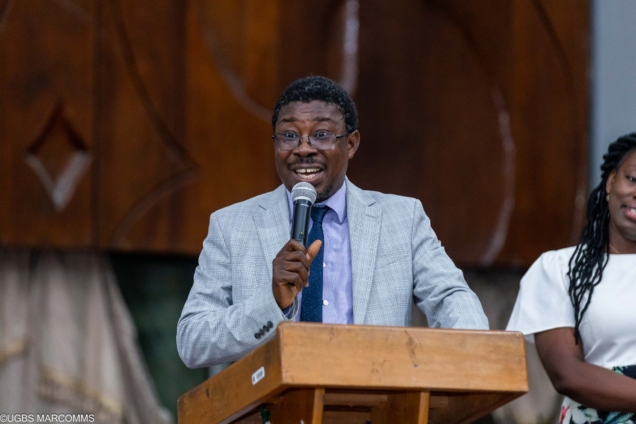
Delivering a powerful inaugural lecture to a packed Great Hall at the University of Ghana on Thursday, July 10, 2025, Professor Bawole presented a damning diagnosis of the country's public sector, describing corruption as a deeply entrenched challenge that continues to cripple institutions and haemorrhage public funds.
His address, titled "Our Corruption, Our Ethics, Our Public Administration: Wicked Citizens, Wicked Problems, and Stagnating Development," was not merely an academic exercise.
It was a direct confrontation of the grim reality reflected in the most recent 2024 Corruption Perception Index (CPI), released in February 2025.
The report, published by Transparency International's local chapter, the Ghana Integrity Initiative (GII), saw Ghana's score drop to 42 from 43, marking the first decline in five years and ranking the nation 80th out of 180 countries. GII attributed this setback to the government's failure to resolve numerous high-profile corruption scandals and a perceived lack of political will to enforce anti-graft laws.
It is against this backdrop of waning public trust that Professor Bawole's call for a fundamental moral reset resonates so strongly. He argued that sporadic prosecutions are insufficient to cure the disease.
“It is possible to live right and survive in public service without being corrupt. Without a consistent moral foundation, punishing offenders becomes nothing more than a firefighting effort,” he declared, rejecting the notion that systemic rot is inevitable.
The cost of this "firefighting" approach is monumental. The latest Auditor-General's report on public accounts for the 2023 financial year, while noting a reduction in total irregularities from the previous year, still identified billions of cedis in recoverable losses due to cash irregularities, procurement breaches, and contract mismanagement.
These are not just abstract figures; they represent funds that could have been invested in healthcare, education, and critical infrastructure.
Professor Bawole, who ironically was just named last month (June 2025) as Vice Chair of a new technical committee to draft Ghana's National Public Sector Reform Strategy for 2025–2029, asserted that these persistent financial leakages are symptoms of a deeper malaise.
He contended that Ghana is grappling with “wicked problems” largely due to a failing public administration system.
He stressed that national development requires not only sound policies but also morally upright institutions and citizens to implement them.
His proposed solution moves beyond mere policy tweaks, advocating for sustained civic education and a profound cultural shift that actively celebrates integrity.
“True change must be rooted in a shared societal morality that drives sustainable development,” Prof. Bawole argued.
His call for a moral reawakening comes at a time when Ghanaians have been rocked by a series of scandals that have shaken their faith in public office.
The ongoing case involving the former Minister for Sanitation and Water Resources, Cecilia Dapaah, and the recent Interpol red notice issued in June 2025 for former Finance Minister Ken Ofori-Atta over corruption allegations have kept the issue of high-level graft at the forefront of national discourse.
Professor Bawole's inaugural lecture, therefore, serves as both a scholarly intervention and a national call to action, challenging policymakers, civil servants, and citizens alike to look beyond legal frameworks and confront the ethical vacuum that allows corruption to thrive, undermining the very foundations of Ghana's developmental aspirations.
Latest Stories
-
$600m tomato imports undermining Ghana’s economy — Chamber of Agribusiness
20 minutes -
Rainstorm wreaks havoc: Faulty transformers, feeder failures leave parts of 3 regions without power
28 minutes -
CUTS International calls for urgent competition law amid sachet water price hikes
1 hour -
‘I never did this advert’, AI clones hijack Ghanaian identities for profit
1 hour -
25-year-old woman battles trauma after surviving deadly Nkwanta attack
2 hours -
Vice President honoured at Tortsogbeza as South Tongu leaders highlight development needs
2 hours -
Kwahu Business Forum 2026: Corporate citizenship, sustaining African businesses take centre stage with KGL as the case study
3 hours -
Trump seeks $152m to reopen notorious Alcatraz prison
5 hours -
Ex-Chelsea player Oscar retires with heart issue
5 hours -
CA Foundation drives constitutional literacy in Kpone Katamanso municipality
6 hours -
GPRTU to hold talks with Transport Ministry over rising fuel costs
6 hours -
CUTS International urges gov’t to halt sachet water price hike pending cost review
6 hours -
Chief Justice: Efficient Judiciary essential to reducing business costs
6 hours -
Bayern grabs 99th-minute winner to cap superb fightback
6 hours -
Ahmed Ibrahim urges Ghanaians to reflect Easter values in nation-building
6 hours