

Audio By Carbonatix
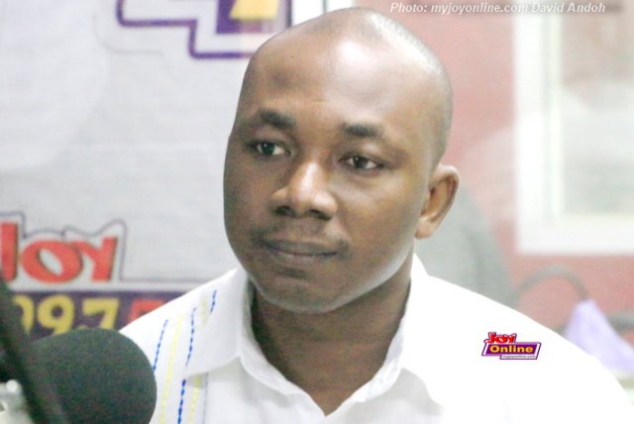
Economist Professor Godfred Bokpin says while he agrees global shocks from the Covid-19 pandemic and Russia-Ukraine war may have impacted Ghana’s economy, he disagrees they are the sole cause for the current economic situation.
According to him, Ghana’s ailing economy is a direct result of government’s poor fiscal management and macroeconomic framework.
He stated that had the economy been better managed prior to the Covid-19 pandemic, the country would not be experiencing its current economic strife.
Speaking on JoyNews’ PM Express on Wednesday, he said the global shocks had merely exposed how weak Ghana’s macroeconomic framework was.
“It takes global shocks like this to reveal the resilience of your economy. So we can use the same Covid-19 to explain what happened in the case of Ghana compared to our peers. So for instance, we were told that those with weak immune systems were more vulnerable to the effect of Covid compared to those with better immune systems.
“So economies that were better governed, well-managed, had good policies [and] macroeconomic framework, had better growth trajectory and all of that were able to withstand those shocks much better than other countries and that is where the variation you will see.
“And, therefore, the tendency to blame or to shift the blame largely to Covid and Russia-Ukraine without attributing part of where we find ourselves to our own resilience of our economy, I think that is less charitable with the reality. I think we need to face that,” he said.
He was reacting to President Akufo-Addo’s State of the Nation Address delivered, Wednesday, March 8 on the floor of parliament where he addressed chiefly the economic challenges that have afflicted the country post-Covid-19.
According to the President, much of the country’s current fiscal problems had been occasioned by the advent of the Covid-19 pandemic and compounded by the Russia-Ukraine war.
He noted that, prior to these events, the economy was healthy.
However, Prof. Bokpin believes otherwise.
He said Ghana’s fiscal deficit was the largest in the sub-region by the time Covid became a pandemic.
“Even before Covid came, we were not complying with the fiscal responsibility act threshold of 5% when it comes to deficits.
“We were only complying with that because we were treating the financial sector cleanup and the energy sector indebtedness as outliers. If you put all of that together, our fiscal deficit, 2018-2019 was actually more than 7% and then Covid came,” he said.
Latest Stories
-
Ghana to honour Christina Hammock Koch for historic Artemis II mission
4 minutes -
Supreme Court appointments require more than 15 years’ experience – Justice Adjei-Frimpong
21 minutes -
Fire destroys 3-bedroom house at Bogyawe
44 minutes -
Why the Supreme Court is a “policy court” – Justice Richard Adjei-Frimpong breaks it down
49 minutes -
Playback: The Law discussed Supreme Court @150
2 hours -
MTN Momo staff walk to promote wellness and fitness
2 hours -
Assafuah: Sedina Attionu’s return from Nevada will test government’s commitment to accountability
2 hours -
How GRA’s Modified Taxation Scheme is boosting revenue compliance & SMEs competitiveness
3 hours -
Stonebwoy Can Do It: A call to unite behind 2026 BHIM Fest
3 hours -
World Shea Expo returns to Tamale for 2026 edition
3 hours -
Prioritise cocoa sector with better prices, timely payments-Annoh-Dompreh urges NDC
4 hours -
Lands and Mines Watch Ghana endorses Heath Goldfields’ mining capacity
4 hours -
Gbintiri residents protest alleged diversion of 24-hour market project
4 hours -
Justin Bieber headlines Coachella with nostalgia-fuelled set
4 hours -
Ukraine and Russia accuse each other of hundreds of ceasefire violations
4 hours