

Audio By Carbonatix
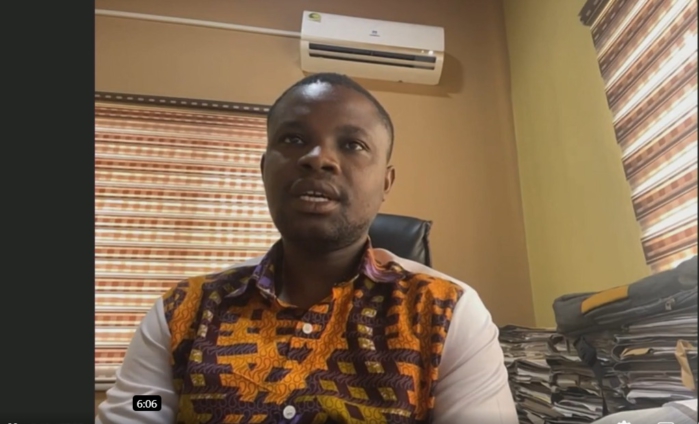
Private legal practitioner Albert Gyamfi has advised the general public against revealing the contents of their will before their death.
Speaking on The Law, on JoyNews, he explained that because a person can change their will at any point, beneficiaries may question the authenticity of the will when its content is different from what they know.
“It isn't a good practice to disclose your will prior to your death. No matter how the pressure is, you are not supposed to disclose the content of your will. Let the court read out your will for the first time for people to know whether they are beneficiaries are not,” Mr Gyamfi said on Sunday.
He told the host Samson Lardy Anyenini that “I know of a situation where a nephew spent a colossal sum of money on his uncle's funeral knowing very well that his uncle had made a will and left so much property to him. Upon reading the will however, that will (he was familiar with) had been revoked and a new one had been made and he was left with nothing.”
Mr Gyamfi believes that not disclosing the content of a will ensure that no bad blood or resentment is created within the family.
The legal practitioner also added that although some family members may be beneficiaries of a deceased’s will, they cannot withdraw any money from his accounts for his funeral.
According to the lawyer, although this is a common practice in the Ghanaian sociocultural context, withdrawing a deceased’s money from their account, by law, is termed as inter-meddling with the property of the deceased, an act that is punishable by law.
“Let me sound this warning, the general practice has been that when a person dies, people would want to go into his bank account for money for the organisation of the funeral. That is inter-meddling. Wherever the family will find a room to organise the funeral, they should do so. And when probate has been granted, then if there’s any property to liquidate that debt, they use his property to do so.”
“But you cannot go into his bank account, withdraw money for purpose of a funeral. As soon as the person dies, doctors declare him dead, his bank account is closed until probate has been granted,” Mr Gyamfi cautioned.
Latest Stories
-
Assemblies of God requires pastors to resign before entering partisan politics – Rev. Wengam
3 minutes -
Ghana targets 20% annual reduction in maternal deaths – Health Minister
8 minutes -
Cyber attacks in Africa grow faster than global rate, report finds
10 minutes -
Ghana signs UAE deal to create 5,000 overseas jobs
17 minutes -
One Million Coders Programme targets 100,000 digital jobs in two years – Sam George
20 minutes -
John Jinapor, Italian Ambassador explore opportunities for energy sector investment
22 minutes -
NHIA seeks legal reforms to support Free Primary Healthcare
26 minutes -
Beatrice Annan defends Afi Agbenyo’s EC appointment, cites record of gender advocacy
29 minutes -
Ghana seeks investment deals in Bangkok amid global economic crises
33 minutes -
IMF raises Ghana’s 2026 growth forecast to 5.7%, sees inflation falling to 4.8%
34 minutes -
Ablakwa urges Africans not to view immigrants as threat to national progress
39 minutes -
Mahama Cares must fund treatment, not looting – Asogli chiefs
40 minutes -
Ghana’s economic salvation lies not in shifting geo-political allegiances – Dr Atuahene
43 minutes -
BoG proposes tougher rules on loan repayment assessment
48 minutes -
Government plans mandatory drug tests for public service jobs — Muntaka
53 minutes