

Audio By Carbonatix
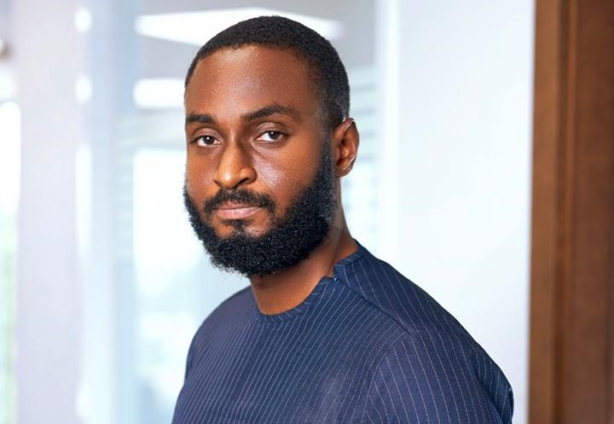
TPB Projects' newly appointed Chief Executive Officer, Dr. Jarvis Tchorly has a 10-year track record of cross-cultural experience in the construction industry, working with clients across Europe and Ghana.
Over the years, Jarvis has developed good construction organisational skills with a practical approach to problem-solving and the drive to see things through to completion.
He holds a Ph.D. in Sustainable Development in Construction and Project Management from Manchester's University of Salford.
He has conducted extensive research on private finance in the delivery of public infrastructure in China, Australia, Europe, and the United States, and he is well-versed in Private Finance Initiatives (PFI) / Public-Private Partnerships (PPP). Jarvis has expertise in construction financing and risk management, project and production management, and a variety of construction software tools.
TPB Projects manages a diverse portfolio of public and private projects worth more than $30 million. The company is committed to ongoing investments in the country and the development of long-term construction solutions.
His goal is to provide consistent quality construction services ranging from advisory services, project delivery, operation and maintenance, and logistics services.
In an interview, Dr Tchorly shares why he made the move to join the team and how he hopes to contribute as Chief Executive Officer.
What made you take on the opportunity and what kind of impact are you hoping to make?
Taking up this role was easy, I recognised the vision of the Chairman and the entire Board to maintain a Strategic Plan that focuses heavily on sustainability, successful, speedy project deliveries to ensure that we maintain a specific quality standard while expanding our portfolio holdings.

TPB is currently executing a variety of public and private work with a portfolio exceeding $30 million, and keen on continuous investment in the country, as well as providing sustainable construction solutions for the economy.
Some projects we are working on include constructing a number of district hospitals under the Ghana Priority Health Infrastructure Hospital Projects, which we aim to finish in the next ten months.
This aligns with my personal aspirations and makes this opportunity an exciting one for me. And there are various other projects on our plate that are just as interesting, that can help reboot our economy.
With this role as a platform, I’m hoping to serve as an instrument, with TPB Projects as a vehicle to gradually carve a unique construction identity for our environment and build efficiently for the future one project at a time.
Have you faced any challenges, and how are you and your team tackling them?
We’ve experienced issues with supply-chain management exacerbated by the COVID-19 pandemic resulting in price hikes, uncertainty in accessing supplies including plants and equipment which negatively impacted our work at TPB Projects.
Fortunately, by building and maintaining good relationships with suppliers, we developed strategic alliances that helped us to negotiate better pricing and continue to meet our targets and timelines.
However, the recent spike in foreign exchange rates are concerning, and we hope the Government can assist contractors by reducing some tax components on essential imported building materials to help regulate core prices and reduce the cost of building.
Another major problem we encountered is the issue with access to funding. Construction is very capital intensive, and so when we have clients delaying with interim payments, and the negotiation of variation payments, it makes it extremely challenging to stay on schedule.
To escalate the issue even further, the private sector, both local and international, are not willing to invest because of prevailing economic indicators. However, we managed to surmount these challenges with the help of private partners who made it possible to deliver our projects successfully and on time.
This has helped TBP Projects spread risks and continue our work to support the development of Ghana.
As CEO, what motivates you to get out of bed each morning?
The work we do at TPB Projects will not happen without the daily input of all of us who work here. We believe that sustainable development is the way forward for the construction industry in Ghana and the world beyond our borders.

Currently, the hospitals we are constructing in several districts in the country are a major source of inspiration. The idea that I am involved in growing medical access in a country that has less than the optimum number of hospitals necessary to provide excellent healthcare to its citizens is a dream come true for both myself and my colleagues. This idea and knowledge of the work we are doing here is what energises me and gets me going every day.
What differentiates TPB from its competitors?
TPB Projects continues to explore the use of renewable and recyclable materials for our buildings to reduce our energy consumption and waste. Our goal is to reduce waste as much as possible and partner with global players that have similar interests.
We care about the communities we work in and seek to build trust, assist with development, create jobs, and add positively to the environment while respecting their values. This plays a key role in the success of our projects and that is our differentiator.
For example, we would rather employ local hands in first phasing digging in our substructure works than utilise mechanical excavations which will cut out this labour opportunity. We have already practised this in several of our construction works and mitigated how this affects our project timelines.
How do you see the company evolving in the next 5 years from where it’s currently at?
As mentioned earlier, our Strategic Plan sets out our action plan for sustainable company growth while maintaining a trademark of excellence in Ghana and in Africa.
We plan to replicate our use of sustainable materials in all our projects to ensure budget efficiency and contribute to economic stability on the continent over the next 5 years.
Latest Stories
-
Pastor William Gyimah remanded over threats against Vice President Prof Opoku-Agyemang
7 minutes -
Sunyani Technical University dismisses 3 students over examination malpractice
10 minutes -
NPRA prosecutes 11 employers, recovers GH¢27m in 2025
12 minutes -
NAIMOS cracks down on illegal mining activities along River Tano
14 minutes -
2026 World Cup: Officials selected are the world’s very best – FIFA defends referees list
21 minutes -
NAIMOS taskforce embarks on major anti-galamsey operations at GREL plantation and along Ankobra River
23 minutes -
Akufo-Addo arrives in Cotonou to lead ECOWAS mission to observe Benin presidential election
30 minutes -
AMA, Mexican Embassy renew commitment to strengthen bilateral cooperation, deepen sister-city ties
34 minutes -
Bolt pushes for expanded support for women-owned enterprises
54 minutes -
Today’s Front pages : Friday, April 10, 2026
2 hours -
‘We don’t have time’ – Fianoo calls for Schäfer to lead Black Stars temporarily
2 hours -
CAF will not favour any country – President Motsepe
2 hours -
Otto Addo was appointed through the backdoor – Kudjoe Fianoo slams GFA
2 hours -
UG Corporate Football League back from the Easter break
2 hours -
Qualcomm unveils startup selection for Qualcomm Make in Africa 2026
3 hours