

Audio By Carbonatix
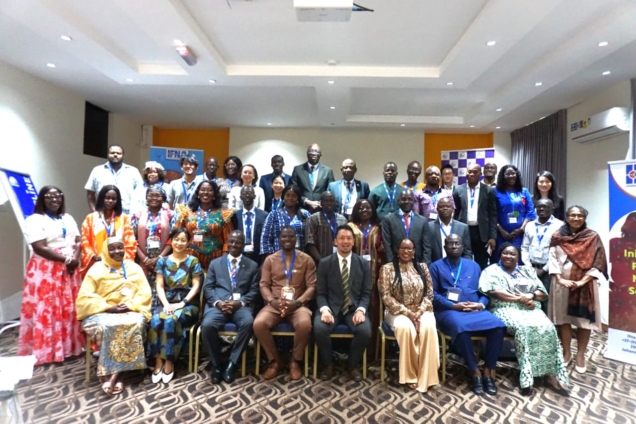
The Initiative for Food and Nutrition Security in Africa (IFNA), in partnership with the Economic Community of West African States (ECOWAS), has announced a pivotal regional training designed to bolster national technical capacities for food security and nutrition within ECOWAS Member States.
The training was held at the Airport View Hotel in Accra.
The intensive three-day program aimed to equip national technical officials with advanced knowledge and practical tools to address the complex challenges of nutrition across various sectors.
Building on IFNA's established framework, which was jointly launched by the African Union Development Agency-NEPAD (AUDA-NEPAD) and Japan International Cooperation Agency (JICA) in 2016, the training emphasized two key approaches: the Nutrition-focused Food Access Improvement Approach (NFA) and the Multi-sectoral Approach (MSA).
The NFA focuses on identifying dietary gaps through assessment and recommending food-based solutions, while the MSA provides a comprehensive examination of multi-sectoral efforts to understand and address the underlying causes of malnutrition.
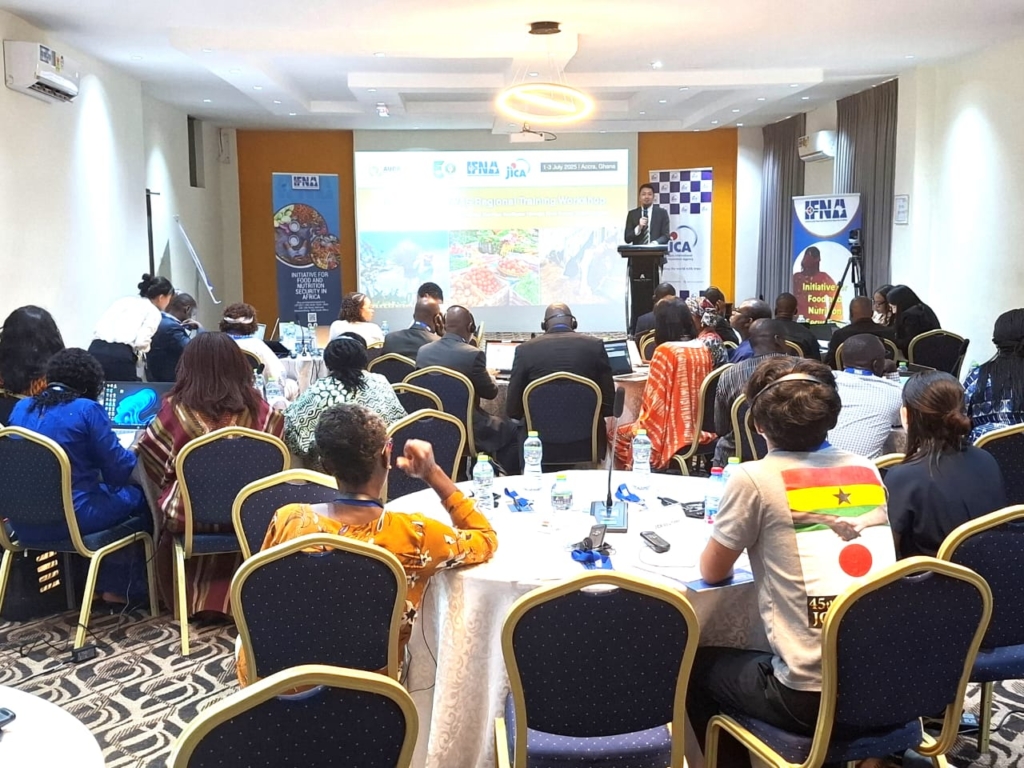
Participants gained critical insights into developing a Multidimensional Action Plan for implementation, informed by data and robust analytical tools.
In the opening address, the Senior Representative of JICA Ghana, Ryotaro Oda, underscored the urgency of collaborative action,
"Despite global efforts, malnutrition remains a critical challenge in Africa. Climate shocks – from droughts to floods – alongside conflicts in Ukraine and Gaza, threaten vulnerable communities. Through IFNA, we empower nations to transform policies into tangible actions using multisectoral strategies."
Aligned with the UN Sustainable Development Goals (SDG) 2 and Africa’s CAADP framework, the workshop aimed at understanding key nutrition issues within the context of CAADP, SDGs, and national commitments, gaining practical knowledge of relevant investments, intervention measures, and tools, learning about the concept and good practices of NFA and MSA and dentifying priority nutrition challenges and developing Multilateral Action Plans with clear accountability mechanisms.
Upon completion of the training, participants deepened their understanding of nutrition issues, acquired practical knowledge of intervention tools, and got better positioned to translate national and regional nutrition targets into actionable strategies.
An IFNA regional consultant will further collaborate with country teams to develop project concepts and identify funding opportunities.
Latest Stories
-
Tamale Water Project to help address northern Ghana’s water shortages – Ghana Water Limited
19 minutes -
Oil prices fall and stocks rise after Trump says Iran war ‘very complete’
26 minutes -
Ghana-Peru Relations: Foreign Ministry outdoors new book focusing on a Journey of Friendship and Cooperation
29 minutes -
Kufuor advocates strict separation of powers to strengthen Ghana’s democracy
29 minutes -
Well-structured governance institutions improve efficiency and strengthen democracy – Kufuor
33 minutes -
Two Turkish firms to construct water treatment plant for Eastern Accra
36 minutes -
Rising sophistication in science and technology is deepening corruption – Kufuor
50 minutes -
Allegations of product hoarding by OMCs are baseless – CBOD
54 minutes -
Council of State not enough to check executive – Kufuor
55 minutes -
CLOGSAG strike without production: Ghana’s dangerous culture of entitlement
59 minutes -
Achimota School raises infrastructure concerns as surging demand outpaces facilities
59 minutes -
Ghana’s economic challenges fuel corruption, private sector must grow – Kufuor
1 hour -
Five Iranian footballers granted Australian visas after anthem protest
1 hour -
Kufuor calls for higher pay for public servants to curb corruption
1 hour -
Kufuor calls for stronger separation of powers, greater parliamentary control over national budget
1 hour