

Audio By Carbonatix
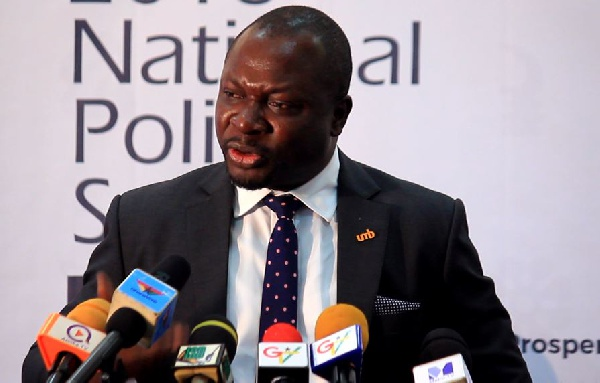
CEO of the Ghana Association of Banks (GAB), John Awuah, says the challenges in Ghana’s lending system reflect the character of the country and deep structural deficiencies that extend far beyond the banks themselves.
Speaking on JoyNews’ PM Express on November 12, he said that comparing Ghana’s lending rates to those in Côte d’Ivoire exposes systemic problems that have nothing to do with banking discipline alone.
He pointed out that many of the banks operating in Ghana also operate in Côte d’Ivoire, yet they lend at much lower rates there.
“Half of the banks operating in Ghana are also operating in Côte d’Ivoire — talk of the Ecobanks, Access Bank and the likes. How is it that in Côte d’Ivoire, the same bank is able to lend at the rate we are talking about?” he asked.
According to him, the difference is not simply about risk or management. It is about the broader systems that support financial operations.
“It’s a character of a country and the structural deficiencies that we have in this country,” he said.
He explained that processes within key state institutions affect how banks function and how credit risk is assessed.
“We have a lot of structural bottlenecks — from the Lands Commission to the court system to credit culture,” he noted.
Mr. Awuah said the absence of a unified credit reporting system makes it difficult for banks to properly assess loan applicants.
“If Mr Joseph Obeng [GUTA president who was also on the show] approaches a bank to borrow, let’s say ¢100,000, all the bank could do is say, Oh, where else do you have exposure? It is word of mouth. There is no mechanism for having a 360 view of the customer,” he explained.
He said borrowers often withhold information about other debts, making it impossible for banks to assess their true financial exposure.
“Whether he has a supplier’s credit, he won’t disclose to the bank. Whether he has taken a loan from the landlord of the property where he rents, whether he is even in arrears, he won’t disclose to the bank,” Mr Awuah said.
This lack of transparency, he warned, distorts lending decisions and increases the risk of loan defaults.
“So the bank gives ¢100,000, thinking it is going to maybe bring goods from China to sell, make money, and pay back the loan.
"Half of it goes to pay the supplier, another half goes to pay rent and salary in arrears. By the time you realise, what you funded is gone. Where is he going to get the money to pay you back?” he said.
Mr Awuah insisted that Ghana’s lending environment cannot be fixed by focusing on banks alone.
The weaknesses, he said, lie in the national systems that define how information flows, how property is verified, and how the courts enforce credit agreements.
“The system that gives the bank a 360 view of the customer is non-existent,” he emphasised.
Latest Stories
-
President Mahama to attend One Health Summit in France, hold bilateral talks with Macron
36 minutes -
Mahama endorses ADB at Kwahu Business Summit
2 hours -
Every gram will be tracked – Gold Board unveils traceability push to deal with illegally-mined gold
2 hours -
Analysis: Why the Bank of Ghana sold half its gold reserves
2 hours -
Buy wrong gold, face prosecution – Gold Board CEO cracks down on rogue dealers
2 hours -
Africa pushes integrated health agenda ahead of One Health Summit in Lyon
3 hours -
We own the strategy, its not head office decision – GCB MD positions bank as engine of Ghana’s economy
3 hours -
No more waiting for head office – GCB boss pushes Ghana-first banking
3 hours -
Mahama lauds Julius Debrah for shaping Kwahu Business Forum
4 hours -
Why actors beg in difficulty – Patience Ozokwor on Nollywood financial struggles
4 hours -
Any man who apologises to woman deserves to suffer – Brymo
4 hours -
Nigerian artistes no longer put effort into making music – Omah Lay claims
4 hours -
‘I’m now skeptical about going into politics’ – Davido
4 hours -
Nigeria’s Seplat Energy resumes operations as oil workers halt strike action
5 hours -
Nigeria launches manhunt after abductions by bandits in northwest Zamfara
5 hours