

Audio By Carbonatix
A joint study by the University of Port Harcourt, Nigeria and the Kwame Nkrumah University of Science and Technology, Kumasi has unveiled alarming findings regarding the presence of cancer-causing substances in meats singed with different fuel sources.
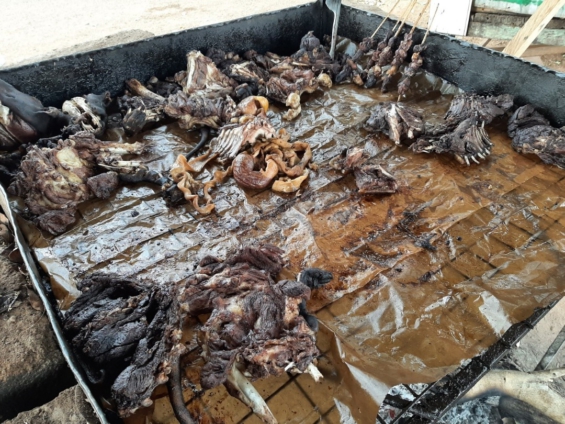
The study published in the journal Environmental Health Insights has found that meats singed with tyres in Ghana contain high levels of harmful chemicals called polycyclic aromatic hydrocarbons (PAHs). These chemicals can increase the risk of cancer.
The study led by Prosper Manu Abdulai from the University of Port Harcourt tested meats singed with tyres, firewood, and LPG gas in Ghana’s five largest cities: Kumasi, Accra, Koforidua, Tamale, and Ho.
The researchers collected 180 samples of cattle and goat meat singed using three different fuel types: firewood, liquefied petroleum gas (LPG), and tyres.
They found that meats singed with tyres had the highest levels of PAHs, especially a dangerous chemical called Benzo[a]pyrene.
Children and older adults are more at risk from these chemicals.
“We did a health risk assessment and we realise that kids and adults who take this meat whether singed with firewood or tyre are at serious risk of getting cancer,” he warned.
The study recommends using safer methods like LPG gas for singeing meat and calls for stricter rules to prevent the use of tyres. This is especially concerning as the levels of this harmful substance in tyre-singed meats exceeded regulatory limits set by the European Food Safety Authority (EFSA).
The researchers call for the urgent need to explore and promote alternative singeing methods that minimise PAH formation.
LPG, which demonstrated the lowest PAH levels among the tested fuels, could be recommended as a safer alternative to traditional fuels like firewood and tyres.
Moreover, the study advocates for stricter regulations regarding the use of tyres for meat singeing, urging authorities to impose heavy penalties for non-compliance to protect public health and ensure that consumers are not exposed to harmful substances.
“The stakeholders should have something to do at the abattoirs so that all of them will use the LPG,” he recommended.
Latest Stories
-
I assure Otumfuo, Mahama will join him to commission KNUST Teaching Hospital by end of this year – Haruna Iddrisu
15 minutes -
Gov’t to roll out free special education for persons with disabilities from July 1 – Education Minister
37 minutes -
“We used it to test our officiating officials’ readiness” – Bawah Fuseini after CAA Athletics event
1 hour -
Volleyball emerges as Ghana’s fastest rising sport
1 hour -
National Sports Fund needs strong leadership from the top – Administrator David Wuaku
1 hour -
JoySports Exclusive: Steve McLaren in talks with GFA after expressing interest in Black Stars job
2 hours -
Fire guts auto parts warehouse at Bubuashie, one fire officer injured
2 hours -
I owe my victory to coach Ofori Asare – Allotey after winning WBA Africa Gold Super Flyweight belt
2 hours -
Church of Pentecost supports over 2,000 BECE candidates in Obuasi with career guidance seminar
3 hours -
Brandon Asante and Coventry all but promoted to Premier League despite Sheffield Wednesday draw
4 hours -
GPL 2025/26: Late Kwartemaa strike downs Hearts in Tema
4 hours -
Ghana Faces Sierra Leone Moment as Prosecutorial Powers come under strain
4 hours -
Don’t consume fish or seafood from Tema Shipyard until further notice – FDA warns
4 hours -
Why volunteering might be Africa’s most underrated career accelerator
4 hours -
ActionAid Ghana raises concern over gender gaps in Feed Ghana Programme
4 hours