

Audio By Carbonatix
Journalists have been urged to help turn the page on how society perceives people with disabilities, by using positive language when reporting on such persons.
According to Madam Victoria Oliver from the US Embassy, Ghana, there are over three million Ghanaians living with disabilities but too often their stories, their challenges, and as importantly, their successes go untold.
“Without these stories: a woman in Takoradi may not recognize the persistent challenges her disabled neighbor faces and how she can become an ally;
“A disabled teenager in Accra never sees someone like him portrayed as a successful Ghanaian and is less likely to advocate for himself;
“A business owner in Cape Coast doesn’t understand the impacts his policies have on disabled clients and employees; and
Society as a whole loses out because all of its citizens are not fully engaged economically, socially or civically,” she stated.
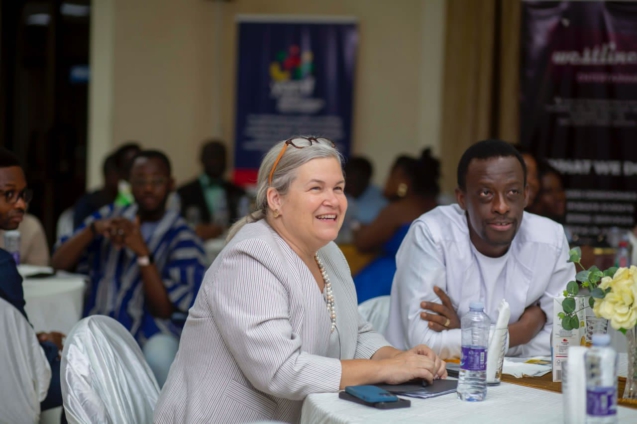
Speaking at the second Media Capacity Building Initiative for Reporting on Disability (MCBIRD) in Takoradi, Madam Victoria Oliver explained journalists have the potential to change the narrative.
“That is where you come in. Free and fair democracies depend on free press and professional journalism to function. Dynamic economies need all of its citizens reaching their full potential. We thrive when all voices – including those from marginalized communities – are represented by factual and balanced reporting.
“I challenge you to take what you have learned here and put it to use as soon as possible. Write the story that helps the reader think differently about the lives of disabled people and hold yourself and your colleagues accountable to using inclusive and positive language in you reporting, But most importantly, I challenged you to truly connect with disabled people and help their voices be heard,” she said.
Madam Oliver stated that this is the ideal time to begin to turn the page on disability reporting and begin to include voices who have been ignored; to begin to tell the stories we all need to hear; and to become more inclusive in our coverage and in our society.
“So why is the United States government, along with the Ghanaian leaders here today, supporting this issue of more inclusive reporting? It is because we recognize the inherent value of people with disabilities as individuals and acknowledge the collective value of their contributions and their participation in schools, workplaces and communities everywhere,” she stated.
Latest Stories
-
Former President Akufo-Addo takes on new role in Anglican Church
8 minutes -
MTN Ghana steps up sensitization on efficient and safe data usage
8 minutes -
Mfantsipim celebrates 150 Years with historic launch of anniversary songs and commemorative cloth
11 minutes -
Korle-Bu doctors accuse management of staging ‘perfect’ emergency ward for Health Minister’s visit
44 minutes -
Ghana’s historic proposal for a UN Resolution on Transatlantic Slave Trade as the gravest crime against humanity. Revisiting the depth beneath our silence
45 minutes -
Korle-Bu accident and emergency centre under strain as doctors warn of legal and safety risks
58 minutes -
Ghana pushes landmark UN Resolution on Reparations for slave trade
60 minutes -
NPP’s poll decline ‘startling’ – Prof Nortey calls for introspection
1 hour -
Consumers to feel impact of Burkina Faso tomato ban – Peasant Farmers Association
1 hour -
ICGC hosts DOULOS Conference 2026 to raise enduring church leaders
1 hour -
NPP support declining, NDC gaining ground – Global Info Analytics poll
1 hour -
LCF leads successful prison outreach at Nsawam, extends hope to inmates
2 hours -
Ibrahim Mahama announces legal action against Black Maria special operations team over alleged assault in Tamale
2 hours -
2026 World Cup: US Embassy reduces Visa waiting time, warns against wrong applications
2 hours -
E&P to invest $1.2bn in Tarkwa and Damang mines, sends 30 heavy-duty trucks to site
3 hours