

Audio By Carbonatix
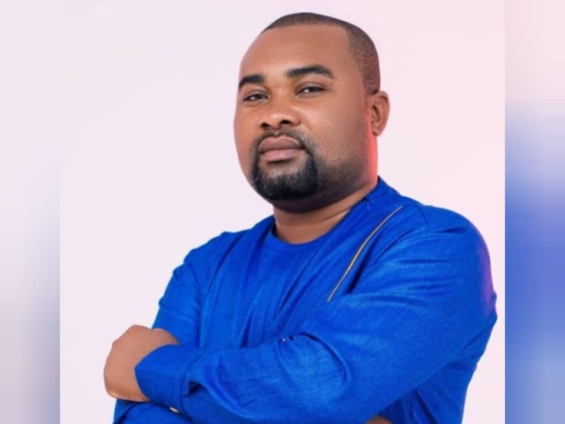
Dr Razak Kojo Opoku, a university lecturer and former Public Relations Manager of the National Lottery Authority (NLA), says the credibility and corporate social responsibility record of the KGL Group have helped it withstand sustained media attacks and remain focused on contributing to Ghana’s economy.
In a statement copied to the Ghana News Agency in Accra, Dr Opoku described KGL as a company whose “credibility, integrity, reputation, and selfless nature” had successfully negated what he called coordinated attempts to undermine its operations, particularly the NLA–KGL partnership.
He argued that the decision by the NLA Board to seek legal advice from the Attorney-General on the licensing agreement with KGL was standard practice and should not be misinterpreted.
“Frankly speaking, this exercise will once and for all put to rest the shameful, unethical media agenda by some people against the NLA–KGL deal,” he said.
Context of the review
Dr Opoku explained that the original NLA–KGL licensing agreement was drafted and coordinated by a sub-committee of the NLA Board, chaired by the Attorney-General’s representative, making it appropriate for the current Board to again seek legal guidance.
According to him, the deal has undergone multiple reviews under different NLA boards, all within the same government, stressing that the current review under a new administration is not unusual.
“All these reviews happened under the same government. Therefore, it is nothing new if the NLA–KGL deal is going through a review process under a different government with a different Attorney-General,” he noted.
Quoting former President John Dramani Mahama, Dr Opoku added that “review is not the same as cancellation,” and criticised some media outlets for claiming credit for the latest review process.
Defence of the KGL partnership
The lecturer dismissed claims by investigative groups that the NLA–KGL deal is problematic, insisting that no specific wrongdoing has been identified.
He said the partnership, which began in 2019, transformed Ghana’s lottery sector after several failed attempts by the NLA and private firms to digitise the 5/90 lottery through USSD and online platforms between 2008 and 2019.
“KGL Technology took on the challenge of digitising the traditional lottery industry and delivered an overwhelming transformation,” he said, describing the partnership as a “game-changing” public-private partnership.
Dr Opoku claimed official figures show that digital lottery earnings for the NLA have increased by over 100 per cent since KGL’s involvement, with the company contributing to the Consolidated Fund through taxes, licence fees, and regulatory payments.
“The NLA has never committed any public funds to KGL. It is rather KGL that bears all the risks and liabilities,” he stressed.
CSR and national impact
Beyond revenue, Dr Opoku highlighted KGL’s corporate social responsibility initiatives through the KGL Foundation, pointing to investments in health, education, sports, and community development.
He cited the construction of a multi-million-dollar mental health facility at the Kwame Nkrumah University of Science and Technology (KNUST), noting that Phase One of the project was commissioned on December 9, 2025, by Vice-President Prof Naana Jane Opoku-Agyemang.
He also mentioned scholarships for underprivileged students, donations of medical equipment, sponsorship of the Black Stars, and grassroots football development under a five-year agreement with the Ghana Football Association.
Call to support local businesses
Dr Opoku said KGL’s recognition at the Ghana Club 100 Awards and by Forbes Africa reflects its ethical leadership and social impact, rather than just profitability.
He called on Ghanaians and the media to support indigenous companies, arguing that sustained media attacks have in the past contributed to the collapse of local businesses.
“Supporting indigenous businesses to compete with foreign-owned entities is a collective national civic responsibility,” he said, expressing confidence that KGL would “move from strength to strength” beyond 2026.
The comments come amid renewed public debate over the NLA–KGL agreement and broader discussions about transparency, media scrutiny, and public-private partnerships under Ghana’s changing political landscape.
Latest Stories
-
Trade Minister applauds GUTA as a pillar of economic growth; Prez Mahama honoured
50 minutes -
President’s brother’s takeover of Damang Mines is ‘untidy’ – Alhassan Tampuli
56 minutes -
It’s not true that gov’t decided not to renew the lease for Gold Fields – Bobby Banson
1 hour -
Ghana to boost tomato production with 60-hectare irrigated farms and processing initiatives
1 hour -
E&P’s takeover process of Damang Mines was very clean – Inusah Fuseini
1 hour -
Damang takeover: There is not going to be any job loss; it is a lease change – Bobby Banson
2 hours -
Gold Fields didn’t stop mining at Damang mines; such claims are untrue – Bobby Banson
2 hours -
Engineers and Planners currently operate only in Ghana – Bright Simons
2 hours -
Lands Minister has no legal basis to restrict lease to Ghanaian firms – Bright Simons
2 hours -
Gov’t’s refusal to renew Gold Fields’ lease was simply untenable – Bright Simons
2 hours -
SOS Children’s Villages Ghana deepens partnership with Gender Ministry
3 hours -
Gender Ministry celebrates Christina Koch, reaffirms commitment to empowering girls
3 hours -
Live stream: Newsfile digs into E&P’s takeover of Damang Mines, OSP powers and Anti-LGBTQ Bill
3 hours -
Moody’s maintains Ghana’s rating at Caa1, revises outlook to positive
4 hours -
Zambia elevates tourism education to national priority as President Hichilema backs continental summit
4 hours