

Audio By Carbonatix
A shift to a digitalized economy combined with enabling sound government policies can improve economic efficiency in all sectors.
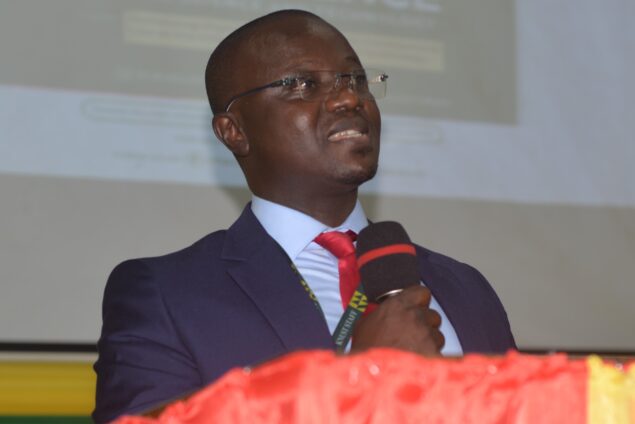
That is according to the Dean of the Faculty of Law of the Kwame Nkrumah University of Science and Technology, Dr. Ernest Owusu-Dapaa.
He was speaking at the maiden edition of an KNUST Faculty of Law International Conference on Law, Science and Technology.
The conference is under the theme: “Harnessing Digitalization for Economic Development: Law at the intersection of science and technology."
The conference attracted renowned academics and legal experts in the field of law, science and technology and other intersecting disciplines.
Participants discussed key challenges that require a targeted and nuanced understanding of the cross-cutting nature of digital transformation and its policy dynamics in Ghana and Africa.
Dr. Ernest Owusu-Dapaa said the initiative is in line with the faculty’s aim to make their activities available for national benefit.
“As a learning community, we have a duty to undertake research to generate knowledge and disseminate the same to support sustainable industrial and socio-economic development.
“Through this conference, we will build, reinforce and scale up innovative solutions to improving the legal channels that can be adopted in response to potential challenges that will emerge from our digitalization drive,” he said.
Vice-Chancellor of KNUST, Prof. Rita Akosua Dickson emphasized the university’s commitment to improving the digital space.
“We will continue to research and develop applications, software and programmes to help drive the digitalization agenda. Not only in the justice delivery system but for the common use of the ordinary Ghanaian,” she said this in a speech read on her behalf by the Pro Vice-Chancellor, Prof. Ellis Owusu-Dapaa.
A computer engineer, Prof. Kwame Osei Boateng called for policies to realize the gains in digitization.
“We have to ensure a sufficient level of internet infrastructure development and digital education and also to reduce the digital divide.
“This brings policy makers face to face with challenges of harnessing the maximum benefits of digitalization,” he noted.
The conference is divided into 6 cardinal themes aimed at providing insights into the interface of the law, its boundaries with science and technology.
These include; Technology and the Court, Technology and Medical Law Issues, Rights to Privacy and Technology, Emerging Technology and the Law, Digitalization Law and Ethics and Technology Commerce and Banking.
Dr. Owusu-Dapaa revealed that all accepted and presented papers at the conference will feature in the maiden edition of the International African Journal of Law, Science and Technology.
Latest Stories
-
GPRTU in Savannah Region to protest alleged eviction in Damongo
24 minutes -
Re: Reinsurance does not replace process — A response to the SIGA–SIC defence
39 minutes -
Gender Ministry supports Harriet Amuzu in ongoing abuse case
52 minutes -
AG joins plaintiff to scrap OSP ?: We should be mindful of the mischief in this – Bobby Banson
58 minutes -
Samson Lardy Anyenini questions willingness of Attorneys-General to prosecute political colleagues
1 hour -
It is only fair the OSP is heard in Supreme Court case – Bobby Banson
1 hour -
Asiedu Nketia resumes Ashanti tour, second leg kicks off on Sunday
1 hour -
NLA denies salary cut claims, threatens legal action over reports
1 hour -
BoG Governor honoured for stabilising cedi, improve inflation
1 hour -
Kyebi Easter Homecoming 2026: A resounding success!
2 hours -
RNAQ divorce ruling: What the noise is hiding
2 hours -
Trade Minister applauds GUTA as a pillar of economic growth; Prez Mahama honoured
2 hours -
President’s brother’s takeover of Damang Mines is ‘untidy’ – Alhassan Tampuli
2 hours -
It’s not true that gov’t decided not to renew the lease for Gold Fields – Bobby Banson
3 hours -
Ghana to boost tomato production with 60-hectare irrigated farms and processing initiatives
3 hours