

Audio By Carbonatix
Two Biomedical Engineering students at the Kwame Nkrumah University of Science and Technology, Kumasi have designed a medical device to improve fluid management during surgical procedures.
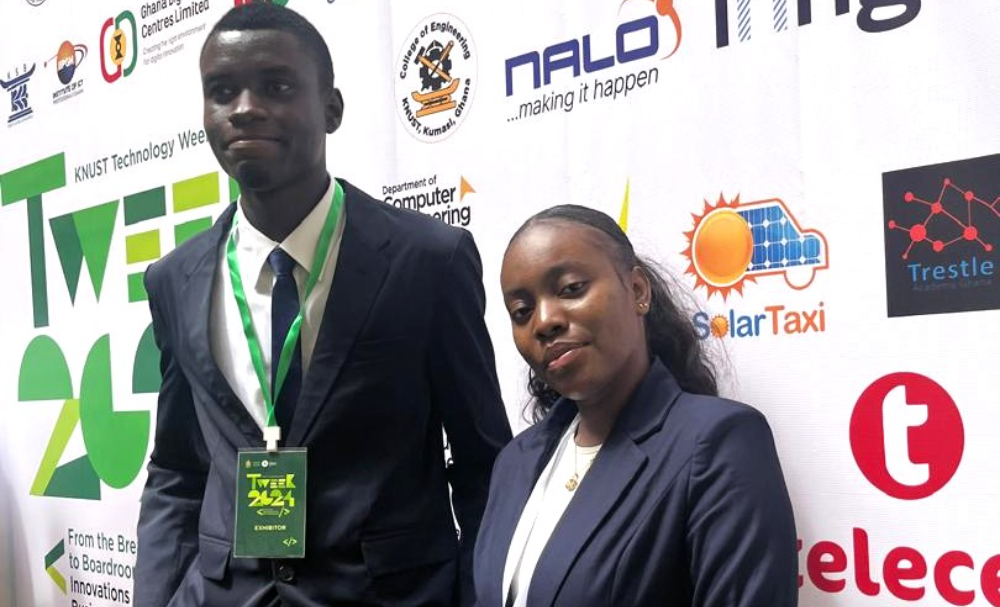
The project, developed by Otema Darfour Manu and Bright Mensah, aims to reduce errors and enhance patient comfort during surgeries such as ureteroscopy and plasmapheresis.
Infusion pumps are commonly used in hospitals to deliver fluids to patients during surgery. However, many of the current systems are manually operated, which can lead to errors in fluid levels, temperature control, and timing. These issues can increase the risk of complications and patient discomfort.
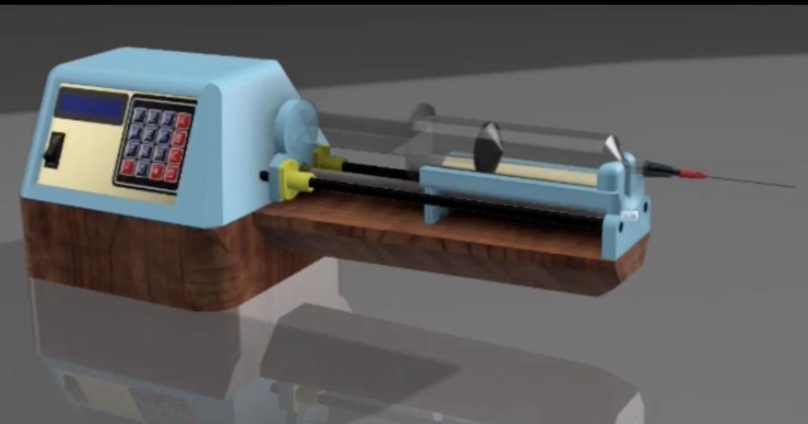
To address these challenges, the students developed a two-way syringe infusion pump. The pump automatically controls both the delivery and withdrawal of fluids. It also includes a built-in warming system that maintains a consistent fluid temperature. The system uses a closed-loop control method, allowing it to adjust in real time based on the patient’s needs.
The device is particularly useful in procedures like ureteroscopy, where managing fluid pressure is critical. Improper control of pressure can damage the kidneys. With this new pump, fluid pressure is maintained at safe levels without the need for constant manual adjustments.
In plasmapheresis, where temperature control is crucial, the built-in fluid warmer ensures that the patient receives fluids at the appropriate temperature throughout the procedure. This enhances both the efficiency of the process and the patient’s comfort.
The students believe their project could help redefine surgical fluid management in hospitals across Ghana and beyond. Their next step is to conduct broader clinical tests and refine the device for use in various types of surgeries.
The project was supervised by Dr. Isaac Acquah of the Department of Computer Engineering at KNUST. The team hopes that, with additional support, their innovation can be produced at scale and implemented in hospitals to improve patient safety and procedural accuracy.
They also see potential for the device to be adapted for use in remote healthcare settings where resources are limited. The students are currently seeking partnerships to help advance the project.
Latest Stories
-
Iran ceasefire deal a partial win for Trump – but at a high cost
11 minutes -
Oil slides below $100 after Trump announces two-week ceasefire
20 minutes -
Ex-Meta worker investigated for downloading 30,000 private Facebook photos
41 minutes -
‘We’ve become quite experienced in negativity’ – Liverpool’s Slot
5 hours -
Legendary manager Lucescu dies days after resigning
5 hours -
One dead as train travelling 99mph collides with lorry in France
6 hours -
Airlines cut flights and hike fares as fuel prices surge
6 hours -
Kane inspires Bayern to first-leg advantage over Real Madrid at Bernabéu
6 hours -
Wireless Festival cancelled after Kanye West blocked from coming to UK
6 hours -
Wa West MP commissions five boreholes for the benefit of his constituents
6 hours -
Havertz’s late strike hands Arsenal narrow first-leg advantage over Sporting
6 hours -
Damang mine award: Minority not against Ghanaian participation; we’re asking for fair process – Konadu
7 hours -
NPA to enforce stricter registration rules for petroleum tankers
7 hours -
Manhyia South MP laments decline in hospitality operations in his constituency
7 hours -
How a simple clean charcoal innovation could benefit Ghana’s climate future
7 hours