

Audio By Carbonatix
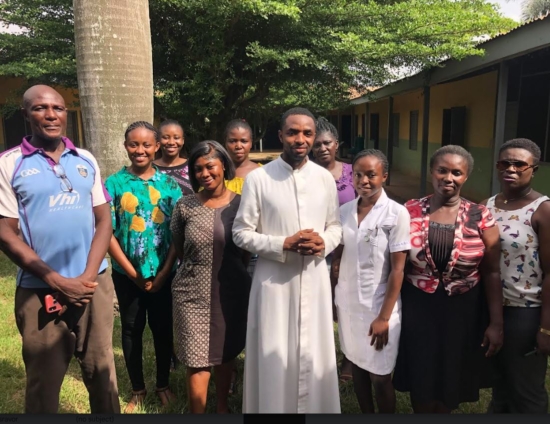
The Kumasi Cheshire Home is calling on benevolent individuals and organisations to extend assistance to the institution.
According to the administrator, Rev. Fr Theophilus Nyamekye, the home is in dire need of financial support to ensure continuous operation.
“Our main challenge has to do with finances, some of our buildings are old and they need renovations. We also have to tear down some of these buildings and put-up new ones. So, please we are pleading to all organizations both governmental and non-governmental institutions, to come to our aid,” he said.
The Leonard Cheshire Disability Home popularly called the Kumasi Cheshire is a non-profit, non-governmental organization established to support the mentally challenged individuals to become economically, psychologically and socially useful people in the society.
The Home is a partner of Leonard Cheshire Disability Global Alliance and a member of the West Africa Regional Council with Headquarters in Freetown, Sierra Leone.
Since its inception in 1986, the Kumasi Cheshire Home has positioned itself to serve the needs of patients between the ages of 18 to 55.
The over 35-year-old Kumasi Cheshire Home, banks its hope on public benevolence. The Home is battling inadequate medication due to high cost and short supply, forcing them to discharge patients back to the streets.
Mrs. Harriet Osei Owusu, the Public Health Officer at the Kumasi Cheshire Home, said, “Most of our challenges are drugs. Sometimes the government provides us with some programme drugs and it’s not always. It sometimes comes twice a year and this calls for us to buy them ourselves for our patients,” she said.
Mrs Osei Owusu also touched on the challenge with inadequate human resources. “If you take a look at our staff you see we are few. Our staff are few for our patients. We need more staff to help make our work more effective. Another challenge is with food. We are not too stable with finance and sometimes it gets difficult with food."
We sometimes depend on donations from anybody at all. The medications our patients take requires that they eat often and this poses some difficulty and relapses in recovery,” she said.
Mrs. Harriet Osei Owusu is again worried the situation could lead to the closure of the Home. “We had a cottage for rehabilitation and skills learning but our machines are have broken down. We used to teach them sandals making, wigs, and hairdressing but the tools for these training programmes are no more,” she lamented.
The rehabilitation programme takes 9 to 18 months and the maximum bed capacity is 55.
Latest Stories
-
‘Selective Justice’ — Omanhene Kwabena Asante accuses GIADEC CEO
19 minutes -
Majority of Ghanaian importers lack awareness of cargo insurance – Gyampo
25 minutes -
GJA Ashanti applauds Asantehene for securing land for new press centre
29 minutes -
Ghana to benefit from France’s National health platform following Paris talks
44 minutes -
Due process must prevail in Ofori-Atta’s immigration and extradition cases – Lawyer
52 minutes -
Oil palm fund will create coherent ecosystem, boost supply—DBG CEO
54 minutes -
Police arrest man for illegal drug peddling at Pankrono
57 minutes -
Industry collaboration key to solving skills mismatch – NYA CEO Osman Ayariga
1 hour -
Ghana, Egypt deepen security ties following high-level meeting
1 hour -
Every neurodivergent child deserves to thrive – AWARE 2026 walk set for North Legon
1 hour -
Ghana-Russia Centre, ATF donate to Princess Marie Louise Children’s Hospital
1 hour -
NPP increases polling station coverage per election committee from 10 to 25
1 hour -
Ghana card cannot be used for financial transactions – NIA debunks false reports
1 hour -
Successful conviction secured for illegal fish processing operation in Watford
1 hour -
Bowen: Ceasefire means respite for civilians, but it might not last long
2 hours