

Audio By Carbonatix
The Founder and CEO of Afcallo Ventures, Christabel Ofori, has sounded an alarm over the leaky pipeline that sees brilliant girls drop out of Science, Technology, Engineering, and Mathematics (STEM) tracks before reaching the professional level.
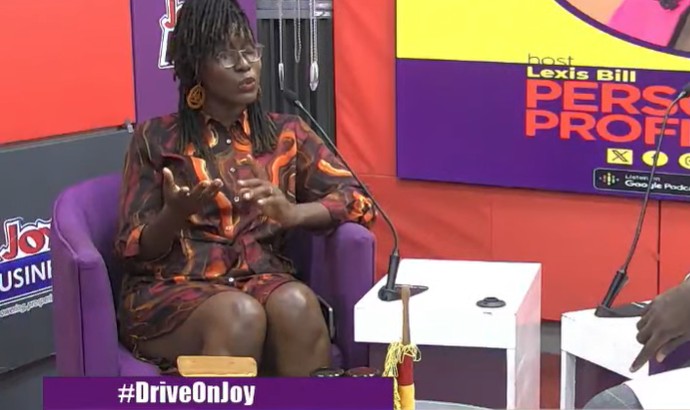
Speaking with host Lexis Bill on Joy FM’s Personality Profile in a thought-provoking interview on Thursday, January 22, 2026, the chemical engineer reflected on her own journey, highlighting how societal myths and a lack of visual representation create an invisible barrier that discourages girls as they transition from basic to tertiary education.
The JHS-to-University Vanishing Act
Ms Ofori observed a puzzling trend in Ghana’s educational system: while girls often dominate the top of their classes at the Junior High School (JHS) level.
However, their presence thins out significantly by the time they reach Senior High School (SHS) and university.
“Usually, at the JHS level, some of the brightest students are always the women, right? So somehow, as we go into SSS and university, it's like we are falling behind,” She bemoaned.
Ms Ofori attributed this phenomenon to a complex mix of biological transitions and rigid societal expectations.
“I guess it has to do with puberty and growing up and all the emotions and things that come with being a woman, and also society or stereotypes.”
The Helmet Stereotype: A Barrier of Visibility
For many young girls, the face of engineering remains stubbornly male.
Ms Ofori emphasised that the lack of female role models in hard hats and technical gear sends a silent message to young women that they do not belong in those spaces.
“We always mostly see the men in the helmets, like growing up. How many women do you see in the helmets? So you feel like this is a thing for men, or ‘they say it's difficult’,” she remarked.
This narration of difficulty almost deterred Ms Ofori herself.
She admitted that had it not been for a timely intervention by a family friend, her career might have taken a different path.
“Even before I chose [Chemical Engineering] seriously, if it wasn't for my mom's friend who encouraged me, engineering would not be a course I would have pursued. It just felt like they say it's difficult. You've not even experienced it to know.”
The Data: A Stark Reality for Women in STEM
Recent data underscores Ms Ofori's concerns.
According to a 2024 Ghana Statistical Service (GSS) Report, women constitute only 24% of professionals in STEM-related fields in Ghana.
The disparity is even more pronounced in technical sectors like engineering and computer science, where female participation drops below 15% in certain regions.
A New Calling: Encouraging the Next Generation
Determined to change the narrative, the Afcallo CEO has pledged to use her platform to demystify engineering for girls.
She believes that women who have successfully navigated the difficulty of STEM have a moral obligation to reach back and pull others forward.
“I think people like me need to do better and encourage women that it's not as difficult. I'll make it one of my callings,” she vowed.
As Ghana continues to invest in STEM-specific schools and digital training initiatives, Ms Ofori’s testimony serves as a reminder that infrastructure alone is not enough, but the nation must also dismantle the psychological and cultural "helmets" that keep girls from envisioning themselves as the engineers of tomorrow.
Latest Stories
-
Friends of Bridget Bonnie Marks her 35th birthday with donation to Kasseh Model Health Centre
31 minutes -
Landfilling waste management creates no value, it’s an economic waste
58 minutes -
Photos: Speaker Bagbin Commissions MPs constituency office under parliamentary decentralisation programme
1 hour -
Black Stars technical advisor Winfried Schäfer sacked as GFA shakes up backroom staff
1 hour -
Wenchi water project almost complete, critical to gov’t agenda – GWL MD
2 hours -
Anti-LGBTQ+ bill not part of government’s legislative agenda – Inusah Fuseini
2 hours -
Anti-LGBTQ Bill: Forget the rumour mongers, I’m a man of action, and will pass the bill – Speaker
2 hours -
Women and children among those killed in Sudanese army shelling of wedding celebration
2 hours -
President Mahama is not sincere with Ghanaians on LGBTQ bill matter – Hassan Tampuli
3 hours -
Gov’t to establish Prison Industrial Hub to equip inmates with income-generating skills – Prison Service boss
3 hours -
Alhassan Tampuli donates cement, roofing sheets to support storm victims in Gushegu
3 hours -
Alhassan Tampuli appeals for urgent support for storm victims in Gushegu
3 hours -
The hypocrisy must stop; pass Anti-LGBTQ+ Bill now – Alhassan Tampuli to Mahama
3 hours -
Imprisonment should be rehabilitative, not punitive – Ghana Prisons boss at UNGA
4 hours -
Ga Adangbe traditional priests petition Mahama over McDan aviation licence revocation
4 hours