

Audio By Carbonatix
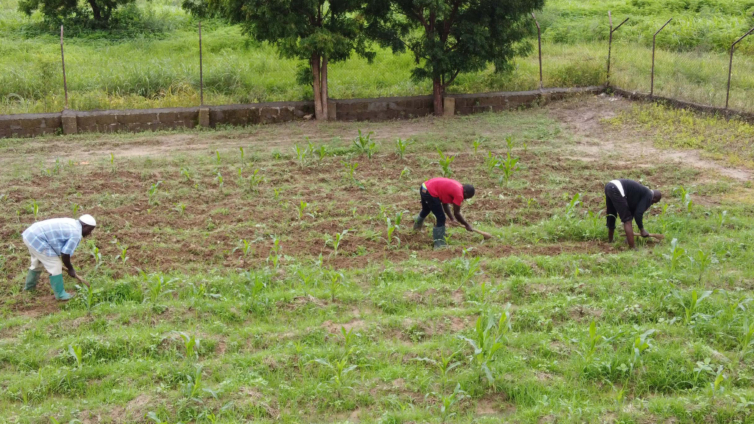
Letshego Ghana, a subsidiary of Letshego Holdings Limited (“Letshego Group”) recently partnered with the Ghana Commodity Exchange (GCX) to facilitate and provide funding for farmers under the Warehouse Receipt Financing Scheme.
The strategic partnership was confirmed through a partnership agreement held between Letshego Ghana and Ghana Commodity Exchange.
The Ghana Commodity Exchange’s Warehouse Receipt Financing Scheme is a financial instrument that receives, grades and stores farm produce and commodities for the local farmers in the Ghana Commodity Exchange’s ‘certified warehouse’.
The farmers are then issued with certificates, enabling them to use their stored farm produce as collateral for loans from Letshego Ghana worth up to 70% of the value of the commodities in the certified warehouse for a maximum period of 6 months.
This represents a great example of impact financing that aims to accelerate the sustainable transformation of the local economy to deliver beneficial outcomes and improve lives for local players, regardless of their scale or size.
Letshego Ghana’s Director Geoffrey Kitakule said, “Letshego’s partnership with the Ghana Commodity Exchange will provide working capital for their farmers, brokers and aggregators in support of their operations. It will also enable farmers in the Accra region to deliver more produce to store in the warehouse operations, helping to reduce their financial burden and enabling them to focus on their core business and to grow and become more competitive in domestic and regional markets.”
The financial support from Letshego Ghana also helps to increase liquidity in the farming value chains by improving the financial security of the farmers and stakeholders along the agricultural value chain making the sector more resilient to market shocks.
The Chief Executive Officer for the Ghana Commodity Exchange Mrs. Tucci Goka Ivowi said, The Ghana Commodity Exchange remains committed to improving the livelihood of smallholder farmers and easing the burden on farmers, especially during the planting season, until they receive their returns upon harvest.
In meeting this objective, we will seek every opportunity to engage with the brokers, aggregators, smallholder farmers and other stakeholders in the agricultural value chain, to understand challenges and provide solutions for farming communities across the country.
Ghana Commodity Exchange’s key goal is to link Ghanaian smallholder farmers to diverse agricultural and financial markets to ensure Ghana's farmers secure competitive prices for their commodities, assuring the market quantity and quality as well as timely settlement of their trade in ways that meet the nutritional needs of the Ghanaian people.
Latest Stories
-
At least 30 feared dead in crush at Haitian tourist site
1 hour -
Four arrested over murder of Scottish businessman in Kenya
1 hour -
New Mainoo deal closer, says Man Utd boss Carrick
2 hours -
Sinner beats Alcaraz to return to world top spot
2 hours -
An inappropriate joke nearly ended his career. Now he’s back with more humour
2 hours -
GPL 2025/26: Dreams FC stage stunning comeback to hammer Eleven Wonders
3 hours -
Livestream: The Probe examines Kumasi’s looming water crisis
3 hours -
MTN Ghana gears up to lead Africa’s AI revolution
3 hours -
Philanthropist Alhaji FuZak donates Da’wah bus to Ambariya Sunni community
3 hours -
GUTA calls for suspension of Publican AI system over trade disruptions
3 hours -
TTAG raises alarm over proposed recruitment of 7,000 teachers, demands national posting roadmap
4 hours -
Civilians feared killed after reports of air strike on Nigerian market
4 hours -
Bishop Simon Kofi Appiah installed as new Jasikan Diocese Bishop
4 hours -
Trump’s Strait of Hormuz blockade threat raises risks and leaves predicaments unchanged
4 hours -
US Court backs extradition of former MASLOC CEO Sedina Tamakloe-Attionu to Ghana
4 hours