


Audio By Carbonatix
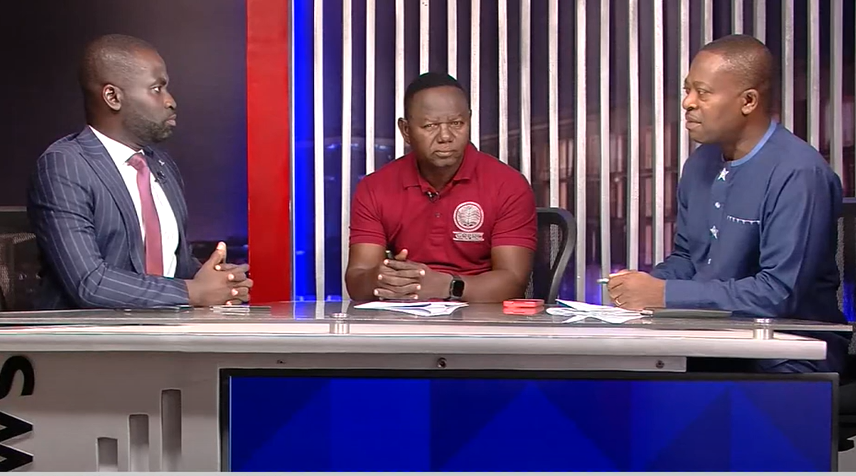
An economist, Prof Ebo Turkson, has expressed strong reservations about the Trade and Industry Ministry's proposed Legislative Instrument (LI) on Export and Import, particularly emphasizing concerns regarding the restriction of selected strategic products.
Speaking on JoyNews’ PM Express, the economist questioned the rationale behind the policy, drawing a historical parallel, where during the era of Ghana’s first President, Dr. Kwame Nkrumah's import substitution industrialisation, where import restrictions were implemented and failed.
According to Prof Turkson such policies should be accompanied by robust support for domestic firms to enhance their capacity.
“It is totally unnecessary. It should not be a policy that should be supported at all. As for import restrictions, it's okay. We need to make sure that we domesticate our consumption. But this has to be data-driven,” he said.
He pointed out a crucial aspect of the issue by stating that Ghana currently faces a situation where local poultry farmers produce only 5 percent of the demand.
Despite the efforts to support local producers, he noted it would take time for production to improve significantly.
In light of this, Prof Turkson questioned the wisdom of imposing restrictions when both locally produced and imported goods are insufficient to meet the demand.
The economist stressed the importance of a comprehensive, data-driven approach to guide policy decisions.
He suggested that any move towards import restrictions should be thoroughly informed by an understanding of the current production capacity and the ability of domestic industries to meet consumer demand.
On Monday, the Trade and Industry Minister, K.T. Hammond, laid before Parliament an improved version of the LI after it was blocked last week over the lack of quorum and consultation.
The LI will compel importers of 22 restricted items, including poultry, rice, sugar, diapers and animal intestines (Yemuadie) to seek licenses from a committee to be set up by the minister.
The Minority in Parliament has, on three occasions, resisted the laying of the LI on the ground that it was not only dangerous but violated international trade practices and could give too much power to the minister, a situation that has the propensity to breed corruption.
Latest Stories
-
We can tackle multiple priorities – Sam George defends Anti-LGBTQ Bill push
19 minutes -
Statement: Ghana Chamber of Mines’ Response to Claims in Joe Jackson’s “Ananse Stories about the Economy of Ghana”
21 minutes -
GES opens 2026 teacher recruitment for licensed B.Ed graduates
23 minutes -
Ghana must value skilled trades, build resilient learners — Ibn Chambas
31 minutes -
Ghana must rethink education around relevance, resilience and responsibility — Ibn Chambas
34 minutes -
Prince Harry faces defamation lawsuit from charity he co-founded
36 minutes -
South Korea deploys thermal cameras to track escaped zoo wolf
37 minutes -
Calls for royal meeting with Epstein survivors grow ahead of US visit
41 minutes -
Ibn Chambas advocates blend of technology and human values in education
42 minutes -
UMA improves healthcare access in Asutifi North with GH₵700k ‘Kim Taylor Legacy’ Walkway
47 minutes -
Scholarships Authority and Fanaka University offer sponsorship for procurement and supply chain studies
50 minutes -
Bisa Kdei drops new single ‘Go N Look’ featuring Medikal
57 minutes -
Benin facing rising terrorism in north as French military presence faces growing criticism
58 minutes -
UEW Public Lecture Series 2026: Education debate ‘about the soul of Ghana’s future’ — Dr Ibn Chambas
59 minutes -
EU fingerprint and photo travel rules come into force from today
1 hour