

Audio By Carbonatix
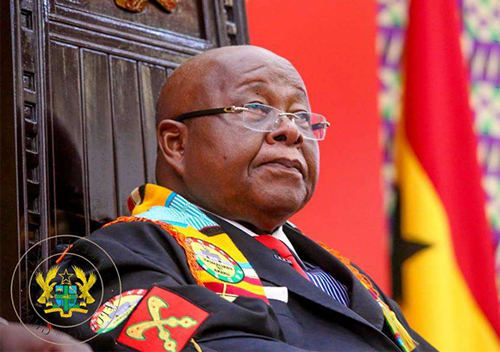
Former Speaker of Parliament, Professor Mike Oquaye, has criticised the lithium mining agreement between government and Barari DV, describing the royalty framework underpinning the deal as unfair and disadvantageous to the country.
His remarks follow the withdrawal of the revised lithium agreement from Parliament on December 10 to allow for further stakeholder consultations.
The decision came after concerns raised by the Majority in Parliament that the proposed 10 per cent royalty rate negotiated under the Akufo-Addo administration conflicts with the Minerals and Mining (Amendment) Act, 2010, which provides for a 5 per cent royalty ceiling.
Speaking in an interview on Channel One TV on Monday, December 15, Prof. Oquaye argued that the public debate should not be narrowly focused on whether the royalty rate should be 10 per cent or 5 per cent.
Instead, he said Ghana must fundamentally rethink how it negotiates returns from its natural resources.
According to him, settling for a minimum royalty of 5 per cent reflects a long-standing failure to protect national interests in the extractive sector.
“The present withdrawal is quite interesting because some people have viewed it in the context of the royalty percentage, from 10 per cent to 5 per cent. But this 5 per cent has existed for some time,” he said.
Prof. Oquaye expressed frustration that Ghana continues to accept low returns from high-value minerals.
“It’s very painful to envisage that we have something that has got value, and then we say, when you take this commodity, don’t give me more than 5 per cent. Who does that?
"Honestly, we have not been fair to our nation at all,” he stated, adding that the country should be negotiating minimum royalties of at least 20 per cent.
The lithium agreement, initially presented to Parliament by the Minister for Lands and Natural Resources, Emmanuel Armah-Kofi Buah, relates to the exploration and mining of lithium and other minerals at Mankessim in the Central Region.
The deal has sparked renewed debate about Ghana’s mineral governance framework and the need for stronger terms to maximise national benefit.
Latest Stories
-
Easter gesture: Ablakwa settles medical bills for 85 North Tongu constituents
56 minutes -
Africa must harness its population strength—Titus-Glover
56 minutes -
Visa-free access doesn’t mean unlimited stay – Lom Ahlijah
59 minutes -
From Golgotha to Kwahu: The Easter Migration of the Faithful and the Faithless
2 hours -
How the Ghanaian onion traders’ standoff with Nigeria unfolded and threatened local supply
2 hours -
No compensation for demolished structures on 24-Hour Economy market lands — Gov’t to structure owners
3 hours -
Financial Institutions must back local enterprises to spur growth – Deputy Minority Whip
3 hours -
Photos: Gomoa Easter Carnival 2026 ends in a burst of colour and celebration
3 hours -
Gomoa Easter carnival ends in colour as fashion, music and celebrity appearances light up final night
3 hours -
Families pick Luv Fm Family Party to celebrate Easter Monday with music and more
4 hours -
IMANI flags procurement issues in Ghana Gas insurance switch
4 hours -
Kaneshie footbridge rehabilitation to take up to 9 months — AMA
4 hours -
AMA confirms trading will be banned on Kaneshie footbridge after rehabilitation
4 hours -
IMANI flags procurement concerns in state insurance placements
4 hours -
Mahama’s push for visa-free Africa reflects Nkrumah’s Pan-African vision – Rashid Tanko-Computer
5 hours