

Audio By Carbonatix
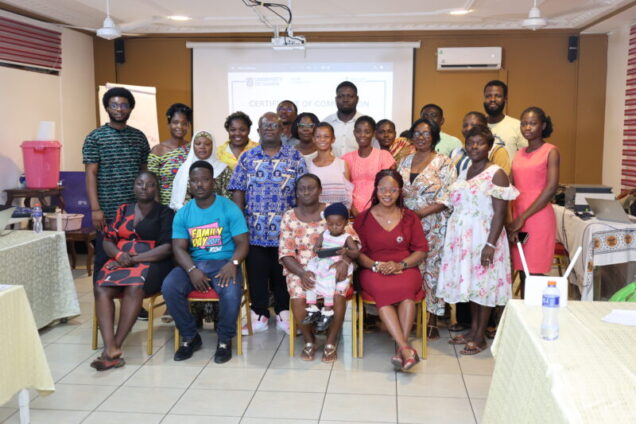
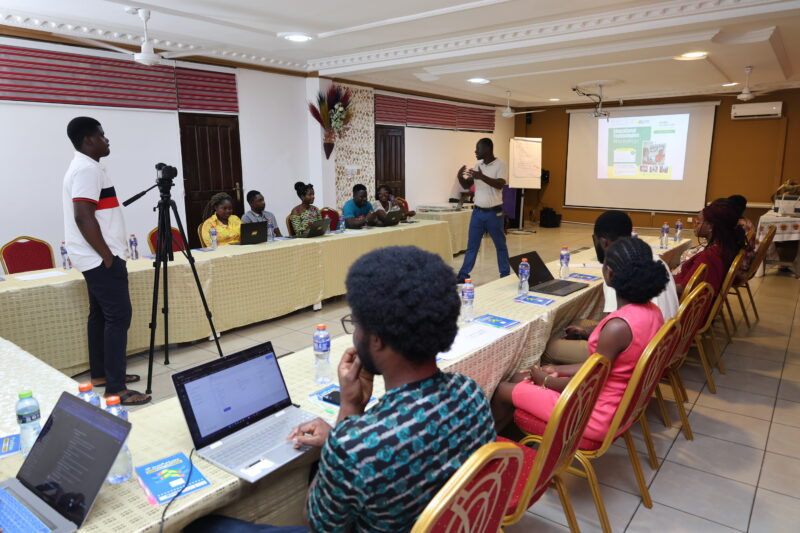
Fifteen selected lower primary school teachers in the Ashanti region are being trained to create Mathematics learning materials.
This initiative, led by the Open Learning Platform for Primary Education (OLPPE), aims to enhance primary education in Ghana by integrating technology into the curriculum, with a particular focus on mathematics for lower primary levels.
Participants from 11 schools are being taught to use generative Artificial Intelligence (AI) and Canva to develop the materials.
OLPPE addresses key challenges in mathematics education, such as curriculum gaps and a lack of student engagement, by creating interactive resources that build foundational knowledge and interest in the subject.
Additionally, the project empowers teachers by fostering collaboration in co-developing digital tools and enhancing their skills for effective use, promoting a more engaging and accessible learning environment in Ghanaian primary schools.
Facilitators are drawn from the University of Ghana, Kwame Nkrumah University of Science and Technology, and the Ghana Institute of Management and Public Administration.
“Through this initiative, we’ve produced downloadable materials. But we think this is not enough; we need to build the capacity of teachers to produce these materials,” said Dr. John Serbe Marfo, a facilitator from Kwame Nkrumah University of Science and Technology.
Project lead and facilitator Prof. Richard Boateng from the University of Ghana was optimistic the initiative would complement the government’s efforts.
“We’re supporting and enabling what the government is already doing. We believe that the government can adopt some of our handbooks for use in deprived areas,” he said.
Facilitators were happy with the positive impact of the training.
“I didn’t know anything about AI or how to use a smartphone to set simple questions. I’m hopeful this knowledge will be shared with other schools,” said Abena Afia Kwakye, a participant.
Another participant, Sarpong Ofori, noted, “It has changed my teaching methods, and I’d like to thank the organizers.”
The initiative is sponsored by Connecting the E-Tech Research Eco-System (CERES) and the Jacobs Foundation.
Latest Stories
-
Gov’t considers exploring local raw materials to stabilise production costs of sachet water prices
3 minutes -
Mahama in Paris: Turning Diplomacy into Delivery
5 minutes -
Middle East crisis shows Ghana needs to diversify energy sources – Energy expert
32 minutes -
Government of Ghana Internal Revenue Generation cannot fund Big Push in Four Years
40 minutes -
EPCG Moderator urges leaders to serve with courage and humility in Easter message
1 hour -
The Cobra at the gate: When good intentions overrun the system
1 hour -
Easter service disrupted in Nyanyano as suspected land guards storm church event
1 hour -
Price surge exposing NDC gov’ts dishonesty -Titus Glover
1 hour -
Afigya Kwabre North MP urges Finance and Energy Ministers to submit energy sector report
1 hour -
Deliver quality or face sanctions — GETFund administrator cautions contractors
2 hours -
Kwahu Easter festivities trigger condom shortages; Health teams boost awareness
2 hours -
Victims of a legend: The women Daddy Lumba left behind
2 hours -
Mahama vows to prioritise roads, social amenities in Savannah region
3 hours -
Mahama sets up 18-member panel to advance Africa-led global health reforms
3 hours -
Ghana Medical Trust Fund Administrator urges hope and compassion in Easter message
3 hours