

Audio By Carbonatix
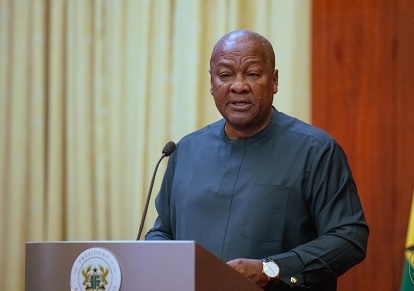
President John Mahama has attributed the devastating flooding that swept through parts of Accra on Monday to a combination of unusually intense rainfall, changing climate patterns, inadequate drainage infrastructure and human activities that have obstructed the city's natural waterways.
The President made the remarks after conducting an aerial assessment of flood-affected communities on June 29, during which he observed the extent of the destruction caused by the heavy rains.
He described the flooding as one of the most severe the capital has experienced in recent years, noting that the rainfall far exceeded previously recorded levels.
According to President Mahama, approximately 140 millimetres of rainfall was recorded in Accra within a single day, compared with a peak of 56 millimetres recorded on a heavy rainfall day during the same period last year.
He explained that data from the Ghana Meteorological Agency also shows a consistent rise in rainfall intensity, with June rainfall increasing from 85 millimetres in 2024 to 172 millimetres in 2025 and reaching 333 millimetres in 2026 over comparable periods.
He said the increasing frequency of rainfall has prevented drainage systems from recovering between storms, thereby worsening flooding in vulnerable communities.
The President further pointed to Accra's geographical setting and rapid urbanisation as significant contributors to the recurring floods.
He explained that the city lies between the Akwapim mountain range and the Atlantic Ocean, with natural watercourses that have gradually been encroached upon by unplanned development.
According to him, population growth and indiscriminate construction have blocked or narrowed many of the channels through which stormwater naturally flows into the sea, creating serious drainage constraints.
President Mahama also blamed irresponsible human activities for aggravating the situation, particularly the indiscriminate disposal of refuse into drains and the destruction of wetlands through illegal dumping and construction.
He expressed concern over reports that some wetlands are deliberately filled with waste before being sold for development, warning that such practices significantly increase flood risks for surrounding communities and undermine efforts to address Accra's perennial flooding challenges.
Latest Stories
-
“NSA did not tell us of any embassy arrangement” – Kofi Adams
8 minutes -
Glasner suffers loss on Selhurst return as Palace beat Forest
2 hours -
WAFU B U17: ‘We won but I expected more from my boys’ – Kassim Ocansey
2 hours -
Man City cruise to statement win over 10-man Liverpool
2 hours -
Be careful with cross-border lending, foreign currency exposures – BoG to financial institutions
4 hours -
GPL 2026/27: Medeama go three clear as Hearts of Oak recover and Bechem stage stunning comeback
4 hours -
Ntiamoah Foundation launches “BEYOND 20” anniversary campaign
5 hours -
Credit Risk Management Directive: BoG to begin implementation for banks, others from July 1, 2027
5 hours -
Ghana Brands Awards 2026: Leading brands, business trailblazers to shine on November 20
5 hours -
T-bills auction: Demand improves as government exceeds target by about 76%; interest rates soften
5 hours -
Ziope undertakes initiative to build a technologically inclined community, commissions self-help ICT lab
6 hours -
ECG announces power outage in parts of Tema, Central Region due to network fault, maintenance
6 hours -
When the Gospel Becomes a Weapon: The church, blackmail and the abuse of faith
7 hours -
JoyNews’ Jacqueline Ansomah Yeboah selected for UK Media Excellence for Emerging Technologies Fellowship
7 hours -
Mental Health Alliance urges government to operationalise Mental Health Fund
7 hours