

Audio By Carbonatix
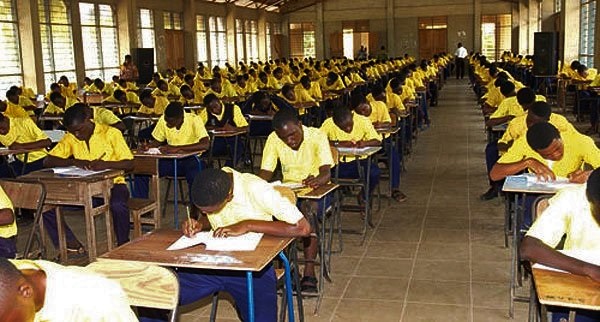
The Founding Dean of the School of Education and Leadership at the University of Ghana, Legon, Professor Jonathan Fletcher, has stated that exam malpractice is most prevalent in Senior High Schools (SHSs).
Prof. Fletcher made this statement while reacting to Adom TV’s Jagri Boaz Binyinyom’s recent documentary titled Cheating to Pass?, which highlighted the rising rate of exam malpractice in Ghana.
The documentary examined whether there is an end in sight to the annual malpractice issue, particularly in the West African Senior School Certificate Examination (WASSCE) and Basic Education Certificate Examination (BECE).
It also followed the West African Examination Council’s (WAEC) decision to withhold over 10,000 WASSCE results due to suspected cheating.
As an effective solution to stop cheating, Prof. Fletcher urged the exam bodies to enhance their use of technology, calling for the adequate equipping of WAEC with advanced technological resources.
Drawing from his experience as an ex-examiner, he noted that exam cheating is most prevalent among SHS students, who are highly motivated to succeed in order to gain admission to tertiary institutions.
To mitigate this issue, Prof. Fletcher proposed that the government introduce additional apprenticeship programs to provide alternative career pathways, which could reduce the pressure to engage in unethical practices.
He also pointed out that excessive pressure from some parents on their children to achieve high exam scores exacerbates the problem of exam malpractice.
“Bringing unrealistic parental expectations under control could significantly reduce fraud,” he stated.
Meanwhile, a study conducted in 2024 revealed a worrying trend of rising examination malpractice in the country.
The study, which covered the period from 2021 to 2023, showed a significant increase in the percentage of candidates involved in examination malpractice, from 2% in 2021 to 10% in 2023.
Presenting the findings at a seminar organized by the West African Examinations Council (WAEC) for stakeholders, the Acting Head of the Accra Section of WAEC’s Research Department, Kwaku Dankwa, emphasized that while the percentage may seem minimal, the actual numbers are alarming, with over 10,000 candidates involved in malpractice in 2021, rising to 44,586 in 2023.
The Asukodo team also visited the University of Media, Arts and Communications – Institute of Journalism (UniMAC-IJ), formerly known as the Ghana Institute of Journalism, where students advocated for a greater emphasis on practical work rather than theoretical knowledge and exams.
A Level 300 student raised concerns about how some teachers phrase their questions, amid claims that some lecturers leak exam questions to their favorite students.
These concerns highlight broader issues within the education system that continue to contribute to the persistence of exam malpractice.
Latest Stories
-
Huel bought by Danone in €1bn deal
3 minutes -
Herbal medicine is not main cause of kidney disease – Expert
10 minutes -
Greater Accra becomes first region to secure full certification of district dev’t plans
14 minutes -
Align ambition with faith, KNUST professor urges Muslim law students
17 minutes -
Ghana to mark World TB Day on today
20 minutes -
PFM Compliance League Table launched to strengthen fiscal discipline
24 minutes -
NAP presents industrial machines to 36 young women in Wenchi Municipality
32 minutes -
24-Hour Economy Authority, GNCCI to sign MoU to strengthen SME support structures
36 minutes -
National Peace Council urges Ghanaians to embrace diversity
40 minutes -
Parliament hosts inaugural meeting of network of parliamentary training institutes with global partners
43 minutes -
Ghana Maritime Authority stands tall at 2026 PELT Awards
58 minutes -
Krachi East MCE accuses NPP of ‘desperate’ tactics
1 hour -
Jury orders Cosby to pay $19m to ex-waitress after finding he abused her in 1972
6 hours -
OnlyFans owner Leonid Radvinsky dies at 43
6 hours -
Nigerian police arrest 15 after viral videos of alleged sexual assault at festival
6 hours