

Audio By Carbonatix
The country has now transitioned into a more aggressive phase to eliminate malaria, a leading cause of death.
The Ghana Health Service (GHS), which announced this yesterday, said the decision followed significant progress made in the control of the epidemic and lessons learnt over the years.
Malaria prevalence had reduced from 27.5 per cent in 2011 to 8.6 per cent in 2022, while mortality had reduced by 95 per cent between 2012 and 2022, representing a decline from 2,799 deaths in 2012 to 151 in 2022.
At a press conference in Accra yesterday, the Manager of the National Malaria Elimination Programme, Dr Keziah Malm, said elimination would be done by strengthening the interventions that had helped in the control of malaria over the years and the introduction of a few new ones.
Interventions
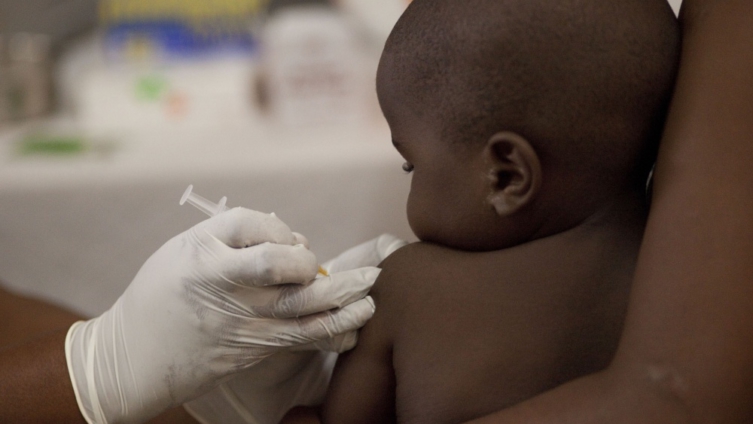
The new ones include mass drug administration, post-discharge malaria chemoprevention and scaling up malaria vaccination, as well as intermittent preventive treatment of malaria in schoolchildren.
Dr Malm also mentioned the conventional interventions to include larvae source management, distribution of long-lasting insecticide-treated mosquito nets, social behaviour change campaigns and vector surveillance, as well as vaccination which was on a pilot basis.
The others are research and indoor residual spraying.
“I know when some people hear about elimination, they say it’s not going to be possible but we believe it’s possible progressively,” the Malaria Elimination Programme manager said.
Dr Malm added that the zero malaria targets were feasible as a lot had been achieved but more needed to be done because malaria remained a national risk, with an impact on social and economic development.
She said while malaria remained a public health concern and a leading cause of death, projections of the impact made by national interventions showed that elimination was very possible as a country.
Strides
Dr Malm said over the years, the country, under its defunct Malaria Control Programme, had been able to reduce prevalence and mortalities significantly, justifying the country’s potential to eliminate malaria.
“The current elimination target is focused on reducing mortality by 100 per cent by 2028 and cases by 50 per cent using the 2022 figures as the baseline.
“Malaria deaths have also reduced significantly over the last five years from 1.42 out of every 100,000 cases to 0.45 per 100,000.
Plan
Dr Malm said the new malaria elimination strategic plan had been developed to, among others, strengthen passive and active surveillance and monitoring evaluation systems; ensure that 100 per cent of all confirmed cases were appropriately, effectively and completely treated within 72 hours and ensure 100 per cent detection rate by 2028.
She said that the current National Malaria Strategic Plan, which spanned 2021 to 2025, had three main goals; which were to reduce malaria mortality by 90 per cent, reduce malaria case incidence by 50 per cent and achieve malaria pre-elimination in at least six districts by 2025 using 2019 as a baseline.
Latest Stories
-
Joyce Blessing blesses Adom TV Fufu Party patrons with thrilling performance
15 seconds -
Toasehene commissions community centre, urges traditional leaders to prioritize development
9 minutes -
ECG to replace transformers in parts of Accra to improve power supply
38 minutes -
Photos: Two brothers who died in a tragic Tema aircraft crash laid to rest
55 minutes -
Pamela Bridgewater Project urges stakeholders to join outreach programme on teenage pregnancy
2 hours -
Shot on duty: A Ghanaian journalist’s five-year struggle for recovery
2 hours -
Rainstorm rips off Kassena-Nankana West District block
2 hours -
Fans gather in their numbers for 2026 Adom TV Fufuo Party
2 hours -
When reporting becomes a risk: The growing digital war on journalists in Ghana
2 hours -
Pressure mounts on Bogoso-Prestea Mine Divisional Chiefs to withdraw petition seeking to replace Heath Goldfields
2 hours -
NACOC Bono-East Command arrests 6 in ‘Operation Clean Street’ in Donkor-Nkwanta
3 hours -
Bawumia calls for cross-border cooperation to unlock Africa’s AI potential
3 hours -
AI will reshape jobs but offers opportunity if managed well – Bawumia
3 hours -
Bawumia outlines six policy priorities to position Africa as global AI leader
3 hours -
High data costs threaten Africa’s participation in AI revolution – Bawumia
3 hours