

Audio By Carbonatix
Ghana has expressed interest in exploring gene drive technology as a new approach to combatting malaria.
The country is open to adopting technology that is cost-effective, efficient, harmless and has the potential to significantly reduce malaria transmission, especially in areas where traditional control methods have failed.
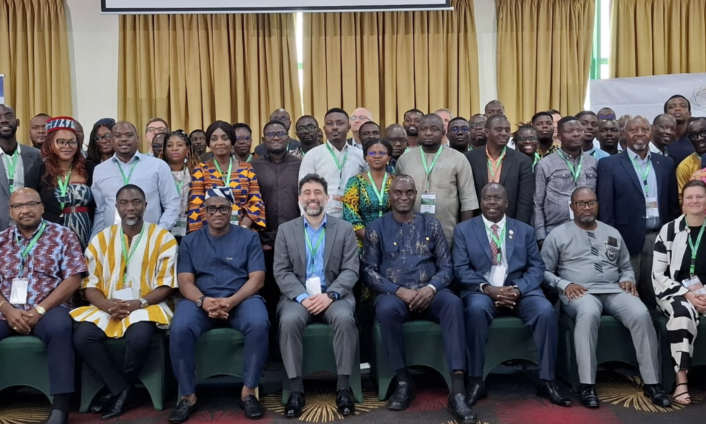
Dr Ibrahim Murtala Muhammed, the Minister of Environment, Science, and Technology gave the assurance in an interview with journalists after opening the Second Global Genetic Biocontrol Congress in Accra.
Scientists, researchers, and stakeholders from 25 institutions drawn from 15 countries are participating in the conference on the theme: “Harnessing genetic biocontrol potential solutions in changing climate.”
Describing Malaria as a “serious threat,” Dr Muhammed said the burden of malaria on Africa’s economy was high as the continent spent millions of dollars on malaria control.
He said Ghana would adopt emerging technologies to help support disease prevention including those that affect crops “as long as it does not affect our survival as human beings.”
“People who are against GMO have several cultural issues and social issues. But the question is, is it the way to go now?
“So as long as it is not inimical to our survival, as long as it doesn’t have any health consequences as a people, I don’t think that we are against it,” Dr Muhammed said.
Gene drive is a new approach to fighting malaria, which involves the creation of a special kind of mosquito “vaccine” that disables mosquitoes from spreading malaria.
Scientists take some mosquitoes and give them a special genetic “tweak” that makes them unable to spread malaria. These special mosquitoes are then released into the wild, where they mate with other mosquitoes.
When they have babies, they pass on the special genetic “tweak” to their offspring and over time, more and more mosquitoes will have the special genetic “tweak” and cannot spread malaria.
Professor Fredros Okumu, a Public Health Researcher and Mosquito Biologist, said Africa required innovative and transformative tools that could crash malaria with about 90 per cent efficiency.
He said evidence from the laboratories indicates that gene drives “might be the answer” to the quest for efficient and affordable technology to eliminate malaria.
“We have four-dose vaccines now for malaria. That tells you how weak our malaria arsenals are. So, we need new tools,” Prof. Okumu said.
Dr Willy Tonui, Founder and Executive Director, African Genetic Biocontrol Consortium, said the Congress was an opportunity to bring researchers, developers, and practitioners together so that future genetic biocontrol activities will take place within a community with shared interests and values.
“This unique Congress will focus exclusively on the topic of genetic biocontrol and will serve to encourage cooperation, collaboration, communication, and new and exciting science at a time when new technologies such as gene drive and Wolbachia induced cytoplasmic incompatibility are being developed,” he said.
Dr Misheck Mulumba, Congress President, advocated for the adoption of the One Health approach to tackle diseases, saying the approach was cheaper and efficient.
Latest Stories
-
Afenyo-Markin’s lawsuit against Sammy Gyamfi takes focus away from development – Kpebu
4 minutes -
FWSC urges media to guard against misinformation in proposed IPEC transition
4 minutes -
Zimbabwean author denies using AI to write award-winning story
26 minutes -
GTEC’s letter directing public universities to reopen by October 16 is unprofessional – GAUA
27 minutes -
Suspect in viral video assaulting wife jailed for 3 months
27 minutes -
GAUA insists strike will end only after Fair Wages addresses market premium issue
27 minutes -
Kpemka seeks compensation as he sues BOST over alleged unlawful termination
30 minutes -
GES asks applicants to check status of 2026 promotion applications on October 15
54 minutes -
Kobe Boujee joins Olympics.com team for Dakar 2026 Youth Olympic Games
1 hour -
Slaty egret’s shifting nesting sites offer clues to changing ecosystems
1 hour -
First phase of arrears for promoted teachers to be paid on Friday – Haruna Iddrisu announces
1 hour -
Caveman Watches partners with Mfantsipim School for 150th anniversary
2 hours -
We’ll pursue GH¢15m defamation suit against Sammy Gyamfi to its logical conclusion – Afenyo-Markin’s lawyers
2 hours -
Martin Kpebu urges Afenyo-Markin not to return to court over Sammy Gyamfi lawsuit
2 hours -
GRA submits preliminary report on drug shipment case to Mahama – Commissioner-General
2 hours