

Audio By Carbonatix
The Minister for Health, Kwaku Agyemang-Manu, has advised parents to allow their children below two years, to be vaccinated against malaria to stimulate the nation’s efforts to eradicate malaria in the country by 2030.
He emphasised that the malaria vaccine remains safe, effective and well tolerated and has no debilitating consequences on the health of children.
Mr Agyemang-Manu gave the advice while speaking at the launch of the expansion of the malaria vaccine implementation programme in Sunyani, on the theme: “Malaria vaccine for additional treatment.”
The Ghana Health Service (GHS) with support from its partners, including GAVI, PATH, and WHO is implementing the pilot programme in parts of the country.
Mr Agyemang-Manu stated that vaccination not only protect and save children's lives, but it is also one of the most cost-effective public health interventions and the most effective way to help children survive.
Considered to be the cornerstone of public health care, the Health Minister said globally vaccination has saved three million children from childhood diseases every year, and urged caregivers and parents to capitalise on the programme and vaccinate their eligible children.
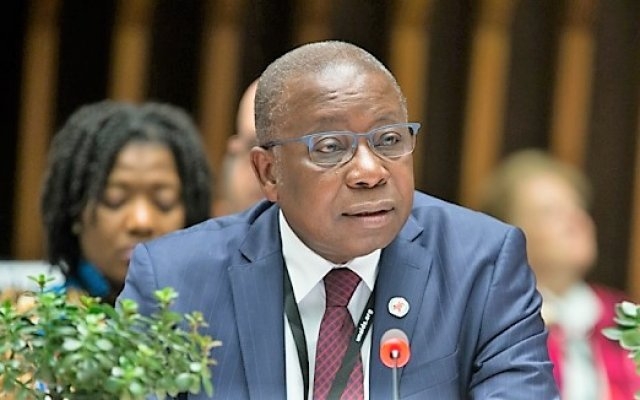
In a speech read on his behalf, Dr Francis Kasolo, the WHO Representative to Ghana, said the “malaria vaccine is a welcome addition to the malaria control toolbox and will offer endemic countries the opportunity to rapidly reach children in the most vulnerable places with an effective intervention through the routine immunisation platform.”
So far, he said, about 1.5 million doses of the malaria vaccine had been administered across 42 districts in Ghana, reaching over 440,000 children with at least one dose and with over 175,000 children completing the fourth dose.
This is a commendable achievement for Ghana and Africa, according to Dr. Kasolo, who added that the malaria vaccine introduction programme demonstrated that the vaccine was safe, feasible, and could be implemented through routine childhood immunization alongside other malaria control interventions.
Dr Patrick Kuma-Aboagye, the Director General of the GHS, said the malaria vaccine reduced the number of times a child gets malaria, including severe malaria and reduced child deaths as well.
He explained children get the first dose of the vaccine at six months of age and the final dose at 18 months, a departure from the previous schedule of 24 months for the final dose.
The new schedule is, therefore, six months, seven months, nine months and 18 months, Dr Kuma-Aboagye explained, saying to get the maximum protection, a child must receive all the four doses.
Latest Stories
-
Accra Athletics Open Championships conclude with strong performances ahead of African Championships
3 seconds -
Ghana to begin camping with 12 athletes after Accra Open Championships – Bawa Fuseni
21 minutes -
Anthony Joshua declines showdown with Tyson Fury but admits they ‘probably’ clash next
34 minutes -
Tyson Fury dominates Makhmudov, calls out Joshua next
54 minutes -
I have supported highway authority financially to fix roads in my constituency – A Plus
2 hours -
US, Iran fail to reach peace agreement after marathon talks in Pakistan
2 hours -
ECG kicks off Phase Two of transformer upgrades at Lashibi; brief outages expected
3 hours -
Port crises loom as 11,000 drivers threaten four-day strike
4 hours -
A source of excellence across generations – Vice President Opoku-Agyemang lauds Mfantsipim
5 hours -
(Photos) Mfantsipim School launches historic 150th anniversary
5 hours -
Knights and Ladies of Marshall group backs Catholic Bishops’ stance on anti-LGBTQ+
6 hours -
Bright Simons writes: All the Filla in the Ibrahim Mahama/E&P – Gold Fields Saga
6 hours -
Monetise Idiocy In Ghana
6 hours -
The Ghanaian prophet and the mysterious death of his scottish wife Charmain Speirs
7 hours -
Nearly 400 sentenced in Nigeria for links to militant Islamists
8 hours